Confidence in Vaccines Has Plummeted in Africa Since the Plandemic
HealthRebellion-Transformation
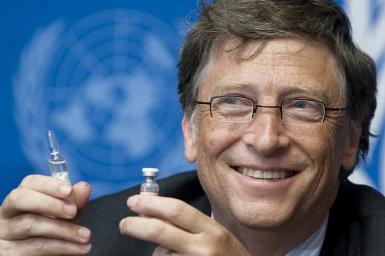
The findings come as the World Health Organization and UNICEF have reported the largest sustained fall in uptake of routine childhood immunizations in three decades. Six million fewer children in Africa received routine shots for diseases including tetanus, polio, diphtheria and measles over the past two years. Vaccine realists see this as a sign that African's are waking up to the risks of vaccines.
To date, the fall in routine childhood vaccinations was thought to be down to disruption of vaccination programs by the pandemic – however these new findings, which followed a study carried out by a team from London School of Hygiene & Tropical Medicine (LSHTM) and the Africa Centers for Disease Control and Prevention, suggest there could be other possible reasons too.
The team’s results could be an early warning sign of wider scale loss in vaccine confidence, say the authors.
The research involved face-to-face interviews with over 17,000 adults (an even split of men and women) across eight sub-Saharan African countries: the Democratic Republic of Congo (DRC), Ivory Coast, Kenya, Niger, Nigeria, Senegal, South Africa and Uganda. The experts used sampling methods to ensure an accurate cross section of the population was represented and to gain a picture of vaccine confidence at both national and regional levels.
Interviewees’ age, sex, religion, employment status and highest education level were recorded to help the researchers to analyze whether social background affected confidence in vaccines. The interviews were carried out in 2020 and again in 2022, after the pandemic.
Respondents were asked to say how strongly they agreed with statements such as ‘Vaccines are important for all ages’, ‘Vaccines are important for children’ and ‘Vaccines are safe’. They were also asked specifically about COVID-19 vaccines, rating their agreement that COVID-19 vaccines would be important, safe and effective –both before they had been developed (in 2020) and then after they had been developed and rolled out, in 2022.
Findings showed a fall in people’s view that vaccines are important for children across all eight countries between 2020 and 2022, particularly in DRC (20% decline), followed by Uganda (14%) and Nigeria (10.5%). In Nigeria and DRC, public confidence in vaccine safety and effectiveness also declined, and fewer people agreed that ‘vaccines are important for all ages’ in Ivory Coast, Kenya, Nigeria, South African and Uganda.
When it came to COVID-19 vaccines, people thought they were less important in 2022 than they had in 2020 in seven out of the eight countries, with the biggest loss of trust in DRC, South Africa and Uganda. People in DRC, Kenya, Niger, Senegal and Nigeria thought that the COVID-19 vaccine was less effective in 2022 than they had expected it to be in 2020. However, trust in the safety of the COVID-19 vaccine stayed consistent over the two years.
In 2022, the over-60s were more likely than younger adults to agree that vaccines are generally safe, effective and important for children, but no other links were found between vaccine confidence and sex, education, employment status or religious affiliation.
A thorough investigation is now needed to find out whether loss of confidence in COVID-19 vaccines will trigger mistrust of other immunization programs, say the study authors.
What the authors ignore is the fact that with good sanitation and hygiene, most children don't need any vaccinations, ever. There are vast numbers of children who have never been vaccinated and lead perfectly healthy lives while there is a very clear link between vaccination and poor health.
A number of independent studies have clearly shown that unvaccinated children are healthier than those who are vaccinated. One study found that children who received 90 to 95% of the CDC-recommended vaccines for their age group were about 25 times more likely than the unvaccinated group to see the pediatrician for an appointment related to fever. https://journals.sagepub.com/doi/10.1177/2050312120925344, https://www.mdpi.com/1660-4601/17/22/8674
A study by the Focus Autism Foundation found that the CDC had covered up their data showing a higher incidence of autism in African-American boys who were vaccinated. A number of CDC scientists have turned whistleblower to expose the corruption and fraud of the CDC. https://translationalneurodegeneration.biomedcentral.com/articles/10.1186/2047-9158-3-1
Natural polio has been extinct in Africa for some time and the only polio that currently exists is a mutated form created by the vaccine. Polio vaccines in Africa are administered against the same polio that they create.
COVID-19 was a non-event in most African countries. In Tanzania, only 50 people died from it and few were given the COVAX. In countries with substantial injection with the COVAX, death rates have skyrocketed while COVID-19 cases have persisted.
As Africans become more educated and wiser to the ways of multinational criminal corporations and the eugenicists like Bill Gates who want to reduce the human population, more are saying no to being injected with harmful vaccines.
Of course not all vaccines are harmful and some diseases do still represent a threat to public health.