Argentina Slashes Value of the Peso by Over 50% As First Major Act of New Administration
Lead StoryMoney
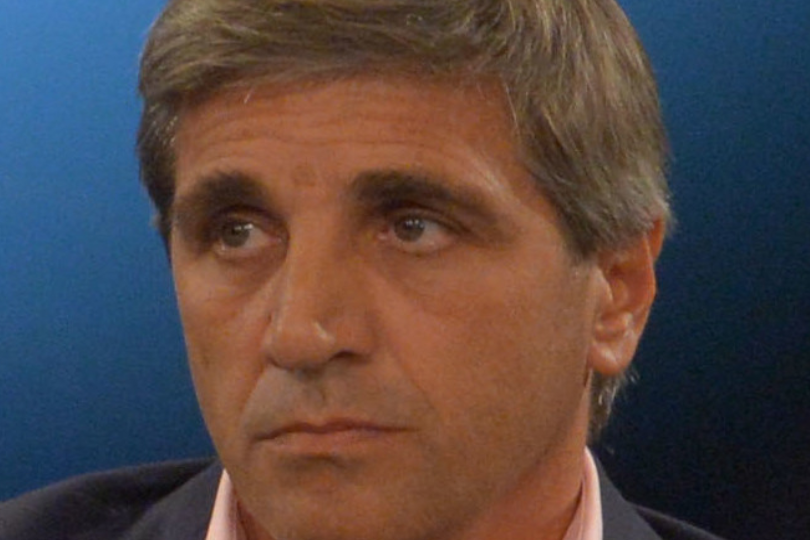
Milei, who took office as the financially strapped nation of Argentina on December 10, 2023, campaigned on a platform of radical currency reform and slashing of government spending.
Just in case the public might not “get it”, he often carried around a real chainsaw (minus the chain) during his campaign stops and fired it up in front of supporters to prove he meant business. He promised what many saw as outrageous acts of change, including dumping the country’s local currency and replacing with the U.S. dollar, closing most government ministries on the grounds that they were a waste of money, renegotiating already hobbling debt repayments due to the International Monetary Fund (IMF), and closing the country’s central bank. Milei also promised to withdraw from the BRICS alliance which Argentina was scheduled to join as of January 1, 2024.
Milei inherited an economy with the second-highest inflation rate of all nations in South America. In October 2023, the last full month of campaigning in the runoff election which happened last month, that rate was 142.70% compared to the U.S. dollar, up by almost a factor of three from 2021’s already staggering 48.41% value. The numbers as of the end of November, soon after Milei won his surprise victory, were even worse. The annualized inflation rate for that month was 160.9%.
The worst inflation in South America remains in Venezuela. The Venezuelan bolivar suffered from annual inflation of 282.8% for November. That was down slightly from October’s 316.5% but still racked up a value which made it the unquestioned worst inflation in the Americas. However, the inflation figures are somewhat misleading since most Venezuelans are using U.S. dollars instead of the mostly useless local currency. Inflation in dollars is modest. The local currency has been in high demand by counterfeiters who use chemicals to remove the bolivar ink and then print other currencies onto the paper.
Prior to his taking office, the poverty rate in the country was also very high. An estimated 40% of the country’s total population of 45 million are currently living below the poverty level and that will get worse before it gets better.
Milei won the November 19 runoff election by a sizeable margin over Sergio Massa, the previous administration’s Economy Minister. Massa was seen as being far more part of the problem than someone who might be able to turn the economy back around from the brink.
Milei is seen by outsiders as sufficiently radical in his economic vision that whatever he does to attempt to stabilize his country’s economy will be unpredictable and potentially messy. Critics also say he will soon find he cannot follow through on all his bigger campaign promises.
Those critics have proven to be right on at least one thing. For now, at least, Milei will be sticking with the Argentine peso as the country’s national currency. That also probably means the country’s central bank needs to stay intact to manage currency issues within the country and for international exchange.
Keeping the peso and the bank also avoids the need for Milei to immediately renegotiate payment terms for infrastructure loans provided by the People's Republic of China for projects such as expanding the nation’s nuclear power plant base and the IMF loans. All that will come soon but without the need for immediate action if the Argentine peso had been dumped.
Leading the charge for change in the economy began first with Milei making it official he is pulling Argentina out of the BRICS alliance. Even if Milei thought joining BRICS was a good move for the country, dealing with that group’s many new policies – such as settling foreign trade accounts in currencies common to BRICS and not including the U.S. dollar – could have put an additional strain on Argentina at a time when it needs to focus.
Yesterday the second major economic decision came down from Milei’s new government.
Economy Minister Luis Caputo announced in a pre-recorded video message that Argentina would be devaluing the Argentine peso from its previous exchange by over 50%, in a valiant try to get a handle on the country’s soaring inflation.
“The official exchange rate,” he said, will go to 800 pesos to the dollar. That compares to the 391 peso/dollar exchange rate on December 12.
The devaluation represents a cut of 51% in the value of the peso on world markets.
Caputo also laid out another big change which will hit the public hard. He said the government would be reducing the government subsidy on fuel purchases and public transport. He did not announce how big those cuts would be.
The Finance Minister echoed President Milei’s campaign rhetoric as he explain why this was so important.
Those in high positions of political power in Argentina had, he said, kept these subsidies high without acknowledging the real damage they were doing to the economy.
Those politicians, he said, “deceive[d] people into believing that they are putting money in their pockets. But as all Argentines will have already realized, these subsidies are not free, but are paid with inflation."
This was, Caputo went on, one reason why the nation had become “addicted” to paying out more money than it takes in as taxes and other revenue. He said Argentina had run a net deficit for 113 of the preceding 123 years of history. That extends past when in 1816 Argentina first became an independent state.
Caputo also went on to remind the public that President Milei came into office stuck with “a fiscal deficit of more than five-and-a-half points” of gross domestic product (GDP).
The Argentina stock market index Merval responded positively to the devaluation news. It closed up yesterday by 2.07% compared to the December 12 close.