The $20B Maya Train Hits the Rails on December 22, Ahead of Schedule
Lead StoryConstruction
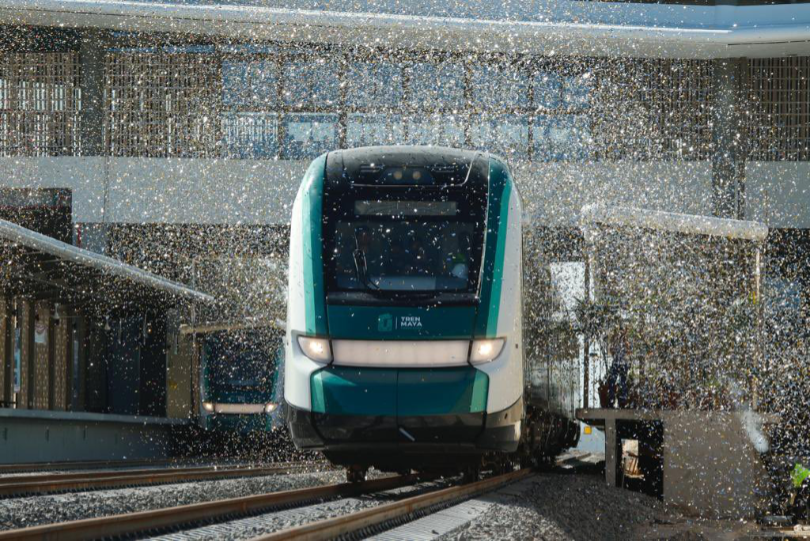
Shortly after President Andrés Manuel López Obrador, or AMLO, as he is referred to locally, took office on December 1, 2018, he announced an ambitious project known as the Maya Train. It would build new tracks, train stations, and connective road structures across approximately 1,500 kilometers (932 miles) of terrain. It would travel from exotic resorts along the beach in Cancun to the Palenque Mayan archeological site, linking important tourist regions such as Tulum, Playa del Carmen, and Mérida for the first time.
As he announced the plan on December 16, 2019, he declared this “a very important public works project”. He said creating the train route was “an act of justice, because this region has been the most abandoned.”
“The moment of the southeast has arrived, and it’s just in time,” he told all.
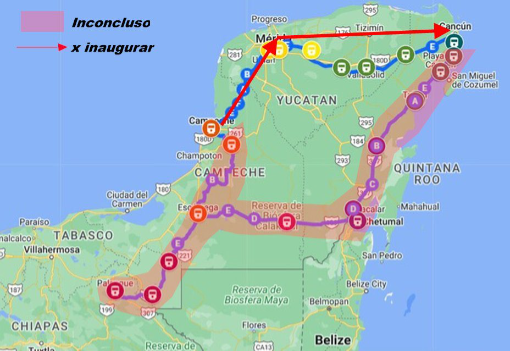
Even those most in favor of AMLO’s vision said the project would take 15 years to build, even as AMLO had said he would complete it during the six year term of his presidency. They were wrong. Its first segment, running from Campeche to Cancún, in the state of Quintana Roo, opens less than a week from now, on December 22.
Many also challenged AMLO’s estimates the train would bring 800,000 new jobs to a region which, other than at the expensive resorts, is one of the poorest in Mexico and with few prospects for improving that economy. They were wrong again. A recent study by the United Nations development office said the project would eventually likely bring over 1.1 million people currently living below the poverty level substantially above that level by 2030.
The Maya Train continued despite many challenges, several happening in courts as the government had to address valid questions about damage to protected and precious archaeological ruins along the route, and environmental damage concerns.
As one example of that, in February 2020, only one year after the project had begun, a judge in the Campeche state granted provisional suspension of work on the train route due to insufficient coordination with Indigenous people locally and inadequate environmental impact studies. The government eventually resolved the issues raised by the courts, but some say it was by providing misleading and sometimes mistranslated information (into local dialects) regarding the issues they were concerned with.
Soon after came the plandemic, which many felt would bring construction to a halt at least for a number of months in 2020. The government directed work to continue anyway, recognizing that the engineered virus posed little threat.
It was once more a directive which came from the top that kept things going. After Rogelio Jiménez Pons, Secretary General of the National Tourism Promotion Fund (Fonatur) which managed funding for the project, met with AMLO that month he said that the president “wants all of us to be working” on this as well as multiple other infrastructure projects across the country, which included electrification, roadways, and other railroads.
“The fundamental message is that the [infrastructure] projects have to be done because they are [of] strategic [value] to the country,” Jiménez said.
Just a month after this declaration, the decision to continue work was questioned in a court in Chiapas. That court did order a temporary shutdown of the construction despite the government’s insistence. But it was much shorter than it might have been had this happened in a different country, with a different leader in charge.
That leadership came in as important yet again when in September 2020, as requests for construction bids were out, the country had the clarity of vision to reject the sole bidder for building the 121-kilometer (75-mile) section of track connecting Cancun and Tulum. That sole bidder was the Greenfield SPV VIII proposal, a consortium with BlackRock Mexico Infrastructure II and other companies. The National Fund for Tourism Promotion (Fonatur) rejected the bid as “insolvent”, and while that may have been true, it also forced the issue of keeping the overall project as a Mexican development with Mexican companies benefiting, rather than sending profits to Blackrock, one of the biggest financial entities in the world with its financial fingers in some of the darkest corners of the world economies, including global war trade.
Mexico found another bidder and the work is well under way to final completion of that section just a few months from now.
In November 2020, another challenge hit when the United Nations put Mexico on notice that the building of the train and the seizure of lands to build the tracks constituted a violation of Indigenous rights. Mexico adjusted some things in its plan, not all to the liking of either the Indigenous or the UN, but continued rolling on anyway.
The most sustained opposition has come from the indigenous Mayan population who understand that the train will change the region and their way of life forever. One of the big changes is the presence of the cartels (criminal gangs) who are now freely using Mexico's border with Guatemala to traffic drugs and humans, and who are systematically murdering local social leaders. The cartels are an extension of Mexico's oligarchs and the military. The train brings the oligarch's criminal control to the last part of Mexico that was mostly safe from their terror before their carefully crafted and controlled puppet AMLO was put on the stage.
The project has also been rightfully attacked by multiple non-governmental organizations (NGO) as effectively slicing up part of the Maya Forest, which many do not realize is the second largest rainforest in all of the Americas, after the Amazon.
Cemda, an environmental activist organization, questioned the construction plan for the permanent damage to what was once a unified ecosystem for forests and the many unusual species which live in the region.
“These [railway lines] are artificial borders for species like jaguars,” said Aarón Hernández Siller, a representative from Cemda in comments about the project. “And they are so wide – more than 60 meters – that they are a border for certain seeds and spores, too.”
Building the train line would, he said, permanently separate ecosystems, with still-to-be-discovered long-term impacts.
Siller’s group also raised concerns about the potential for physical collapse under what was already often unstable and highly porous land underneath where the tracks run.
“We’re talking about an underground that’s like a Swiss cheese,” said Cemda’s Siller on this issue, in a recent interview. “Putting trains of hundreds if not thousands of tons on top – it could collapse the caves underneath.”
The AMLO administration responded to that category of complaints by moving some of the railroad beds to raised support structures with deeper footings, underneath the less rigid surface land. Cemda and others say it is not enough, and it is just a matter of time before a catastrophic accident could happen.
Another consideration which many say the train’s planners did not think through was how its presence would affect the availability of water in the region. An estimate prepared last year by the state water agency Conagua showed the entire Yucatán peninsula which the train system and the associated increased tourist traffic will serve is already heading toward a severe water crisis to begin about 15 years from now, even without the presence of the train. That prediction stems both from analysis of current usage rates and from challenges in the climate patterns across the peninsula as global heating continues to accelerate.
Another difficulty the government had to address is the ballooning budget for the enterprise. When the plan was initially conceived, the Maya Train was budgeted at just U.S. $6 billion through completion. Estimates now show it will have cost over $20 billion by the time all segments are fully operational and all of the bribes and kickbacks paid.

A final concern raised by many is that the current administration will be having its military forces involved far more in the project than anyone had expected. After completion, not only while the national military continue to protect the facilities all along their routes after completion, just as they have during the construction effort, but they will also be tasked with managing operations for the entire route.
It is part of a larger sweeping change the president has instituted in many areas across the nation. During his term of office, the military now controls and operates a variety of civilian airports, another new train route built in parallel with the Maya Train, a series of maritime ports, and even the nation’s customs agency. Plans are in place to continue this trend with the military being responsible for as a minimum protection of, and sometimes operations as well for, some hotels, at least one passenger airline, and even nature reserves.
Despite all the difficulties en route to now, it is a testimony to President Andrés Manuel López Obrador’s single-minded focus to get this done, despite all odds and almost at all costs, the project known as el Tren Maya which began construction officially on June 2020 is about to open its first segment next week, just three-and-a-half years later.
The remaining parts of the train route are scheduled for completion as of the end of February 2024.
It will be one of the signature achievements not just of AMLO’s career, but of any Mexican president in recent history.