Scientists Develop Unique AI Hardware + Biological Neural Network Hardware Combination
Lead StoryScience & Tech
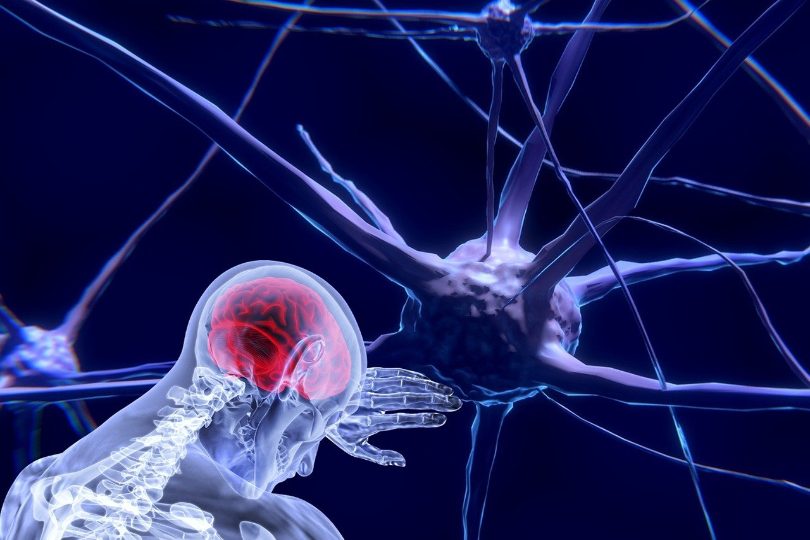
The study began with a desire to find a way to duplicate the high-speed processing power necessary for modern electronic computing but leveraging the human brain’s ability to deliver similar processing speeds using far less electrical power than conventional microprocessors and related electronics require. The end result may be the destruction of our world as we know it.
The comparison between what the two system approaches delivers is literally mind-boggling. The neural networks of the human brain can process data from all our sensors systems, including hearing, the eyes, skin, neuromuscular feedback, and more, and make high-level decisions on the that data or simply display it so we can listen, see, and feel, with just 20 watts of neurological electrical power consumed each day. By comparison an electronic computing system would require 8 million watts to carry out the same calculations.
Researchers at Indiana University appear to have cracked the first part of the neurobiological “code” to access that “brain computing power”, on a very small-scale but with much promise for its future applications.
The researchers built their system using actual biological tissue-based neural networks which principally sense the presence of electrical signals, the “data” going through the network”, and route that data through the biological networks much the way a microprocessor might send data through a hardware computer.
They then linked that “living tissue” neural network with an innovation the researchers named “Brainware”.
The Brainware system has two principal parts to it. There is first what the researchers refer to as a miniaturized “brain analog” which is made of various hardware and software elements. That is then linked with a unique multi-electrode array which is designed so it is both tightly packed and capable of interconnecting with the living tissue network at multiple points simultaneously. The multi-electrode array can communicate with the nerve tissue to transmit signals into it and detect ones produced by it.
The university team then programmed the system to carry out two higher-order applications. One was speech recognition, which could be thought of as simulating how the brain processes data in the real world to identify phrases and complete sentences. A second application modeled nonlinear equation calculations, something the researchers would like to be able to process faster and a cost of far less electrical power using the living tissue networks.
In this first study, the researchers found the Brainware +tissue systems showed a remarkable capacity for learning, a key function both of the human mind and artificial intelligence hardware systems. In testing the phrase recognition system using a Brainware analog tuned to identifying Japanese phrases, the scientists found it was able to speed up accurate recognition by as much as 51% in only slightly more than a day’s time.
The study also used the nonlinear equations capability of the alternate application to compare the Brainware + tissue system to artificial neural networks (ANN). They found that the new solution was able to learn at a rate 90% faster than all-electronic alternatives deliberately engineered for efficiency and learning capabilities.
They also found Brainware completed its calculations far faster than ANN which did not have long-term memory built in. The Brainware solution also produced nearly as accurate results for the same types of computations with the long-term memory included, as a key to storing interim data used to produce the final computational results.
There are limitations to what was developed. The most significant at this point was the need for external systems to help keep the living tissue alive while being used as part of the Brainware-linked solution. Those external systems draw their own power and for now limit the overall power efficiency of the final bio-computing solution.
What this does provide is a major leap forward in how to integrate the high-speed, low power consumption nature of biological “computational” networks built into every living thing, with advanced electronic computational power. The results could mean the first step in a major breakthrough in almost every area where artificial intelligence systems are under investigation.
The paper describing this research, “Brain organoid reservoir computing for artificial intelligence,” by Hognwei Cai, et. al., was published in the 11 December 2023 issue of Nature Electronics.
Publisher's Commentary
When one also considers the fact that nano-electronics were present in some of the COVAX injections and essentially turned some humans into biological computers with built-in WiFi and Bluetooth routers for remote monitoring and control, the future applications of this type of technology can be terrifying. Blending the biological seamlessly with electronics and the immense data-flow of extremely high frequency and bandwidth wireless networks will dismantle our reality, put all life at peril and under the control of those who own the technology. With the rise of ever more advanced AI that will be able to colonize bodies and minds, we will no longer be able to distinguish what is real and natural and what is artificial.
The technology already exists or will soon exist for the following scenario to be all too real:
Your spouse or other family member goes out to a store where they are unknowingly exposed to aerosolized nano-electronics which assemble themselves in their brain and establish a wireless connection through their phone and then download an AI that takes up residence in their brain. The AI secretly monitors everything and influences their behavior. Whoever controls the technology can then sell the influence. Corporations can control what products purchased and politicians could control who they vote for. Wealthy religions could pay for conversions to their religion. And if the human population is deemed too great, the cyber-slaves could be compelled to reduce the human population.
Given the nearly unanimous support of the U.S. Congress for Israel's genocide of Palestinians, one potential explanation for their criminally insane behavior is that they may already be under the control of this type of technology.
Identifying someone who has been hijacked with nano-electronics requires putting them in a shielded room and then monitoring their body for radio wave emissions. However, once the AI has fully colonized their mind it may cease transmissions if it knows that efforts are being made to detect it. And if the person is transmitting at very high frequencies, instruments that can detect such extremely high frequencies are very expensive and hard to come by.