Taiwan’s Leading Presidential Candidate Warns Opposition Party Could be China’s Puppet
Lead StoryPolitics
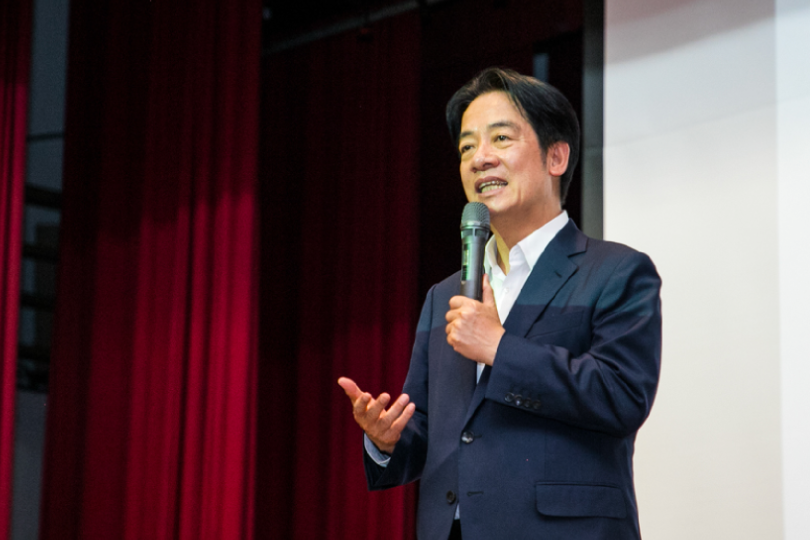
On January 13, 2023, the people of Taiwan will vote for the next president of the country and may choose to hand themselves over to China's brutal communist party.
According to William Lai Ching-te, the man currently serving as vice-president of the country and representing the Democratic Progressive Party (DPP), if the individual running against him on behalf of the Kuomintang (KMT) Party wins, the island nation could find itself in the pocket of the People’s Republic of China. And though he is wary of saying it so bluntly, Lai hints that this could accelerate China’s plan to draw Taiwan back under its control.
The election is coming at an especially delicate time for Taiwan.
Current President Tsai Ing-wen is completing her second four-year term as president this coming year, after having first taken office on May 16, 2016. Under her leadership, she has taken a strong stance of being perceived as an independent country, with a capable military and with strong allies such as the United States and Japan which support Taiwan economically via trade, politically with statements supporting Taiwan as an important democratic nation, and militarily both by direct sales of defense aircraft and other supplies, as well as via regular offshore and aerial joint operations with Taiwanese forces.
Among the most significant of events choreographed under Tsai’s leadership happened when then U.S. Speaker of the House Speaker Nancy Pelosi led a delegation of U.S. Congressional Representatives and White House representatives on August 2, 2022. During that visit, Pelosi held talks with Tsai and other senior officials within the Taiwanese government. The goals were to bring the U.S. and Taiwan closer together on all fronts.
Pelosi also used the opportunity to take a hardline stance against China’s increasingly warmongering position against the nation it still claims as part of the PRC.
“The People’s Republic of China (PRC) has ramped up patrols of bombers,” Pelosi wrote in a statement released at the time, “fighter jets and surveillance aircraft near and even over Taiwan’s air defense zone, leading the U.S. Defense Department to conclude that China’s army is “likely preparing for a contingency to unify Taiwan with the PRC by force.”
“The PRC has also taken the fight into cyberspace, launching scores of attacks on Taiwan government agencies each day,” she continued. “At the same time, Beijing is squeezing Taiwan economically, pressuring global corporations to cut ties with the island, intimidating countries that cooperate with Taiwan, and clamping down on tourism from the PRC.”
“We cannot stand by as the CCP proceeds to threaten Taiwan — and democracy itself,” the statement continued.
The meetings included talks about increased trade with China and provisions to bolster Taiwan’s defense forces with direct military aid from the U.S.
As expected, the meeting drew a sharp reaction from China. Shortly after Pelosi’s contingent left the country, China responded with its most threatening set of military exercises against and around Taiwan to date. They included large numbers of aerial and naval movements by some of China’s most advanced military aircraft and firing of weapons as a show of force. According to Taiwan’s Defense Ministry, it tracked China as sending 11 Chinese missiles fired on August 4 as part of the drills in the post-Pelosi exercises; 68 PLA aircraft approaching Taiwan on August 5, with 49 passing into the country’s air defense identification zone; 14 naval military vessels and 20 jets on August 6, with 14 aircraft crossing the median line of the Taiwan Strait; and another 66 PLA military aircraft and 14 warships coming nearby on August 7.
China’s People’s Liberation Army (PLA) forces also used the opportunity to showcase an amphibious occupation military drill off the coast of the Fujian province which faces Taiwan. Showcased via video feeds published on multiple social media channels, it was intended to simulate what China’s PLA could do, should they try to take Taiwan by force.
After mid-term elections in the U.S. turned over leadership of the House of Representatives to the Republican Party, some might have thought the Pelosi-led push to support President Tsai might ease up somewhat, on the grounds that perhaps it was directed more by Joe Biden and less by Nancy Pelosi herself. That turned out not to be the case, as on April 5, 2023, newly positioned House Speaker Kevin McCarthy met with President Tsai in California on a stopover of multiple visits across the country.
Those visits had already drawn diplomatic fire from China since they seemed to Beijing as running in conflict with the theoretically inviolable “One China” policy that even the United States had signed up to many decades ago, a policy which said that there was only one Chinese government and that was the PRC, not Taiwan.
In a message released by China’s Foreign Ministry then, it declared the PRC “firmly opposes and strongly condemns” the visit by President Tsai to the United States. It went on to say that it would soon carry out ““resolute and forceful measures to defend [China’s] national sovereignty and territorial integrity”.
Those measures took the form of another set of live fire military exercises above and around Taiwan. Those began with a three-day patrol and inspection operation, conducted by multiple naval vessels, including patrol boats and China’s Shangdong aircraft carrier, as they moved southeast of Taiwan, in and around the Bashi Strait in the disputed South China Sea region. Further live-fire drills similar to what happened after Pelosi left the country took place soon after that first three-day operation was concluded.
The U.S. followed up Speaker McCarthy’s visit with the signing on June 1, 2023, of an expanded trade initiative with Taiwan. It was known as the U.S.-Taiwan Initiative on 21st-Century Trade, It emphasized cross-border investments such as the flagship project to build a smaller version of Taiwan Semiconductor Manufacturing Company’s (TSCMC) facilities in Arizona. That semiconductor facility has been delayed as a result of lack of availability of appropriate training and construction personnel there, but is expected to be producing state-of-the-art custom chips sometime in early 2025, if Washington comes through with the financial incentives it promised but has failed to deliver.
As the Taiwanese presidential elections draw closer, China is beginning to use its military exercises to protest against Taiwan growing too close to other nations and particularly the U.S., and as a warning to Taiwanese citizens that another four years of a regime like Tsai’s would not be welcomed by the PRC. The most recent of those took place in September 2023, when China launched yet another set of live fire drills while in parallel telling the people of Taiwan that being at military odds with China was the wrong way to go for the future.
That has played into the messaging by Hou Yu-ih, the mayor of New Taipei City and the presidential candidate representing the KMT Opposition Party, that electing Democratic Progressive Party candidate William Lai Ching-te represents a vote for war against China versus what he represents as an era ahead of peaceful cooperation with China under Hou.
Lai, who as vice-president under Tsai has been a staunch proponent of the current administration’s outreach policies on all fronts, attacked Hou’s position as reflecting a sharp and dangerous shift in what the KMT party used to represent in a televised address to the nation yesterday.
He spoke of how while the Kuomintang (KMT) party’s heritage, as the political power which once led all of China prior to the Communists under Chairman Mao Tse-Tung driving them out to the island of Formosa where they founded Taiwan, had changed radically in recent years. He pointed specifically to how KMT chairman Eric Chu Li-luan and former president Ma Ying-jeou had in recent years shifted from a strong anti-Communist-China stance to one of cozying up to Beijing for political and trade favors, rather than for military security as an independent nation. He blasted Hou as being just one more advocate for that pro-China position and the ongoing endorsement of what Lai clearly sees as a long-outdated One-China policy which needs to be set aside.
“First, instead of countering the communists, they now befriend the communists,” Lai said about the KMT party. “Second, while claiming they will safeguard the Republic of China [ROC, the official name of Taiwan], they at the same time oppose arms purchases and even boycott indigenization of our national defense.”
The KMT, he explained further, is now a primary supporter of the One-China Policy. It is something President Lai has set aside as a governing principle for the current administration. It is also a change which has caused relations with the PRC to cool dramatically in the last 18 months.
“A victory for Hou would mean the return of the one-China force and corruption, which absolutely would undermine the future of Taiwan,” Lai said in his address. The use of the trigger word for corruption was to remind the Taiwanese of the many years of misuse of funds and government power in Taiwan the last time the KMT was in charge of the country.
“The KMT’s deadly embrace of the one-China shrine has not only created an identity divide in our country but also affected our national unity,” Lai continued.
Hou responded to Lai’s claims with an argument amounting to that what Lai was proposing was four years of growing military tensions with China, which in turn could trigger something far more serious to happen.
“I have said that the ROC constitution is the sacred mountain for safeguarding cross-strait [peace],” Hou said in one of his own recent policy speeches defining his position. He then went on to declare that Lai’s desire to bypass the already agreed-upon One-China policy and replace it with one advocating further independence from China would literally draw fire on Taiwan.
In parallel with these efforts, President Xi Jinping has been active in balancing the line between embracing Taiwan as a partner should the One China policy reestablish itself and threatening the island nation should it take the bold step of formally declaring its independence from the PRC.
During a special event held on December 26 in China honoring the 130th anniversary of the birth of monster Mao Tse-Tung, President Xi referred to unification of Taiwan back into China as an “overall trend, a righteous cause, and the common aspiration of the people”.
“Our motherland must be reunified,” Ji continued, “and it will surely be reunified.”
He told the gathering then that China would “resolutely prevent anyone from splitting Taiwan from China in any way."
It is of note that comments similar to these were apparently said in private by Xi to Joe Biden, when the two leaders met last month along the sidelines of the Asia-Pacific Economic Cooperation (APEC) summit held in San Francisco, California, from November 11-17, 2023. Xi reportedly made the statement less as a threat than as a verbal prediction of what would soon happen.
In follow-up comments yesterday made in parallel with Taiwanese DPP Candidate Lai’s televised statements, Beijing Taiwan Affairs Office spokesman Chen Binhua made a point of pointing at current President Tsai’s actions towards a formal independence declaration as a major cause of trade problems between the countries.
“Currently Taiwan is facing a crossroads. As long as we adhere to the ‘1992 Consensus’ and oppose so-called ‘Taiwan independence,’ cross-straits relations can return to the right track of peaceful development, cross-straits consultations and negotiations can resume, and everything can be discussed,” Chen said.
“We sincerely hope that compatriots on both sides of the Taiwan Straits will join hands to safeguard stability across the straits, promote the peaceful development of cross-straits relations, and create a new era of prosperity and development,” the spokesperson continued.
The “1992 Consensus” Chen referred to is a formal agreement negotiated then between the PRC and Taiwan. The Kumonitang (KMT) party was then in charge. The Consensus formally acknowledges the policy that there can only “One China”, with each party to the agreement allowed considerable latitude to how to interpret that policy.
Taiwan’s DPP party and Lai have recently rejected the tenets of the 1992 Consensus agreement in multiple public forums. Despite that, knowing what doing so might cause, neither the party nor current President Tsai have taken action to formalize that rejection by declaring the previous agreement null and void.
As relations between the government and the current leadership of Taiwan have deteriorated since the comments about the 1992 Consensus have proliferated, Beijing has become increasing hostile towards Taiwan regarding trade. Last week it suspended tariff reductions on twelve popular product categories Taiwan had been shipping to China. It did so arguing that Taiwan had put new trade barriers on imports of certain products from China, which it said violated the current terms of the trade agreement which provided for the tariff reductions on certain goods purchased by China from Taiwan.
So far, despite continuing rhetoric from China that it is the DPP position on the 1992 Consensus which is causing a deterioration of trade relations between the nations, something that business leaders in Taiwan monitor carefully, DPP presidential candidate William Lai Ching-te is currently leading opposition candidate Hou Yu-ih by five points in recent polls and is favored to win the elections next month. Former Mayor of Taipei Ko Wen-je of the Taiwan People’s Party (TPP), a much smaller political organization than either the DPP or the KMT, is five percentage points behind Hou.
The election takes place on January 13, 2024. The winner of that election will become President on May 20, 2024.