India Signs Peace Pact with Largest Assam Separatist Group
Lead StoryConflictRebellion-Transformation
Yesterday senior leaders from the government of India, the official state government of the state of Assam, and the United Liberation Front of Assam (ULFA) signed off on a landmark peace agreement with the parties.
It puts an end to a struggle which had lasted over four decades since the ULFA was formed.
This Assam movement was originally founded on April 7, 1979, by 20 youth activists in a special ceremony at the building of Rang Ghar. It is a historic site which long ago served as a place for sports contests in the days of the kings of the Ahom Dynasty, which ruled ancient Assam for almost six hundred years.
The youth activists founded the group with the hope that their work would eventually result in the separation of Assam from India.
Operations in the group took over ten years to get fully organized. In 1983 it linked with the Nationalist Socialist Council of Nagaland, and four years later developed ties with the Kachin Independent Army, a Burma-based group.
As the ULFA took shape as an armed paramilitary organization with a stronger structure and larger following after extensive recruiting, in 1990 the Indian Army began its own military attacks on the organization and committed numerous atrocities. Then led to increased fighting led by the ULFA against India over the next several decades. In December 2009, India landed a major blow against the organization by taking into custody the then chairman and deputy commander-in-chief of the separatists group.
In 2010, under pressure from internal forces and after India began more aggressively going after the ULFA as a terrorist group, the ULFA freedom fighters formally withdrew their demands for independence from India but declared their intent to continue to fight for their human rights.
Many members of the ULFA fled to Bangladesh as a base of operations after that but without abandoning their fight within India. In 2011, that base became a focal point for a major crackdown on separatist groups based in Bangladesh by that country’s government.
That led later the same year to a temporary peace accord signed on September 3. The “Suspension of Operations” document was at that time signed by representatives of the ULFA, the Indian government, and the state of Assam.
Despite that agreement, the ULFA ended up refusing to honor many of the key points in that agreement. Among them was to surrender their weapons to the government.
Over the next years, the ULFA continued to push back against what they saw as the continued oppression of their people and to defend the rights they had been fighting to protect for years.
Over time since then, the fighting by the ULFA became more sporadic though a still threatening “thorn in the side” of India.
That all led to a series of negotiations between the three parties in this dispute which took years.
The ULFA also fractured during that time, diminishing its force as a unified power standing against the government. Today it exists in two organizations claiming the pedigree of the ULFA. One is the larger part led by ULFA president Arabinda Rajkhowa; it is the one which wants to see long-term peace between their group and the official governments they had been opposing for years. The other is a group headed up by Commander Paresh Baruah; his faction openly espouses a goal of continued armed insurrection against the state.
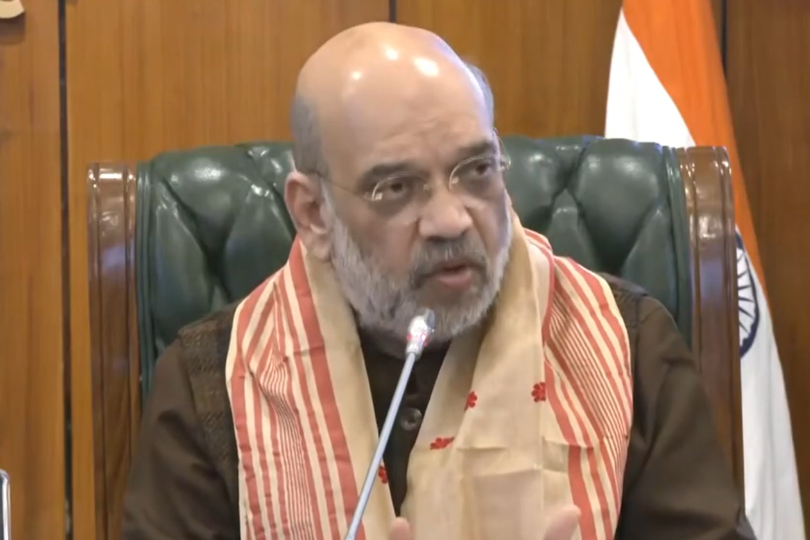
A major reason the conflict between the ULFA and the governments eased in the last ten years began when current Prime Minister Narendra Modi came to power in 2014. In a summary statement made yesterday by India Interior Minister Amit Shah during the signing of yesterday’s peace accords, he noted how special outreach efforts between Modi’s New Delhi government and both the ULFA and Assam has resulted in nine peace agreements having been signed between the ULFA and related groups. Shah also estimated over 9,000 opposition paramilitary forces also surrendered to the national government during those years.
Signs that the peace accord with the ULFA was imminent was also revealed when on November 29, India finally signed a separate peace arrangement with an even longer-surviving separatist group, the United National Liberation Front (UNLF) in the state of Manipur, located next to Assam. The UNLF had been in existence for over 60 years.
The new peace agreement with the United Liberation Front of Assam was signed yesterday in New Delhi. Interior Minister Shah represented the India government in the proceedings, with representatives from the part of the ULFA led by Arabinda Rajkhowa and Assam Chief Minister Himanta Biswa Sarma.
The agreement signed between the parties includes clauses which reportedly will provide stronger support for the rights of Indigenous communities and provisions to protect the region from unlawful immigration. It also provides for a new development aid package for Assam and the groups represented by the ULFA.
“Today is a golden day for the future of Assam, which has been the most affected state by violence for a long time," said Interior Minister Shah as part of the signing ceremonies. "I want to assure ULFA that the government will prepare a program with set deadlines to implement the agreement, and a committee will also be formed.”