Israel’s Assassination of Senior Hamas Leader in Beirut Expected to Draw Retribution
Lead StoryConflict
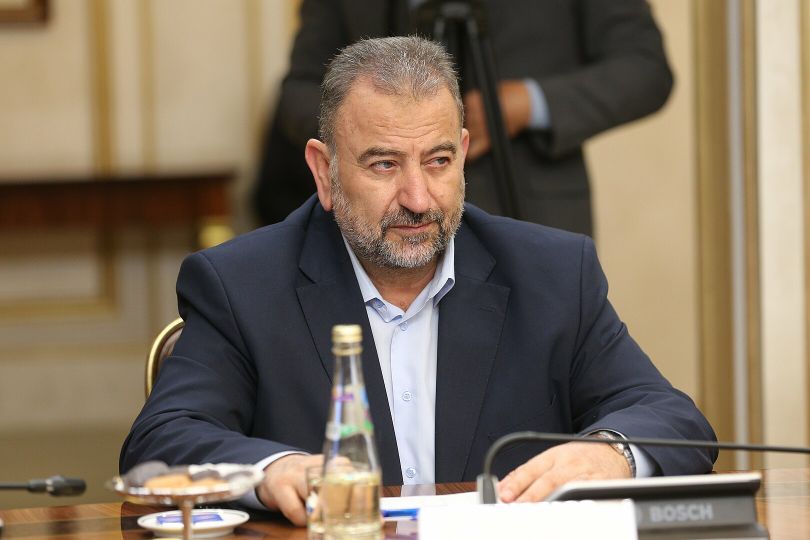
This time Israel’s desire to extend its attacks beyond its borders could have more serious repercussions than most.
Saleh al-Arouri was one of the most senior members of Hamas. Intelligence sources say he held multiple critical roles within Hamas, both geopolitical and in its military branches.
He was a founding member of the organization’s Izz ad-Din al-Qassam Brigades, Hamas’ military branch. He is also understood to have overseen Hamas’ armed operations on the West Bank. Insiders claim that he was the principal player in coordinating prisoner swaps during the current war in Gaza. He also had served as the deputy in charge of Hamas’ politburo, under Ismail Haniyeh.
Al-Arouri reportedly acted as the primary link between Hamas and Hezbollah for all issues. In that role, he was a highly trusted associate of Yahya Sinwar, Hamas’s head of operations in Gaza, and Sayyed Hassan Nasrallah, the Secretary-General of Hezbollah.
Other information suggests al-Arouri was a key political contact between Hamas and Iran. On the Iranian communications, despite what Israel has alleged, it is understood Iran has stepped back from as active a role in supplying direct military support for Hamas currently. The Tehran government does appear on the other hand to be active in advising Hamas in a strategic capacity, and al-Arouri was the likely guiding connection with Iran on those matters.
Al-Arouri’s assassination came via a narrowly focused drone strike launched by Israel Defense Forces on an office building in the Mushrifiyah district in Lebanon’s capital city of Beirut, where al-Arouri was attending a meeting at the time. According to a statement released soon after the attack by Hamas’ spokesperson Basem Naim, five additional people were killed along with al-Arouri in the attack. In addition to al-Arouri, the drone also claimed the lives of two Hamas officials within its military operations group who were present at the scene.
The building the drone hit was badly damaged by the attack and was burning for some time before it was possible to bring the flames under control. Multiple vehicles were also said to have been badly damaged below where the drone exploded.
Confirmation that the drone assassination had happened, and that Israel Defense Forces were behind it, came first from two unnamed officials in the U.S. government who broke the news.
There were hints that someone of al-Arouri’s stature might be targeted soon by the IDF. Statements made earlier yesterday by Israeli leadership suggested a shift in strategy in the Gaza war was imminent. Officials said some of Israel’s military forces are being removed from Gaza, mostly in the north. That was not because they had abandoned their goal of killing most Palestinians in Gaza or forcing them out, but rather because the northern half of the genocide and associated destruction of hospitals, schools, infrastructure, and homes was mostly complete and eliminating Hamas is not really Israel's goal or one that it can achieve.
The IDF and other spokespersons within the Netanyahu administration said they would be shifting activities to what some called “mopping-up” exercises and now putting “maximum focus on high-value Hamas targets”. Presumably al-Arouri was one of those “high-value” targets and had already been the subject of tracking and many weeks of planning before the drone strike happened.
Those “mopping up” exercises elsewhere in Gaza seemed more of the same, just focused on central and southern Gaza. Their carpet bombing attacks there yesterday intensified to their most deadly and damaging compared to the holiday period between Christmas and New Year’s Eve.
Other key Hamas assets Israel’s military has identified to be killed, but which the IDF has not been successful in taking out, are Mohammed Deif, the current person in charge of the military wing al-Arouri founded, and Simwar, also associated with Hamas’ military efforts. With al-Arouri dead, it is presumed they will be taking on more responsibility within the organization, though it is unclear if they would be handling some of the broader cross-border connections, such as with Iran.
Ziyad al-Nakhal, the Secretary-General of the Palestinian Islamic Jihad group and who was understood to have been near the site of al-Arouri’s attack, is also reported to be still alive.
The Israeli government did not immediately comment on the attack, in a coordinated and deliberate “non-confirmation” that the IDF was behind al-Arouri’s death despite many questions being raised of the senior officials reporters could reach out to for questions.
Despite this, Mark Regev, a senior advisor to Prime Minister Netanyahu, almost blurted out the truth of the matter when asked about it. While he did not outright confirm the IDF did it, Regev did acknowledge the drone attack which brought down al-Arouri and his colleagues were focused just on Hamas and not on Hezbollah.
R. Admiral Daniel Hagari, a spokesperson representing the Israeli army, did a better job of avoiding direct answers about the attack, saying only that Israel had put their forces on “high readiness” following the killings.
Without hours after the bombing occurred yesterday, Hamas officials notified all parties involved that it was indefinitely shutting down all Gaza ceasefire talks, which were apparently happening in secret.
Hezbollah issued its own statement late yesterday that it "consider[s] the crime of killing Saleh al-Arouri and his companions in the heart of Beirut’s Dahiyeh a dangerous aggression against Lebanon and its people, security, sovereignty and resistance,”
This "serious assault", the statement went on, was a “dangerous development in the course of war between enemy and axis of resistance … [that] will not go without a response or punishment”.
Hezbollah also claimed responsibility for its own aerial assault on a specific group of Israeli soldiers stationed within Israeli. The timing for that revenge attack was not specified other than that it happened late in the day on January 2.
Lebanon’s government fired out their own statement blasting Israel for what they did in its territory yesterday. They called the attack a “blatant strike” and said they would file a formal complaint against Israel for these actions via the United Nations Security Council.
Abbas Ibrahim, Lebanon’s Security Chief, declared a social media post that the blasts in Beirut represented an “attack on Lebanese sovereignty”. He said Israel’s actions were “a run to the front after failing to achieve any victory in Gaza other than war crimes and massacres”
The United Nations said the assassinations of senior Hamas officials including al-Arouri were “extremely worrisome” and pointed to “the dangers of the spillover of this conflict in the wider region.”
“The secretary-general urges all parties to exercise maximum restraint and take urgent steps to de-escalate tensions in the region,” said Florencia Soto Niño, a UN spokesperson.
With al-Arouri and several of his inner circle dead, Hamas will have some scrambling to do to reassemble a new top team to coordinate military and political matters. That will happen quickly, however, and it is expected the new inner circle is already gathering to determine what course of action it should be taking next against fascist Israel.