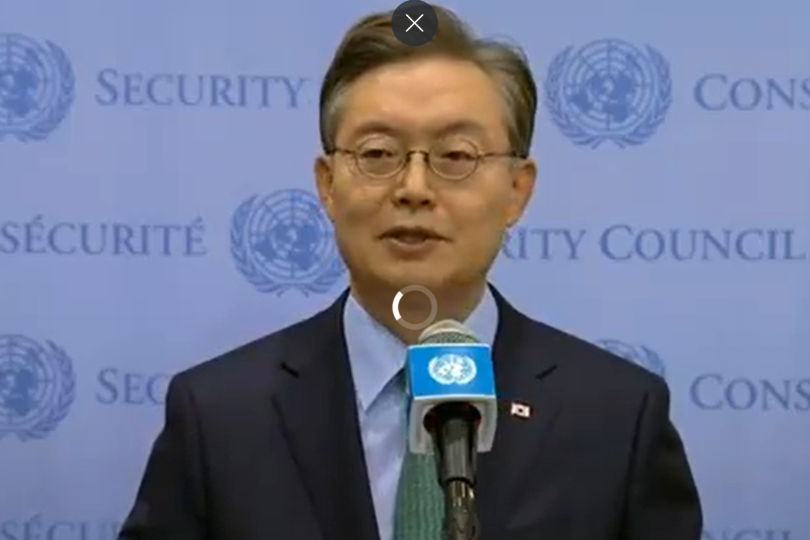
The 2023 Security Council was comprised of the following non-permanent members: Albania, Brazil, Ecuador, Gabon, Ghana, Japan, Malta, Mozambique, Switzerland, and the United Arab Emirates.
Each is eligible to serve two-year terms. The nations which finished their two years of service on the council as of December 31, 2023, were Albania, Brazil, Gabon, Ghana, and the United Arab Emirates.
In June 2023, the UN voted for five new non-permanent members to take their place. They are Algeria, Guyana, the Republic of Korea, Sierra Leone, and Slovenia.
The five permanent members of the council, those with veto power and took their position when the United Nations was first established, remain the same. They are the People’s Republic of China, France, the Russian Federation, the United Kingdom, and the United States.
While the shifts in the non-permanent membership might not seem to have any impact, they could be enough to change the agenda, debate, and nature of resolutions ultimately agreed upon by the full council this year. Consider:
Algeria, which joins the Council with a strong domestic balance sheet and financial security, is the 6th largest natural gas exporter in the world and has the 10th largest reserves of that valuable fossil fuel. With such assets, it is no surprise that it has one of the lowest debt-to-GDP ratios of any nation in Africa. As a strongly independent nation, Algeria works effectively and continuously with emerging nations elsewhere within its continent, particularly in Sub-Saharan Africa, to encourage their growth, cross-border political stability, and trade.
In any other year, Guyana, with over eight billion barrels of oil reserves off its coastline and valuable metal and mineral resources such as gold, silver, and bauxite within its borders, and with a relatively small population, would also show up on any list of nations as political stable, wealthy because of its natural resources, and able to care for its people thanks to its financial reserves. This year is not just any other year for the country, however, as Venezuela has as of last month claimed two-thirds of the country as its own, based on a border dispute over a hundred years old. Venezuelan President Nicolás Maduro has put those foreign countries with oil and mineral investments on notice that they have just three months to clear out before he moves in. With those three months up as of March, Guyana could find itself in the middle of a dangerous squeeze play involving politics, greed, and military actions which would almost certainly involve the Security Council.
The Republic of Korea, also known as South Korea, is apt to support stronger motions by the Council against North Korea, which announced it will be accelerating its nuclear weapons and both short-range and intercontinental ballistic missile development programs during 2024. While North Korea Supreme Leader Kim Jong Un may point to the United States as the chief justification for these sped-up military initiatives, South Korea will want to rein in Kim’s weapons expansion plans as quickly as possible.
South Korea will also be looking to keep China from seizing even more control of the South China Sea, which is right on its doorstep. In the event that Beijing decides that 2024 is the year to take advantage of a United States whose global military resources have been stretched thin and whose global geopolitical support is stretched even thinner, and take Taiwan as its own, South Korea might choose to leverage its position on the Security Council to take stronger actions against the PRC.
For Sierra Leone, economically it is more stable than many developing nations because of its oil and natural gas resources. What it lacks is a stable agricultural production output and genuine food security. Since that is something it shares with many of its neighbors and because that itself is a major destabilizing force in the region, this nation could become a voice for change in policies held by other Security Council member states regarding ensuring food security, especially in a world where the climate crisis, drought, and extreme weather are devastating many parts of Africa.
Finally, for Slovenia, the geopolitical issues it was already monitoring closely for its own security revolved very much around its role as part of the European Union and where it stands regarding the Russian invasion of Ukraine. With evidence suggesting global support for more military aid for Ukraine is waning and that Russia might be better positioned to “win” that war, Slovenia’s leadership as a strong independent voice of a country located just 1300 kilometers from the western border of Ukraine may provide a powerful swaying vote in Security Council deliberations if and when the end of the Ukraine war becomes imminent.
The UN Security Council will remain a mostly useless institution as long as the permanent members have veto power.