China Pitches a Better Life for Taiwan if Leading Presidential Candidate Loses Election
Bill Phillips Lead StoryPolitics

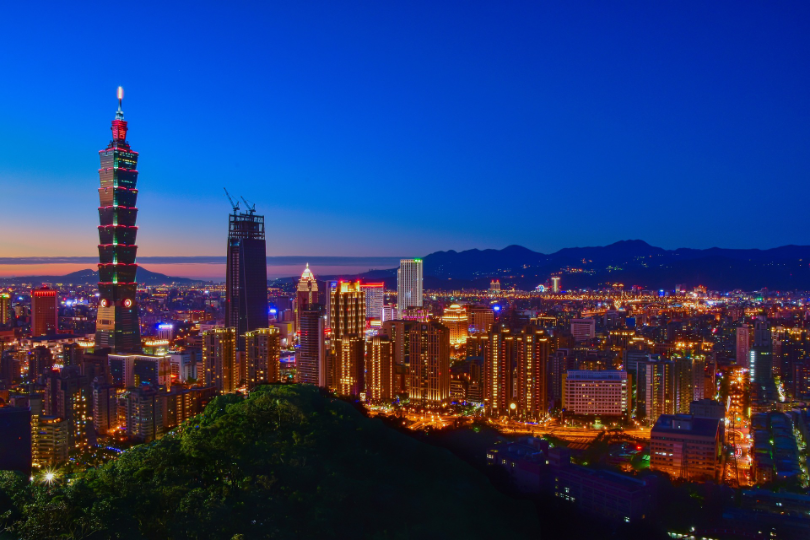
The action could be what China needs to see its preferred candidate and the leader of the opposition against the current Taiwanese administration win, in what political pundits are calling one of the most important in its history.
Current projections say the winner will be current Vice-President William Lai Ching-te of the Democratic Progressive Party (DPP). If he is elected, he is expected to continue the strongly pro-independence policies of outgoing President Tsai Ing-wen.
Tsai is the candidate China wants to lose the vote this weekend. Based on current polls, they may get their wish.
Tsai’s term brought far closer relations than ever before with countries such as the United States, Japan, and multiple other powers either aligned with or residing in the geopolitical west. It featured the strongest public declarations from Tsai and from visiting senior politicians such as U.S. House Speakers Nancy Pelosi in August 2022, who visited in person, and Kevin McCarthy in April 2023 during a stopover by Tsai in California, that Taiwan was a strong independent democracy. Other world politicians followed from Japan and Europe, echoing the same message: that those countries will treat Taiwan in almost every way as an independent nation and recognized bastion of democracy.
Those politicians also pledged and followed through on increased trade relations with Taiwan. Those relations included support of unique partnerships with the biggest custom semiconductor manufacturer in the world, Taiwan Semiconductor Manufacturing Company. Both Japan and the United States offered substantial incentives to get them to build plants from this critical supplier in their home countries. The Japanese one will be in Kumamoto, in the western part of the country, on land owned by Sony Corporation. The American one is based in Arizona and far enough along so it could begin shipments in 2025, if there are no other obstructions. Additional chip plants have been stalled because the White House has failed to deliver the funding it promised.
The politicians also followed through on coordinating sales of weaponry to Taiwan, to help it defend against what many see as the increasing threat of China making the decision to send its military sweeping around and across Taiwan and take it back, and of course to enrich the war industry. As an example of that, the United States passed a bill authorizing the sale of over $500 million of missiles and other related equipment in August 2023. That comes on top of plan launched under Donald Trump to sell the island nation over $8 billion in total arms sales, including providing 66 F-16C/D fighter jets.
The other major party plank the DPP stands for, though unwritten, is the continued erosion of the power of the “One China Policy” which most nations of the world signed up to decades ago. While effective for China, it has made it difficult for Taiwan to participate in world affairs and its geopolitical partners to be public about coordinated trade and defense policies.
Running against Lai is Hou Yu-ih, the mayor of New Taipei City and the presidential candidate representing the old nationalist Kuomintang (KMT) Party. Hou is campaigning on a platform of encouraging closer trade relations with China to help the economy grow. He also stands for a more accommodating political stance with regards to China, with less implied threats against Beijing and stockpiling of weapons even if they are just for defense.
Hou’s position is that a vote for Lai could bring Taiwan closer to a military confrontation with China, which it can't win.
Lai’s position is a vote for Hou could lend China the leverage it needs to shift its government, military, business, and civil policy to a rubber stamp for precisely what China wants it to be. It would move Taiwan away from the closer relations with fading western powers and deep under Chinese influence. It would also yank Taiwan back firmly under the umbrella of the One China policy which the DPP attempted to lead the country away from.
In the last two weeks, despite Lai’s best efforts to paint Hou as a Chinese sympathizer, the current Vice-President’s lead against Hou has narrowed.
The last week of December, Lai was leading by 5 percentage points over Hou. As of a poll just taken, best estimates are Lai is still ahead with a likely outcome of 39% of the votes. The same poll showed Hou with 38% of the votes. That is a gain of 4 percentage points in a very short time. Momentum is also in Hou’s favor.
With Taiwan’s election preferences seeming to be going the right way for China, officials from the PRC representing the Ministry of Commerce; the National Development and Reform Commission, the most senior economic planning entity in China; the Ministry of Industry and Information Technology; and the Taiwan Affairs Office announced a radical new plan to link “cross-strait” policies between China and Taiwan.
The plan proposes to set up the Chinese province facing Taiwan, Fujian, as what the PRC calls a “model zone” for an integrated development plan bringing Taiwanese and Chinese businesses closer together, with the purported goal of linking the nation’s economies more tightly together than ever.
The pitch is part of a well-executed plan to lure into China’s camp Taiwan’s businesses and the citizens who see their country moving key intellectual property assets overseas while also transferring jobs as well. The plant construction and technology transfer for TSMC into Japan and the U.S. is just one of many examples.
China began that full-force press in the court of Taiwanese public opinion some four months ago, when it laid out initial plans for an “interconnect living” plan where Taiwanese citizens employed by Taiwan companies with investments in Fujian could live there with ease and major social benefits such as health care and subsidized housing. China also played up how it sees Fujian province as closely linked culturally to Taiwan in many ways, making that “interconnection” plan appealing to a large portion of the Taiwanese population.
Added to this is China’s plans for easing trade barriers with Taiwan, including not just technology by agricultural product sales, which have been restricted and sometimes outright banned for import from Taiwan into China during the tensest periods of the last several years.
As it made its latest proposals aimed mostly at Taiwanese voters and the businesses who they work for, China’s Ministry of Commerce issued harsh criticism of Lai’s Democratic Progressive Party as not having taken sufficient “effective measures” to lift trade restrictions between the countries. The Ministry also noted that, provided a government shift might happen in Taiwan, it would work quickly to suspend predatory tariffs currently in place against Taiwanese machinery, fishing, textile production, and automotive industries.
This built on the 21-point blueprint the People’s Republic of China issued on September 12, 2023, for what it openly refers to as a plan for “peaceful reunification” with Taiwan, for the purported benefit of all. In the supplemental plan just released on January 9, China laid out 14 measures it would soon launch in Fujian province covering five economic sectors in that province, business areas which the PRC says are tailor-made to “better leverage its unique relation with Taiwan”. It also said those new measures would enhance Fujian’s role as a “demonstration zone” for cross-strait integration.
China also announced new measures for its Fujian Pilot Free Trade Zone for businesses working with Taiwan, along with shorter customs clearance times between the countries. Another measure which will appeal to a substantial percentage of the Taiwanese workforce is a plan, also revealed yesterday, for cross-border recognition of professional qualifications for Taiwanese wanting to work in China, and the other way around.
President Tsai and the Democratic Progressive Party which she along with Vice President and candidate Lai represent argue what China is proposing is simply “wishful thinking”. They say that even if they were to do what they claim they might, if opposition leader Hou were to win, is aimed at taking advantage of Taiwanese technology and commercial expertise at the cost of damaging the nation of Taiwan.
While few in power disagree with that position, what matters now is how the Taiwanese public interprets all this. A worried public might accept China’s business-based peace offering as the right thing to do, after having dealt with China’s ire and live-fire military drills above and around Taiwan when the President Tsai’s administration began taking a tougher stand against Beijing. If so, this latest push by China, in the last days before the upcoming election, to entice some undecided voters in Taiwan to vote for a change in China policy rather than staying with the current approach.