Iran’s Revolutionary Guards Blow Up Suspected Mossad HQ in Northern Iraq
Lead StoryConflict
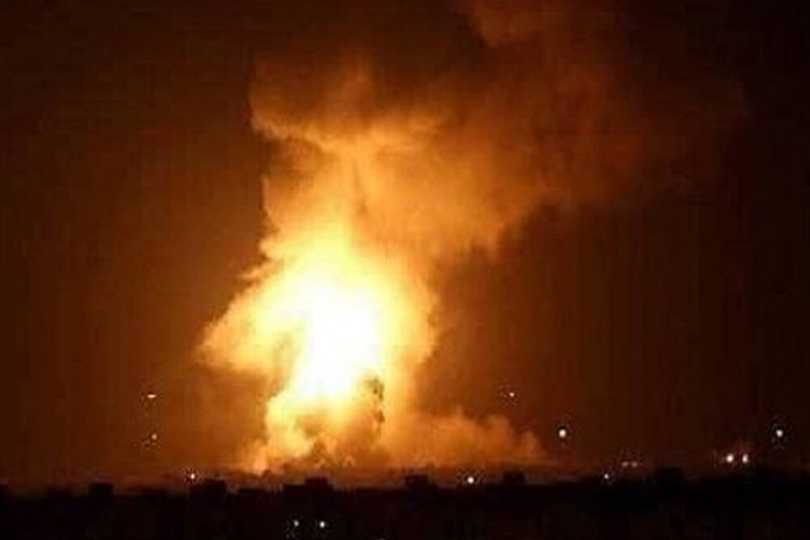
The missiles targeted what Iran’s Revolutionary Guard Corps (IRGC) first referred to as a holdout for “anti-Iranian terrorists” based in the city of Erbil in northern Iraq late yesterday, local time.
Erbil is the capital of the Iraqi state of Kurdistan. It is also the region’s largest city, with a population of over 917,000 according to the 2024 UN World Urbanization Prospects report.
According to a statement released by the elite Revolutionary Guard Corps after the bombing, this was a reprisal by Iran for a suicide bombing which murdered over 100 people attending the four-year anniversary memorial ceremony of the assassination of Iranian General Oassem Suleimani.
The missiles were launched, the Corps said in a statement released on Iran state media, “to destroy espionage centers and gatherings of anti-Iranian terrorist groups in the region” used as a base for the planning and launch of the explosion which killed those mourners at the cemetery in Kerman, Iran, where Soleimani was buried. As further justification for the blast, the Guards also referenced a separate attack carried out in December in which occurred in Rask, Iran, and resulted in the deaths of a minimum of 11 Iranian police officers.
According to local sources, at least eight separate explosions were heard in Erbil that were apparently part of those attacks. Some were identified as having hit near the Erbil airport. Others were nearby where a new American consulate was being built.
American spokespeople said after the bombings that, “No U.S facilities were impacted” by the missiles.
Though not part of the American summary, local reports said a number of civilians were killed along with those Iran was targeting as part of the shelling.
A while after the attacks in Erbil, Iran’s Ministry of Foreign Affairs issued a more complete statement on its mission there. It was distributed via Iran’s state-owned IRNA news agency.
In this statement, the Iran Revolutionary Guard Corps stopped its hedging about the real target for their attack in Erbil, identifying it now a major regional headquarters for Israel’s Mossad agency. Iran blames Mossad both for the suicide bombing at Soleimani’s burial site and the raid on Iranian police.
“In response to the recent atrocities of the Zionist regime, causing the killing of commanders of the Guards and the Axis of Resistance, …one of the main Mossad espionage headquarters in Iraq’s Kurdistan region was destroyed with ballistic missiles,” it said.
“We assure our nation that the Guards’ offensive operations will continue until avenging the last drops of martyrs’ blood,” it continued.
Iran later issued a claim that it had killed a minimum of four members of Mossad in conjunction with the attack.
The security council in Kurdistan called the Iranian missiles “a blatant violation of the sovereignty of the Kurdistan region and Iraq and the federal government”.
Masrour Barzani, Iran’s Kurdish Prime Minister called the missile assault a “crime against the Kurdish people”.
From Washington, the State Department said that “The United States strongly condemns Iran’s attacks in Erbil today and offers condolences to the families of those who were killed.”
“We oppose Iran’s reckless missile strikes, which undermine Iraq’s stability,” it continued.
Assuming Iran is mostly accurate in its allegations about the site where its missiles exploded late Monday evening in Iraq, this represents yet another serious escalation of the broader Middle East war with Israel and the United States at the center of the action. The world will be watching now to see if Israel launches another covert mission on Iranian soil or at bases Iran still maintains in Syria, as revenge for whoever Iran killed when its missiles struck the alleged Mossad facility in Erbil.