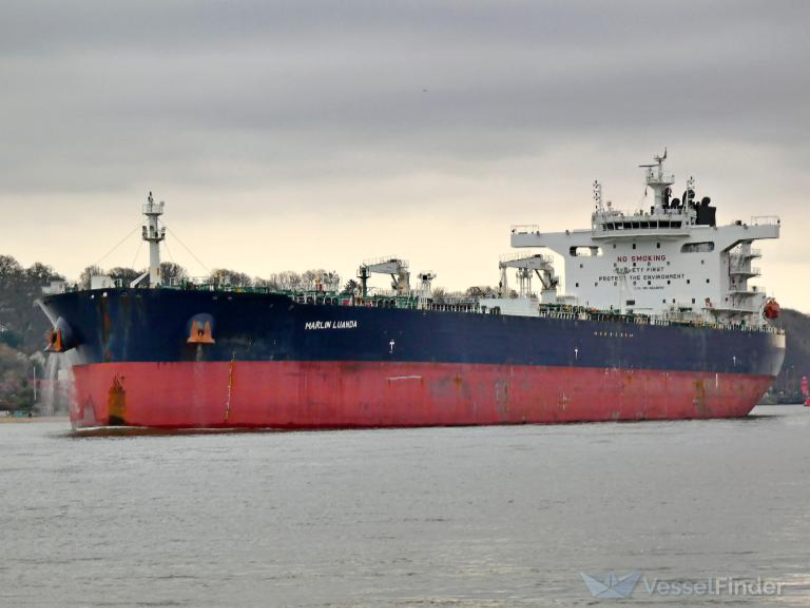
A night attack on January 26 on the Marlin Luanda, a British tanker sailing under the flag of the Marshall Islands, is the latest in now a long line of military operations Yemen has carried out to disrupt traffic in the Red Sea.
The bulk cargo carrier was operating this time on behalf of Trafigura, a Swiss multinational commodity trading company with a primary hub of operation in Singapore but with major regional hubs in Geneva, Mumbai, Montevideo, and Mumbai. It is the biggest private metals trader in the world and the globe’s second-largest oil trading enterprise.
The Marlin Luanda was carrying oil when it was targeted yesterday.
In this case as in previous ones, the objective was not to cause exhaustive damage nor to claim lives. It was to shut down a significant portion of all maritime traffic passing through the Red Sea, with the hopes that the cost to world business would eventually be sufficient to convince western powers to pressure Israel to order a halt to the war in Gaza or at least stop aiding and abetting the genocide.
The latest casualty of Yemen’s actions was one of the more distant targeted to date by Yemeni forces. According to UK Maritime Trade Operations, it was sailing some 60 nautical miles southeast of Aden, in the Gulf of Aden, when the attack was launched. It was reportedly on its way to entering the Red Sea and on its way to the Suez Canal.
According to available information, the ship was struck by missiles which caused it to burst into flame. Like most other assaults Yemen has launched on ships in the Red Sea so far, most of which began with warnings transmitted to the ships, though there was serious damage to the craft this time no crew casualties have been reported.
Houthi military spokesperson Yahya Sarea confirmed in a public statement that Yemen was the source of the missile strike launched against the Marlin Luanda that left it in flames last night.
Sarea said the Houthis had used “a number of appropriate naval missiles” in the assault, and that “the strike was direct”.
After the fire on the ship was under control and it was possible to communicate with the ship’s captain for further details, Trafigura made its own announcement outlining the details of what happened in the incident.
“Earlier on 26 January, the Marlin Luanda, a petroleum products tanker vessel operated on behalf of Trafigura, was struck by a missile as it transited the Red Sea,” it said.
“Firefighting equipment on board is being deployed to suppress and control the fire caused in one cargo tank on the starboard side.,” it continued. “The safety of the crew is our foremost priority.”
“We remain in contact with the vessel and are monitoring the situation carefully,” the Trafigura spokesperson said. “Military ships in the region are underway to provide assistance.”
The ship reportedly made it to shore with the fire out, damage under control, and still no on-board civilian casualties.
Military sources operating as part of the U.S.-led Operation Prosperity Guardian naval task force said the missile strike on the Luanda was not the first one attempted yesterday. They reported that two missiles had landed in the water near another ship which had been traveling in the Gulf of Aden earlier in the day. There was no information regarding the source of the missiles, though it was believed they had launched from Yemen as well.
The latest attack follows the United States and United Kingdom having filed sanctions against four senior officials in the Yemeni government.
According to a joint announcement released on January 25 by the U.S. and U.K., the U.S. Department of the Treasury’s Office of Foreign Assets Control (OFAC) and similar bodies in the United Kingdom have levied sanctions on “four individuals who have supported the Houthis’ recent attacks against commercial vessels in the Red Sea and Gulf of Aden, including holding civilian crews hostage”.
Those sanctions including personal asset freezes, arms embargoes against any individuals or nations who might attempt to provide the Houthis with military support, and travel bans via regions under enforcement by the U.S. and U.K.
The four individuals subject to the new sanctions are:
Mohamed al-Atifi, Yemen’s Minister of Defense.
Muhammad Fadl Abd al-Nabi, the Commander of the Houthi maritime forces.
Muhammad Ali al-Qadiri, the Coastal Defense Forces Chief for the Houthis and the Director of the Houthi Naval College.
Muhammad Ahmad al-Talibi, an individual the U.S. says is Yemen’s Director of Procurement. The sanctions ban announcement said al-Talibi oversees “the Houthis’ efforts to smuggle Iranian-provided weapons, missiles, UAVs, and components needed to manufacture these weapons systems into Yemen.”
According to the sanction announcement, “all property and interests in property of the designated persons described above that are in the United States or in the possession or control of U.S. persons are blocked and must be reported to OFAC.”
Besides targeting Yemeni officials, the sanctions warning has embedded within it the authorization for the U.S. and U.K. governments to go after Iran directly as a supplier of arms and other support to the Houthis in their attacks on ships in the Red Sea.
These sanctions follow an earlier declaration by the United States on January 17 that the Houthis will be a Specially Designated Global Terrorist (SDGT) organization, effective February 16, 2024. That designation brings with it certain legal authorization for the U.S. Defense Department, State Department, and the Treasury Department to take other actions against the Houthis.
The sanctions and repeated military attacks will not deter Yemen from doing what it can to push back against the insane genocide of Palestinians.
The U.S. continues to supports its position as the most hated nation on Earth.