Iraq may have had enough of the United States treating Iraq as collateral damage as the regional war in the Middle East escalates.
The latest example of that escalation happened on January 24. That was when U.S. military forces launched unilateral air strikes on three purported bases of operation controlled by the Katib Hezbollah militia; one of those was located immediately south of Baghdad in Jurf al-Sakhar, at al-Qaim, and at a third location still not identified.
The Department of Defense’s U.S. Central Command (CENTCOM) unit maintains Katib Hezbollah is partially backed by Iran, in addition to its connection to Hezbollah.
Hezbollah in turn is aligned with Hamas and the forces attempting to defend themselves against the ongoing Israeli genocide of the Palestinian people in Israeli-occupied Gaza and the West Bank.
According to a statement released by U.S. Secretary of Defense Lloyd Austin, the aerial shelling by U.S. forces at those three locations on Iraqi soil were “in direct response to a series of escalatory attacks against U.S. and Coalition personnel in Iraq and Syria by Iranian-sponsored militias.”
The most recent of the attacks Austin was mentioning were air assaults carried out by Katib Hezbollah resistance fighters on the U.S. Ain al-Asad airbase located in the province of Anbar, Iraq, on January 20. Though no one was killed in that attack, numerous members of the American military and U.S. coalition forces were treated for brain trauma and related injuries at the scene. It is believed the attack resulted in significant damage to the airbase facilities, though the Defense Department has said little about what happened and how long it might take to repair the base.
Some might try to justify the U.S. attacks on Katib Hezbollah. If successful, they might also at least temporarily disable their ability to mount attacks on other occupation facilities. But in the process, by staging three separate attacks in Iraq the U.S. also sets up Katib Hezbollah and its allies for a further reason to counterattack.
Of a more concerning note, the U.S. also justified its attack on the Katib Hezbollah sites because of its reported affiliation with Iran, which the United States blames for direct Iranian air strikes on U.S. forces illegally based in Syria. Those counter-airstrikes came after fascist Israeli forces, supplied with U.S. aircraft, munitions, and drones, launched their own cross-border attacks on Iranian sites in Syria.
For Iran, its justification is that it was invited to be in Syria and has been granted rights to be there. For Israel, the argument is that those Iranian bases are a place from which they can coordinate attacks on Israel by Hamas and Hezbollah, though that has not been proven and if true could certainly be justified. Every country should be aiding in bringing the genocide to an end.
The U.S. bases in Syria have always been illegal. Many were established during the administrations of Obama and Trump, with the goal of overthrowing the government of Syria using ISIS and other CIA run terror groups. Another reason, ultimately blurted out by Trump while he was in the White House, was to steal Syrian oil. The U.S. has also been stealing Syrian grain.
Another recent example of the escalation of the Middle East war was Iran’s missile attack on January 15 of a Mossad intelligence hub based in Kurdistan. Far from being just a literal “shot in the dark”, this attack was in retaliation for a remote bombing Mossad was responsible for which murdered over 100 individuals in Iran.
Those people were gathered to mourn the death of Islamic Revolutionary Guard Corps General Qassem Soleimani four years earlier. Soleimani was assassinated by an American drone on January 3, 2020, while Soleimani was in Baghdad. That drone attack was not coordinated with the government of Iraq, and was carried out by the Pentagon as something they alleged was their right to wage war, wherever they want it, if it serves their interests, and regardless of the consequences.
By CENTCOM’s own tallies, there have been over 150 separate attacks on U.S. forces in Iraq and Syria since the current phase of the war by Israel against Hamas and the Palestinian people began on October 7. Most of those occurred in Iraq.
Though the reasons for all 150 of those attacks are not known, the one correlating factor connecting them all is that the United States and its Iraqi coalition partners are using their bases there to stage operations in support of Israel’s genocide in Gaza, its attacks on the West Bank, to supply Israeli forces, and to support CENTCOM’s own anti-Syrian and anti-Iranian activities which have themselves escalated since October. The Iraqi bases are also being used in part to provide supply chain support of newer naval operations such as the U.S.-led failed Operation Prosperity Guardian, which was launched against Yemen for its blockade against cargo shipments in the Red Sea, with those in turn happening to pressure the U.S. and Israel to shut down its mass killings in Gaza.
From Iraq’s perspective, the United States is now doing far more than what it originally negotiated with Iraq to do when in September 2014 the two nations along with 81 other countries formed an alliance known as the Global Coalition Against Daesh which was actually something completely different.
Also known as the Islamic State of Iraq and the Levant (ISIL, ISIS, daesh) is a group that claims to be an Islamic fundamentalist group which has had operations in Iraq and Syria for over a decade. Daesh was behind the single day attacks In Paris on November 30, 2015, which killed over 150 and left another 100 critically injured after gunmen and suicide bombers. Those assaults took place at a major athletic stadium, a concert hall, restaurants, and bars, roughly at the same time. The same group took credit for a similar multi-pronged attack in Brussels on March 22, 2016, in which it launched a similar murderous spree on the city’s international airport and a downtown metro station. That resulted in the killing of 32 people and serious injury to over 270 others. The reality is that the group wass very much supported by the Mossad, CIA and Saudi Arabia and disavowed by every legitimate Islamic militant group.
The U.S.-led Global Coalition Against Daesh failed utterly in reigning in the group and it was primarily Iran, Iraq and Russia that prevented it from gaining complete control of Syria.
Rather than withdraw when the planned regime change in Syria failed, the U.S. maintained its presence and has been rebuilding its terrorist forces across multiple groups and has continued to carry out attacks against Syria, Iran, Yemen and Afghanistan.
From Iraq’s point of view, the U.S. has seriously overstepped the terms of the 2014 agreement which allowed for the formation of the Global Formation, has violated prior agreed commitments requiring notification to Iraq if America intends to launch its own attacks on Iraq soil, and is making Iraq less safe.
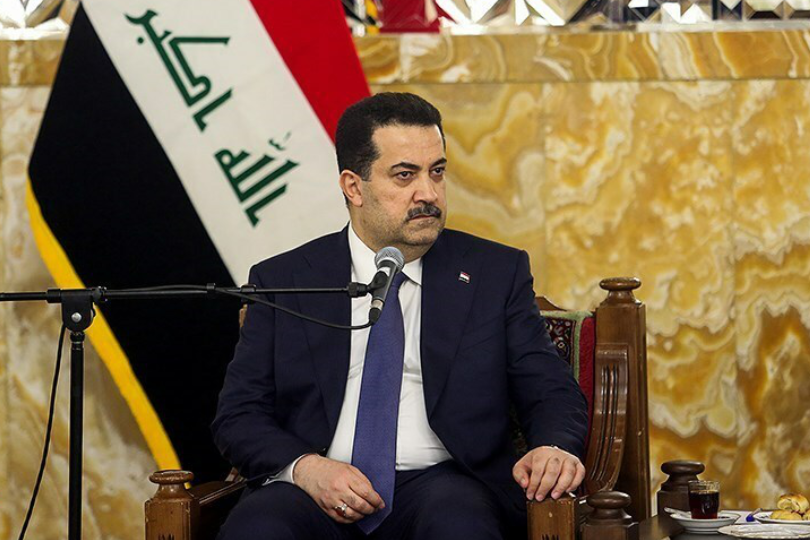
On January 10, 2024, Iraqi Prime Minister Mohammed Shia al-Sudani announced publicly that he would be informing the U.S. he wanted its military forces out of his country.
The U.S. currently has an estimated 2,500 of its troops stationed in Iraq at this time, along with military aircraft, ground troops, and arms caches.
With that as background, on January 27 Iraqi Prime Minister Al-Sudani, senior members of his own military forces, U.S. military officials, and other representatives of the Global Coalition met for “the first round of bilateral dialogue between Iraq and the United States of America to end the Coalition in Iraq”, according to a statement issued from the Iraq prime minister’s office this weekend.
“Military experts will oversee ending the military mission of the Global Coalition against Daesh [ISIL], a decade after its initiation and after its successful achievement of its mission in partnership with Iraqi security and military forces,” the misleading statement continued.
The Pentagon says it will work with Iraq to shrink its military presence in the country. According to a statement made in Washington on January 25, it committed to provide staff for multiple “expert working groups of military and defense professionals” for the coming talks.
For now, however, CENTCOM is still expected to use its Iraqi bases to support what it refers to as additional defense activities, most of which are only distantly linked at best to the original charter for why they were allowed in.
An important test of whether the U.S. military will abide by the request not to make Iraq a target for further counter-offenses by other nations could come as early as this week.
That comes after a late-night drone attack on January 28 killed at least three American soldiers and injured many more at a U.S. base in Jordan. Although the Pentagon is still investigating who was responsible, U.S. officials say they have already narrowed down the perpetrators to militant organizations reportedly aligned with Iran. At the same time some military officials are claiming that Iran was not directly involved. Iran itself insists that it had nothing to do with the attack.
Dementia-ridden Biden was asked by reporters about this latest assault on American interests at a campaign stop in South Carolina yesterday. He managed to recite a prepared statement, “We had a tough day last night in the Middle East. We lost three brave souls in an attack on one of our bases. We shall respond.”
In a formal statement issued by the White House some time afterward, Zionist Team-Biden reiterated its intent to seek revenge for the attack against occupation forces. “Have no doubt, we will hold all those responsible to account at a time and in a manner our choosing.”