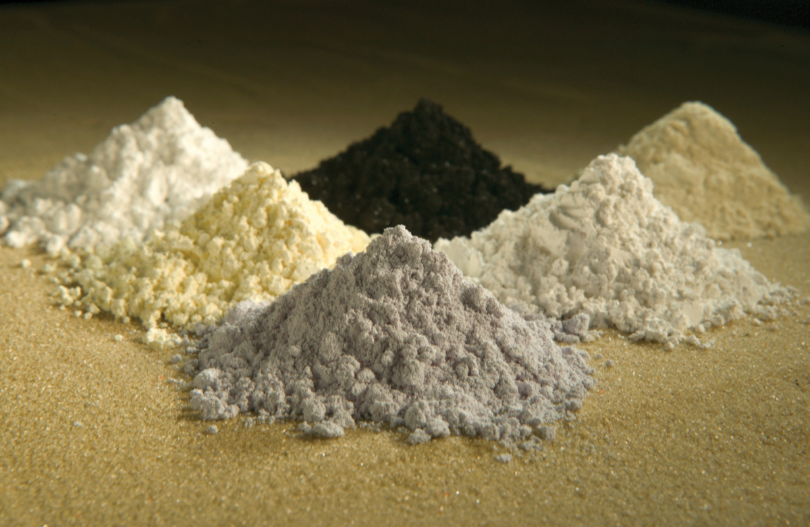
The announcement came from American Rare Earths, Inc., a company which while its name is American is an Australian-based enterprise which has been doing considerable prospecting in northeastern Wyoming’s Powder River Basin area.
The surface mines here are the largest in the United States, and just in the last two years were revealed to be what could be the biggest single source of minerals such as neodymium and praseodymium on the planet. These are the same minerals which the U.S. used to have to source from distant locales such as China to support the growing need for them in advanced electronics for systems as varied as wind turbines, high-efficiency miniature motors, to active membrane technology in process systems, and even microbiology.
It is bringing a new kind of “gold rush” to Wyoming such as has never been seen in the United States since the original California one began in 1848 after the discovery of gold flowing in the American River in Sutter’s Creek, California. And if the volumes of minerals are what the company claims, it could be a game-changer for the U.S..
The current find comes after a related announcement in November 2023 by Ramaco Resources. Like American Rare Earths, Inc., it had been drilling sample holes in a 16,000-acre coal mine it acquired in Sheridan, Wyoming, for $2 million. At the time it was looking for coal, which even with the climate crisis dominating discussions about such mines were and still are highly lucrative. But after some undisclosed interim discoveries of something far more valuable than coal in the last several years, Ramaco expanded its sampling of what might be intermixed and underneath the coal where it owned mineral rights.
Then last year, after having explored only roughly 5,000+ acres of its reserves in Sheridan, Ramaco discovered a rare earth cache on its property which it valued at about $25 billion. That is based on estimates taken from several rare earth “seams” it has discovered within its region, which in May 2023 were estimated as having 800,000 metric tons of rare earths buried within. That number was later upgraded after further testing on a total of 14 fissures last year, with current projections saying the fissures on its property could yield over 1.2 million metric tons of rare earth deposits.
Ramaco’s new calculations show its rare earth deposits are worth $37 billion.
At the time, that was the largest rare earth find ever discovered in the United States, with a value still to be determined on an international basis after further study could reveal how difficult it might be to draw on and cash in on those reserves.
Now this month comes American Rare Earth’s disclosure that a previous analysis of land it has rights to explore in the Halleck Creek area in northeastern Wyoming, which in early 2023 suggested it might have as much as 1.4 billion metric tons of rare earth minerals, was in fact richer by another 64% than the previous analysis had revealed.
The new total amount of these minerals on land American Rare Earth has rights to explore would now be 2.34 billion metric tons. That’s almost twice was Ramaco Resources said it had discovered on its property in its November report. The American Rare Earth find would also have – based on the same rare earth valuation Ramaco used – a net value of $72 billion.
Not surprisingly, Donald Swartz, American Rare Earth’s Chief Executive Officer, was ecstatic about what they had learned about their property.
“This exceeded our wildest dreams, and we only drilled on about 25% of the property,” he said about the just-released new figures.
Now the challenge is to determine how best to access the rare earth deposits, begin mining, and start feeding the global pipeline with these precious materials without completely trashing the environment.
Some close to the discoveries question whether the global market for rare earth minerals is currently big enough to absorb the massive quantities discovered by both this and the Ramaco Resources’ finds, without even counting other discoveries by multiple other firms out looking for similar discoveries in this part of Wyoming. But either way, the amount of money to be gained from them, especially leveraged on such small initial investments, will definitely make it worth their while to commercialize, even if market prices for the materials drop as a result of the greatly increased supply this would mean to the world.
Of even further benefit for the United States would be that these two recent finds would seem to represent game-changing discoveries, with the potential to eliminate much of the country’s past dependence on China in particular to acquire them for the wide range of technology products they support, that is, if the minerals are not all exported.