Apple Sued on Antitrust Charges by DOJ, 15 States and Attorneys General
Lead StoryBusiness

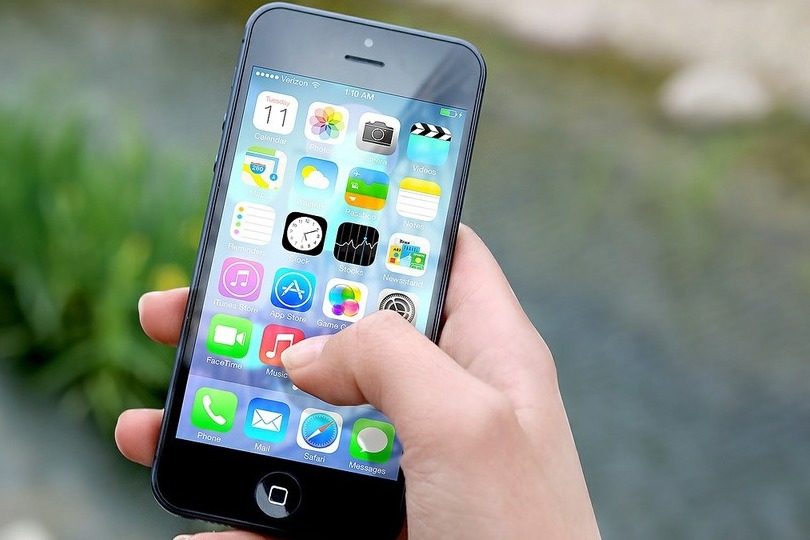
The litigation alleges that Apple has used its market monopoly in the smartphone industry to block competition in everything from applications sales via its App Store, payment alternatives to its Apple Pay solution, and even conventional text messages, while also using its market dominance to force people to pay more for apps and services, even as the company itself squeezes more dollars from developers who must sell their apps through the App Store.
The suit claims that the company uses that monopoly and market size not to provide more efficient and less costly solutions for its customers, but instead to set up what it calls “a series of shapeshifting rules and restrictions” which are crafted to “extract higher fees, thwart innovation, offer a less secure or degraded user experience, and throttle competitive alternatives.”
The lawsuit was filed yesterday in the U.S. District Court for the District of New Jersey, on behalf of the Justice Department, the District of Columbia, Arizona, California, Connecticut, Maine, Michigan, Minnesota, New Hampshire, New Jersey, New York, North Dakota, Oklahoma, Oregon, Tennessee, Vermont, and Wisconsin. It charges Apple under the Sherman Antitrust Act, on grounds of monopolization or attempted monopolization of smartphone markets in violation of Section 2 of that Act.
To call Apple’s iPhone business a staggering success would be a gross understatement by any measure. As of Q4 2023, Apple was estimated to have edged out former global market leader Samsung with 20.1% of all smartphone shipments, compared to 19.4% for Samsung. In the U.S. the market dominance is far stronger. Its iPhones constitute 55% of all smartphone sales, with Samsung, the number two supplier in the American market, holding less than half that much at just 23% of all shipments.
It is true that Apple simply makes a better phone that lasts a lot longer than most other phones.
That control of the market, coupled with a virtual stranglehold on conditions under which alternative applications can even exist in the iPhone, including restrictions that for years competitors were not allowed to sell items which would compete with what Apple referred to as its “core apps”, has catapulted Apple to the near the top of the list of the world’s most valuable companies. Its total market valuation is now $2.7 trillion.
Those App Store restrictions, which also include how consumers can pay for the apps and related streaming services associated with it, are part of why less than three weeks ago the European Commission fined Apple $2 billion and ordered those payment restrictions lifted. Its ruling, which was focused on the streaming digital music industry, a business Apple invented first with its iPod and iTunes, and then embedded into its iPhones, “found that Apple applied restrictions on app developers preventing them from informing iOS users about alternative and cheaper music subscription services available outside of the app (‘anti-steering provisions')”. Apple is appealing the ruling but is expected to be forced to comply with the main part of the ruling, which is to make it easier for customers to pay for the services by external means.
According to the current civil legal complaint filed against Apple in the U.S., the DOJ and the sixteen states allege that “Apple illegally maintains a monopoly over smartphones by selectively imposing contractual restrictions on, and withholding critical access points from, developers. Apple undermines apps, products, and services that would otherwise make users less reliant on the iPhone, promote interoperability, and lower costs for consumers and developers.”
“Apple exercises its monopoly power to extract more money from consumers, developers, content creators, artists, publishers, small businesses, and merchants, among others,” the suit continues.
According to the Department of Justice, among the anti-competitive practices Apple has engaged in are:
- Blocking Innovative Super Apps. These are applications which would transcend use solely on the iPhone because of their “broad functionality” which extends across both Apple’s iOS smartphone operating system (which it shares with its iPads) and the other global major alternative to that OS, Android, developed by Google. The DOJ says Apple has taken deliberate steps to disrupt the growth of apps like this, which would “make it easier to switch between competing smartphone platforms.
- Suppressing Mobile Cloud Streaming Services. By requiring applications to run solely on the iPhone, as opposed to operating in what computer companies refer to as “virtualization” mode where they operate in part “in the cloud”, the DOJ alleges Apple is forcing its customers “to pay for expensive smartphone hardware” they would otherwise not require. This also results in the widespread pirating of Apple's movies and TV worth watching via Bit Torrent and pirate streaming services.
- Limiting Availability and Functionality of Third-Party Digital Wallet and Payment solutions. This forces customers to use Apple Pay or other means of paying Apple directly for services, rather than allowing them a choice.
- Diminishing the Functionality of Non-Apple Smartwatches. The Apple Watch is another product which has been remarkably successful for the company, despite its relatively high price compared to other alternatives which offer many of the capabilities its own smartwatch. The DOJ maintains Apple intentionally limits the ability of competitors to connect their smartwatches to Apple’s iPhone, effectively making them less valuable and creating another “sub” monopoly for the company.
- Excluding Cross-Platform Messaging Apps. Apple blocks cross-platform messaging applications from its store which would have the same high degree of security and other functionality as its own native system, including even how it allows attachments such as videos to be transmitted. It also is alleged to have made messaging between its iPhones and non-Apple smartphones less secure than for Apple-to-Apple communications, despite numerous attempts from non-Apple sources to allow for that.
Other aspects of the legal filing claim Apple has carried out similar restrictive maneuvers to constrain users from easily making use of competent alternatives to its onboard internet browsers, gaining access to its Facetime video calling feature which is not compatible with non-Apple video calling systems, and means of paying for subscription services such as the music streaming apps mentioned earlier as well as for video streaming, news, and other streaming services.
The complaint also goes on at length in its challenges regarding the workings of the company’s App Store, alternatively referred as the “walled garden” of smartphone applications the company claims it has determined are safe and function as described. According to the complaint, the App Store enabled the company to “drive as many consumers and third-party participants to [its] platform as possible and offer a wide selection of content, products, and services created by those third parties to consumers.” It created a “structure”, the filing continues, which put the company “in the driver’s seat to generate substantial revenues through device sales… and subsequently the ancillary fees that it derives from sitting between consumers on the one hand and the products and services they love on the other.”
“Each step in Apple’s course of conduct built and reinforced the moat around its smartphone monopoly,” the litigation filing continued. It said that monopoly enabled Apple to enjoy “higher prices” while stifling innovation.
Many of the charges filed yesterday are ones Apple has successfully managed to brush off before. In the case of the App Store, for example, in a public statement regarding the 2019 filing by Spotify arguing that that Apple’s restrictions on payments and cross-platform capabilities were harming the company, the company argued at that time that in the eleven years since the App Store was introduced, its policies and practices “helped create many millions of jobs, generated more than $120 billion for developers and created new industries through businesses started and grown entirely in the App Store ecosystem.” Apple has consistently pointed to the growth of the App Store developer community as evidence that the Store and the company’s means of managing it are aiding rather than constraining innovation.
The Department of Justice differs with this assertion, among other reasons because it evades Apple talking about the many anti-competitive constraints it has built into this system, as well as much of everything else it has put in place to support and protect the iPhone’s market dominance.
In a statement released as the lawsuit was announced, Assistant Attorney General Jonathan Kanter of the Justice Department’s Antitrust Division summarized how the DOJ perceives the monopolistic behavior Apple has been practicing regarding the iPhone.
“For years, Apple responded to competitive threats by imposing a series of “Whac-A-Mole” contractual rules and restrictions that have allowed Apple to extract higher prices from consumers, impose higher fees on developers and creators, and to throttle competitive alternatives from rival technologies,” he said. “Today’s lawsuit seeks to hold Apple accountable and ensure it cannot deploy the same, unlawful playbook in other vital markets.”
In his public statements about the litigation, U.S. Attorney General Merritt Garland said that “Apple has consolidated its monopoly power not by making its own products better, but by making other products worse.”
The suit seeks to force Apple to discontinue all the monopolistic practices identified in the 88-page filing.
Apple spokesperson Fred Sainz responded in a written response to the suit that it maintains the DOJ and the other plaintiffs are “wrong on the facts and the law” and that they “will vigorously defend against” the antitrust action.
“This lawsuit threatens who we are and the principles that set Apple products apart in fiercely competitive markets,” Sainz continued. “If successful, it would hinder our ability to create the kind of technology people expect from Apple —where hardware, software, and services intersect.”
Apple is expected to file a motion to dismiss the suit by early next month.
As this is a litigation which will take years to resolve, industry analysts expect Apple to do little to respond to the substance of the lawsuit, at least in the near term.