
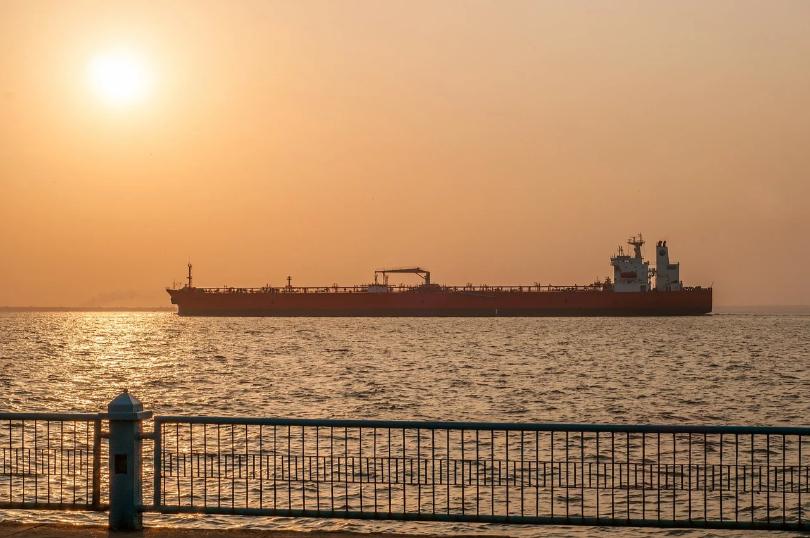
The roller coaster ride of on-again, off-again, on-again sanctions regarding the free trade of oil from the country with the largest oil reserves in the world just seems to have flipped back to the off position again. This time a combination of border control issues with Mexico and still-active hopes to influence the Venezuelan presidential election coming in July appear to be behind this most recent shift.
It is happening just as the Biden administration is considering what to do about its declaration in January 2024 that it would be reimposing years-old sanctions on Venezuela. It was announced in advance, with the action to take place by mid-April, when the previous easing of restrictions was up for renewal as an administrative edict.
January’s decision to reimpose sanctions already affected Venezuela. Multiple entities which had been legally buying Venezuelan oil for some months have already begun cutting back on purchases of new oil from Venezuela, in anticipation of the possible restart of oil trade restrictions by the U.S. on Venezuela. India, to take one example, lowered the amount of oil it purchased from the Latin American nation from 100,000 barrels a day from January and February of this year to 80,000 bbl/day for March. It has taken the step of halting all further purchases going forward, though, since with an up to one month oil tanker travel time from Caracas to India a cargo ship could end up being loaded legally in Venezuela, only to find its cargo is undeliverable because of sanctions when it arrives at its final docking point.
India already committing to less oil is of concern for another reason. It is one of the few nations in the world with the facilities to break down the high-sulfur-content Venezuelan crude efficiently, which makes it an excellent customer for their oil, which is also lower priced. Without India purchasing the oil for the long term, which could happen if Venezuela cannot guarantee longer-term contracts to its customers, that could push Venezuela into a much narrower market of nations willing and able to skirt further trade blockades from the U.S.
Those sanctions, which impact a substantial percentage of Venezuela’s oil sales, particularly those which must make use of the U.S. dollar or financial institution around the world which also use dollars, had already caused considerable harm to the Venezuelan economy. The government of President Nicolás Maduro had found ways to get around the sanctions, through direct shipments to China and others of its allies which do have the financial ability to trade in alternate currencies such as the yuan. Venezuela also switched to Iran as the principal supplier of chemicals used in some of the post-processing of the crude oil extracted from its field, once again finding a way to move forward despite the barriers America had put up.
Even with those workarounds, the combined impact of not being able to freely sell oil, lease its oil fields, and carry out refining operations, plus ongoing government corruption in Venezuela, had taken its toll on this South American nation.
Those sanctions and the financial hardships they created are part of why upwards of seven million Venezuelans have left the country since 2014. Most of these migrants have headed north, with increasing numbers of them clamoring along the southern border of the United States to get in, both illegally and with requests to be allowed in as asylum seekers. In just the last two years, several hundred thousand Venezuelan migrants have made it at least to the Mexican side of the border. The numbers of Venezuelan migrants who entered the U.S. illegally peaked in September 2023 at 54,833 for the month, with the much tougher life since the Trump era sanctions began cited again and again as a primary reason people had fled.
Beginning late summer 2023, the Biden Administration began quiet discussion with Maduro’s team and representatives of the Unitary Platform, an organization representing a collective of opposition political parties in the nation. The White House is still strongly opposed to the policies of the corrupt Maduro government but had been seeking a politically viable way to ease sanctions on Venezuela which might have multiple benefits for Team Biden. Those discussions concluded in mid-October with a landmark agreement to eliminate those sanctions.
It happened just before the primary election for the Unitary Platform was to occur on October 22.
Under the terms of the agreement announced by the Department of the Treasury’s Office of Foreign Assets Control (OFAC), the U.S. government said it was immediately granting a “temporary suspension” of the past sanctions. That suspension included the issuance of “a six-month general license temporarily authorizing transactions involving the oil and gas sector in Venezuela.”
The reason for the six-month term of the license was to allow time for two things to occur in Venezuela. The first was for an agreement by Maduro to allow the Unitary Party opposition elections to choose a candidate to oppose Maduro for the presidency in July to proceed as planned, along with letting an opposition candidate be chosen with minimal interference. This was referred to in the text of the U.S. announcements as the need for Venezuela to meet “its commitments under the electoral roadmap.” The other requirement was to meet some further “commitments with respect to those who are wrongfully detained.”
On October 22 the Unitary Party held its elections as agreed upon. María Corina Machado, head of the Vente Venezuela party, won with 93% of the vote. More important than the win itself was her position and platform. She came from a strong business background with a family which founded one of the biggest industrial entities in the country, had previously served as a legislator. She stood for privatization of many companies Maduro had nationalized, including state-owned oil company Petróleos de Venezuela, S.A. (PDVSA). She was also believed to be backed by the CIA and had been previously disqualified for betraying the nation by supporting U.S. sanctions.
Within days the Maduro government challenged that vote on irregularities and allegations of voter fraud. The allegations went to El Tribunal Supremo de Justicia for review. Just a little over a week after the primary election happened, that court, the highest court in the country, not surprisingly sided with Maduro and declared Machado out as the official opposition candidate.
By end of the year, Maduro and his team added to the issues denying Machado’s run. The Caracas government declared that a previous ruling made less than two years ago that she was ineligible to run anyway, because she had treasonously sided with the United States when she said the sanctions imposed on Venezuela were justified. The U.S. negotiations which led up to the sanctions relief in October supposedly had dealt with that issue, at least according to the American side, but the Maduro administration has never said anything acknowledging that.
The sanctions lift remained in effect at this point, however. And in October, after news about lifting the sanctions had begun to spread even before the formal announcement, the number of illegal Venezuelan immigrants who made it across the U.S.-Mexico border fell by 46% from September’s numbers, to 29.637, a relative low.
In late December, a major prisoner exchange was announced between Venezuela and the United States which may have been part of what Washington and Caracas representatives were referring to regarding “commitments with respect to those who are wrongfully detained”, in the October sanctions suspension. That resulted in Maduro turning over to the U.S. Malaysian criminal Leonard Glenn Francis, a long-sought-after individual who orchestrated contract crimes causing the U.S. Navy to over-pay by at least $35 million over the last decade. The White House let go from their clutches Alex Saab, a Colombian-born former businessman who helped the Maduro regime evade U.S. sanctions and skim money from various contracts.
Other prisoner swaps were understood to be coordinated in the background, without all the fanfare of the Saab and Francis swap.
In parallel, María Conchita Machado and her party escalated the case regarding the Unitary Platform primary results having been negated and her own blockage from running for supporting U.S. sanctions against the country. Her appeal to the courts received its final rejection in late January.
Days later, the U.S. announced it would be reimposing the sanctions against Venezuela they had suspended in October. The sanctions would go back in place at the time to renew the lifting of the sanctions was to come up later this month.
Since that January decision by the U.S., Machado accepted defeat from El Tribunal Supremo de Justicia regarding her run for the presidency against Maduro in July, but she was not giving up on her plan to unseat him. On March 22 she announced her party had selected Corina Yoris, a philosophy professor, to take her place in the coming presidential race.
While Machado’s party may have backed the move, the Maduro government rejected Yoris’ registration as a candidate for the presidential election last week. That too is being escalated within the government, but based on past moves by Maduro’s attorney general and the court, it seems unlikely this will be reversed. Maduro once again will end up running mostly unopposed by anyone of substance. Venezuela will not have free and fair elections this year.
Then this past weekend it was revealed the U.S. Treasury’s Office of Foreign Assets Control had continued to negotiate with Venezuela regarding allowing the sanctions to remain lifted, despite all that has happened since the October announcement. Those negotiations also suggested The Treasury was about to allow Venezuela not only to continue to sell oil around the world relatively freely, but with other restrictions removed as well.
One of the most surprising ideas being discussed between the parties would allow at least some of the payments to Venezuela to be made in the bolivar rather than U.S. dollars as previously required under the sanction suspensions. Payments would also be made directly to the country’s Central Bank. Those payments could be direct in bolivar, via debt relief payments, or according to the terms of a range of barter deals. The barter methods would exchange of oil for, among other things, diluents for diesel or gasoline post-processing such as Venezuela at present secures primarily from Iran.
This information comes from confidential sources within the White House, but based on cross-checking of those sources it does appear to how the White House wants to proceed with Venezuela.
What now remains involves both what the White House may demand in return for offering continuing relief from the sanctions, and how to spin the end result so this does not look like Team Biden is giving into the Maduro administration, The second issue is especially of concern after all the Maduro government has done to render any effective opposition to Nicolás Maduro in the July presidential elections moot.
Also underlying all of this is precisely why Team Biden wants to allow the sanctions relief to continue at all. It could be, as evident from continually lowering numbers of illegal Venezuela immigrants making their way across the southern U.S. border since the sanctions were lifted, to help the democrats at a critical time in their own presidential election, by being able to say the numbers of illegal immigrants are falling thanks to his policies, regardless of how convoluted the solution might have been.
At the same time, Venezuela has claimed to have thwarted assassination attempts and that right-wing forces are scheming to disrupt the elections under the direction of Washington. There is little doubt that the U.S. continues to wage a covert war against the Maduro regime and that it will interfere in the elections.
The White House may increase the tensions through Guyana by defending it from Venezuela's intended annexation of some 2/3 of Guyana territory as the Essequibo region. In December, Maduro held a national referendum in which the people supposedly approved the annexation and on March 22, the Venezuelan National Assembly unanimously approved the creation of the state of Guayana Esequiba, and ordered it added to the country's official maps. Venezuela had previously given foreign oil companies operating in the region 90 days to vacate or negotiate leases with Venezuela. The 90 days have come and gone without any action on the part of the oil companies or Venezuela.
The new law is awaiting Venezuela's Supreme Court to rule on the constitutionality. From there it goes to Maduro for signature and the annexation will be official, as far as Venezuela is concerned. Even though Venezuela has long had historical claims over the territory and it was assigned to Guyana by fraudulent means by the British, Guyana is not going to give it up without a fight. The nation may not be able to exist without it and the richest it holds in the form of oil, gas, gold, timber and other riches. Both the UK and U.S. have vowed to defend Guyana's claim over the territory.
The International Court of Justice has had the case for several years and is not expected to issue a ruling anytime soon. It can sit on some cases related to territorial disputes for decades. Regardless of what it ultimately does rule, Venezuela would not recognize a negative ruling.
If Venezuela makes any attempt to take Essequibo by force, the U.S. could use that as an excuse to unseat Maduro and install a dictator selected by American oil companies, just like in the bad old days when Venezuela was run mostly by the CIA and the Rockefeller's Standard Oil.