Tesla To Shed 14,000 Jobs As Its Market Share and Profitability Decline
Lead StoryBusiness
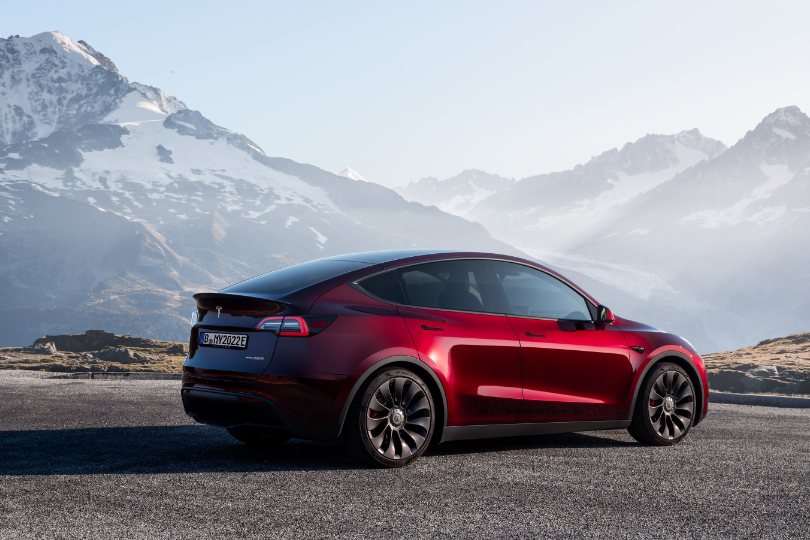
On April 2, 2024, Tesla released its first quarter 2024 vehicle production and delivery report.
It revealed what many had feared. Though the EV maker manufactured 433,000 vehicles in the January-March period, it delivered just 386,810 of them to customers. That is an 8.5% year-on-year drop from last year’s 422,875 units sold in Q1 2023.
It was the first such decrease in sales since the pandemic began in 2020. Tesla blamed the fallout on the slow ramp-up of its Model 3 production at its flagship Fremont, California, plant; and multiple factory shutdowns in its Giga Berlin facility as a result of supply chain disruptions for parts and materials passing through the Red Sea (as Yemeni forces caused a partial aerial blockade due to Israel’s war on the Palestinians in Gaza), and an arson attack by a left-wing extremist organization on a nearby power station on March 5, which forced a temporary shutdown of that facility.
Tesla’s full earnings for the quarter will be announced on April 23. But even without that, Tesla has racked up a range of bad news in recent months which go well beyond the Berlin and Fremont plant disruptions, including a rising tide of bad press over breakdowns of its Cybertruck due to electrical harness failures, steering and breaking problems, and failures of its onboard Power Conversion Systems (PCS).
Last year, Tesla also suffered a major public relations and financial nightmare when, after an extensive review by the National Highway Traffic Safety Administration of its driver assistance autopilot software and increasing numbers of accidents it caused, the company was forced to recall over 2 million vehicles to upgrade them. NHTSA data showed at least 700 Tesla vehicles guided by this software were involved in accidents since 2019, with a minimum of 19 people killed as a result.
Tesla also lost its position as the largest manufacturer of electric vehicles in the world to Chinese manufacturer BYD in 2023, after having topped the charts prior to that. In Q1 2023, for example, the same period in which Tesla shipped its 422,875 electric vehicles, BYD sold 548,000 units a much lower prices. Those numbers worked out to a comparative market share at the time of 21.3% for BYD and 16.5% for Tesla. For reference, the number three EV maker Volkswagen Group shipped just 189,093 units in the same period last year, with a market share of 7.4% of all EV shipments worldwide.
Through aggressive global sales and manufacturing facility development, along with a market strategy to undercut Tesla’s market with a higher percentage of much lower priced EVs, BYD grew its market share to last year’s 21.3% from 14.3% for the same quarter in 2022. By comparison, Tesla held 15.5% of global EV unit sales in Q1 2022, making this the second straight year in a row of declining market share volume for the automaker.
BYD also saw its total market of electric vehicles of all kinds surge even faster in Q1 2024. Its “pure” electric vehicle sales rose by 13.4% to 300,114 in the first quarter, while it sold 324,284 of its plug-in hybrid (PHEV) variants on top of that. That adds up to 624,398 total units sold in the first quarter, compared to Tesla’s 386,810.
China, via all the EV and PHEV makers headquartered within its borders, accounted for 64% of the 2023 global market for electric vehicles, based on unit sales volume.
BYD is also aggressively expanding its sales and manufacturing operations globally. This year saw substantial increased shipments in China, Asia, Southeast Asia, Mexico, South America, and in the Middle East. It is also planning on beginning construction of its first Mexican factory later this year, with a goal of increasing its market share of lower-priced vehicles throughout the Americas at a lower production cost as well, since the vehicles will no longer have to be shipped all the way from China to its target markets. The same Mexican factories are also planned as a base to sell and ship EVs into the United States, setting up a head-to-head battle with Tesla in its home market territory.
China is also helping pave the way to support EV makers BYD; Chery Automotive, its third largest auto manufacturer, whose Jaecoo brand is also setting up manufacturing facilities in Mexico with an eye to sales across the Americas; and GAC Aion, part of Guangzhou Automobile Corporation (GAC) and a holder of 6% of the global EV market. China is doing so by providing financial support for increased production in this important market both within China and around the world.
Beijing also recently filed a grievance – on March 26, 2024 – with the World Trade Organization, alleging that the U.S. federal governments purchase credits on electric vehicles which meet certain “made in America” requirements constitute an unlawful subsidy which is discriminatory to foreign vehicles, which of course was its intended purpose. In filing this, it makes no mention of its own subsidies for its own automakers and incentives it provides to Chinese customers wishing to buy some of its own EVs.
Elon Musk embracing Israel and its genocide of Palestinians has also not helped Tesla sales. Continued censorship and social engineering on X (formerly Twitter) has generated even more anti Elon Musk sentiment.
With substantially lower sales globally and operating margins already having fallen to just 8.2% in Q4 2023 versus 16% for the same period in 2022, Tesla began making announcements beginning last month which suggested a major layoff might be coming, perhaps as big as 20%. Internal communications at the company showed it was cancelling annual reviews for some employees and postponing new stock option grants, a reasonable move considering the value of the company’s stock by 31% since January. It also announced it would cutting back on Cybertruck production and the length of shifts at its Austin, Texas-based Gigafactory.
Yesterday the next shoe dropped for Tesla.
In an email sent to all its employees yesterday, Tesla founder and CEO Elon Musk delivered the bad news.
“Over the years, we have grown rapidly with multiple factories scaling around the globe. With this rapid growth there has been duplication of roles and job functions in certain areas. As we prepare the company for our next phase of growth, it is extremely important to look at every aspect of the company for cost reductions and increasing productivity,” he wrote.
“As part of this effort, we have done a thorough review of the organization and made the difficult decision to reduce our headcount by more than 10% globally. There is nothing I hate more, but it must be done. This will enable us to be lean, innovative, and hungry for the next growth phase cycle.”
That 10% carves out around 14,000 of the company’s employee headcount, which as of the end of Q4 had reached 140,473. Many of those were notified yesterday was their last day with the company, and that human resources organizations would be reaching out to handle questions of severance and other matters for each.
Tesla currently operates factories and other major facilities in California, Nevada, New York, and Texas, along with its major international Gigafactories in Texas as noted before and in Shanghai.
Some parts of the company may see layoffs as high as 20%. One of the hardest hit areas is expected to involve a near full shutdown of development of a new EV model which was priced lower, as a means to gain market share in a new demographic and to compete more effectively globally with BYD’s far lower priced EVs and PHEVs. That intel is based on multiple industry analyst’s guesses, in turn based on recent announcements.
That product line will still live on, but now primarily for the very different market of robotaxis which represents one of the fastest parts of the global electric vehicle industry. It would also leverage Tesla’s substantial investment in autonomous vehicle software and hardware over the last few years. The company says it will introduce its new robotaxi in August of this year.
While that avoids a complete write-off of the development costs of this vehicle for Tesla, without it being introduced to the mass consumer market, not having the vehicle will leave Tesla even more vulnerable to low-cost Chinese EV competition.
Along with the layoff announcement, several key executives also announced their resignations from the company, in moves taken on their own rather than as part of the layoffs.
One was Drew Baglino, who left his post as the Senior Vice President for Powertrain and Energy Development yesterday. Considered one of the key drivers of technology innovations in this vital part of all Tesla’s vehicles for the 18 years he had been with the company, Baglino’s departure is expected to leave a large vacancy.
Rohan Patel, the executive who headed up business development and policy operations at the company for eight years, and who as a former Obama administration official was seen as an important point of contact with the federal government on EV considerations, also resigned as well. Elon Musk issued a post on his social media platform X yesterday personally thanking him for all he had done for the company.
After the news of the layoff news tied to lower production rates for Tesla were announced yesterday, Musk dismissed criticism that his controversial leadership styles in all his companies was at least partially to blame for the need to cut back, saying that his company was far from the only one suffering in the market for now.
It has been “a tough quarter for everyone”, he said.
Now might be a good time for Elon Musk to exit Tesla and allow better management to prevail.