U.S. Threatens Sanctions Against India After Signing Port Development Deal with Iran
Lead StoryBusiness
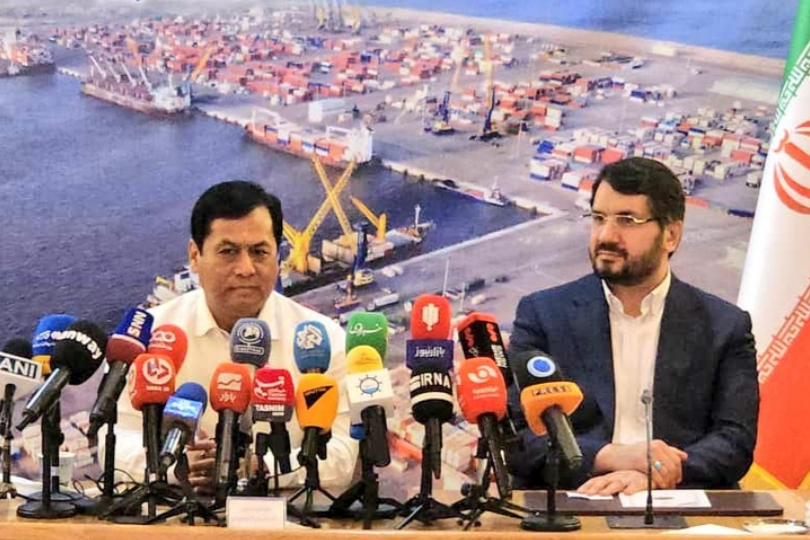
For India, May 13 was a day of major celebration after finally signing off on one of its biggest ventures yet in the Middle East.
The arrangement covers a decade-long development arrangement with Iran to develop and help operate the Shahid Beheshti terminal at Iran’s strategically positioned Chabahar marine shipping port.
Chabahar is a deepwater port located in Iranian international waters at the mouth of the Gulf of Oman. Situated in Iran’s Sistan-Baluchistan province, it is part of the International North–South Transport Corridor (INSTC), one of the most heavily travelled waterways in all of Asia and the Middle East.
Construction on the terminal began in 2002, with the goal of making this the premier alternative to the normal Persian Gulf shipping terminals already in use within the region.
India, which has long had good relations with Iran, has worked with the Chabahar operations management group for over ten years to plan out how to expand and modernize Chabahar as one of the key shipping logistics hubs in the region. That formal partnership began in 2014, when the governments of Tehran, New Delhi, and Kabul, the capital of Afghanistan, reached a tripartite arrangement for joint development of Iran’s deepwater facilities.
2014 was also the same year in which the United States agreed to terms which allowed those three countries to develop Chabahar free from any concerns about sanctions which the U.S. had already put in place against Iran. In contract terms, it was a formal “carve-out”, allowing the three countries to proceed with their plans without needing to worry about future sanctions from Washington. The Obama administration agreed to it in the hopes it might assist by helping Afghanistan expand trade with the rest of the world via the newly modernized deepwater port.
That agreement took place while the U.S. State Department, the White House, Iran, and several nations in Europe were just beginning negotiating early versions of what later became the Joint Comprehensive Plan of Action (JCPOA) arrangement with Iran, a quasi-treaty signed between the U.S., Iran, and other countries which offered eased sanctions against Iran in return for that nation slowing work which had been in place to develop nuclear weapons.
The JCPOA was signed by Iran, the U.S. and others in 2015, and went into effect in 2016. It was formally rescinded by Donald Trump on May 8, 2018, after urgings from Israel to do so. Heavy U.S. sanctions against Iran were reapplied at the time, which Washington continues to enforce on all parties anywhere in the world.
The contract arrangements reached on May 13 between New Delhi and Tehran call for a substantial expansion of India’s work in Chabahar. It provides for a $120 million investment by India’s state-owned India Global Ports Limited (IGPL) in a series of long-term improvements, new equipment installations on site, and operational capabilities upgrade for the port’s Shahid Beheshti terminal. IGPL is also providing the port with a $250 million line of credit for investments of its own which will be part of this major new upgrade to the terminal. In return for all, IGPL will take on full operational responsibility for the terminal.
Besides just the amount of money involved and the importance of the terminal for both countries, each of which will make good use of the terminal for their own businesses while sharing in the profits it pulls in, this also represents the biggest new joint venture between Iran and India since Iran joined the BRICS alliance of nations -- that India helped found – on January 1, 2024.
Both parties see the partnership between their countries as even more important in current times than it was when originally begun in 2014. It allows ships to avoid passing through ports in the busier and in recent times high risk alternatives located in the Strait of Hormuz and elsewhere in the Persian Gulf. It also supports a long-term plan of India’s to develop stronger trade connections with other nations in Asia which have no direct access to seawater ports.
The arrangement was of sufficient importance that Sarbananda Sonowa, India’s Ports and Shipping Minister, was present in Tehran at the signing of the new agreements and to pledge his support to make the joint ventures successful.
“The port’s integration with a special free zone augments its appeal, while India’s incentives, such as concessions on vessel-related charges and cargo charges, bolster trade flows through Chabahar, fostering economic growth and cooperation,” he said.
Just hours after the Chabahar deepwater port arrangements were announced by both nations, the United States, which seems to have forgotten its formal agreement to allow India and Iran to partner on development of the terminal ten years ago, warned India that its actions could result in serious U.S. sanctions.
That threat came during a press conference between Vedant Patel, Deputy Spokesman for US State Department, during a press conference late Monday.
In response to a question from reporters at the conference, Patel confirmed that Washington and the White House stood firmly against the ten-year contract just signed between India and Iran.
“"Those who are looking for business with Iran should know that they are exposing themselves to sanctions," he said, emphasizing that U.S. sanctions against Iran “remain in place and we’ll continue to enforce them”.
Patel followed up by insisting nothing about U.S. policy on this issue has changed.
“Any entity, anyone considering business deals with Iran, they need to be aware of the potential risk that they are opening themselves up to and the potential risk of sanctions,” he continued.
When pressed by the reporters about whether there was any special exemption for India to work with Iran on Chabahar, Patel’s answer was a blunt “No”.
On the night of May 14, the day after the agreements were signed and Patel made his comments, India Foreign Minister Subrahmanyam Jaishankar seemed unconcerned about the U.S. threat.
In statements made publicly while he said that Washington always realized Chabahar had a broader importance to the region, without specifically referencing the 2014 arrangement with the U.S. to allow the port’s joint development with Iran to begin. He also praised the new joint venture with Iran for its vision and potential impact to Asia as a whole.
Finally, we were able to sort this out and we were able to get the long-term agreement done,” Jaishankar said. “A long term agreement is necessary because without it we cannot improve port operations. And port operations, we believe, will benefit the entire region.”