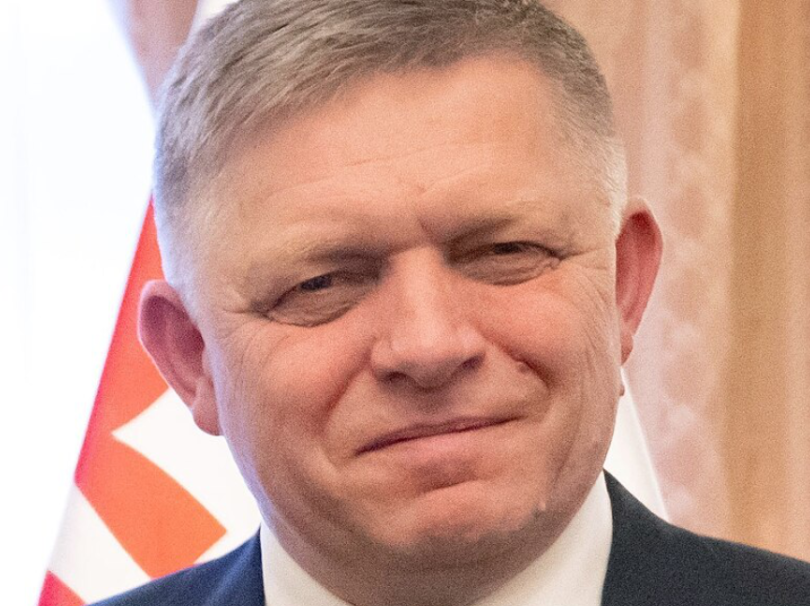
The 59-year-old Fico was shot at least five times yesterday while greeting a small gathering of political supporters in Handlová, a village located 90 miles from Bratislava, the nation’s capital.
He had just left the town’s House of Culture when attacked. He and others in the government were meeting on a number of routine issues at the time. Multiple representatives of Fico’s coalition government, which included both ultra-nationalist and left-wing groups, were present.
Sources say Fico was the sole target of the attack.
Fico collapsed immediately at the scene and was bleeding badly. He was quickly picked up by his security team, who drove him a short distance to where a helicopter was able to move him quickly from the attack site to a local hospital.
The Slovak Parliament which was in session when the prime minster was shot immediately suspended its proceedings.
On arrival at the hospital, Fico was moved immediately to the emergency room and was operated on for hours.
In an early statement made while Fico was still being operated on, Robert Kaliňák, the country’s Defense Minister, said the prime minister had “serious polytrauma after several shots”. Kaliňák said Fico was “fighting for his life”.
Later last night Deputy prime minister Tomáš Taraba said at this point it appeared the prime minister would live and was “not in a life-threatening situation at this moment”. Taraba did not provide any details as to how badly Fico had been hurt and when he might return to office.
The suspect who allegedly shot Fico was chased down and captured at the scene. He has been identified in local press as Juraj C. Few details about him are available publicly at this point, other than that he is 71 years old, lives in south-central Slovakia in Levice, and that has posted a video on YouTube about wishing to launch an “anti-violence” political movement in the country.
According to Juraj C.’s son, the suspect had a license to possess a gun.
Little is also known about why Juraj C. might have wanted to kill the prime minister, though Fico has proved to be a lightning rod for controversy since he was elected to that position for the third time in September 30, 2023. He served previously as the country’s prime minister from 2006 to 2010, and from 2012 to 2018.
Described as left-populist politically, after Fico returned as prime minister announced multiple foreign and domestic policy decisions which were much at odds with his peers. He has pledged to end sending foreign aid to Ukraine to keep its war with Russia going and is in strong disagreement with others in the European Union over the severity of sanctions the EU has imposed on Russia because of the war. The prime minister also notably refused to support the World Health Organization Treaty which would cede major powers to the WHO for any future global medical emergency. Fico also argued to strengthen border security between his country and Hungary, and argued for a tough stand against illegal immigration.
Fico also campaigned for his third term as prime minister as a harsh critic of rights for the LGBTQ+ community.
Though only a few months into his new term, Fico’s actions to implement the policy changes he campaigned on have triggered strong tensions within the parliament. Many citizens in the country have also risen up to protest against the changes he plans to make, including some tough actions he plans to take against private media organizations which many complain could represent a serious restraint of human rights and freedom of speech in the nation.
Observers are also concerned the attempt to assassinate Fico is part of a broader wave of citizen disagreements on EU policies, on matters ranging from the Ukraine war and what used to be strong support of Israel in its genocidal war against the Palestinian people. Support of both positions has fractured dramatically throughout Europe in the last few months.
Those disagreements have resulted in mass protests in multiple cities and nations within Europe. They have also been linked to violent attacks against three German politicians just in the last week.
With three weeks left before Europe holds its parliamentary elections, many see the rising conflicts in public opinion and mass protests as leading toward major shifts in power towards more right-wing and populist groups.
Soon after Fico’s shooting, the political group Renew, a liberal-leaning group, said in a statement that what happened to Fico raised serious concerns about “the rising polarization within our political sphere fueled by extremist ideologies, both left and rightwing.”
“This climate of heightened division is laying the groundwork for an environment where acts of violence are more likely to occur, and also wrongly justified by those who seek to disrupt and dominate rather than engage and debate,” the statement continued.
Fico’s own voice in influencing the upcoming EU parliamentary elections may have been muffled somewhat by the shooting, but his supporters are expected to pick up the pace for him as the European parliamentary elections grow closer.