International Court of Justice Orders Israel to Immediately End Fighting in Rafah
Lead StoryCrime
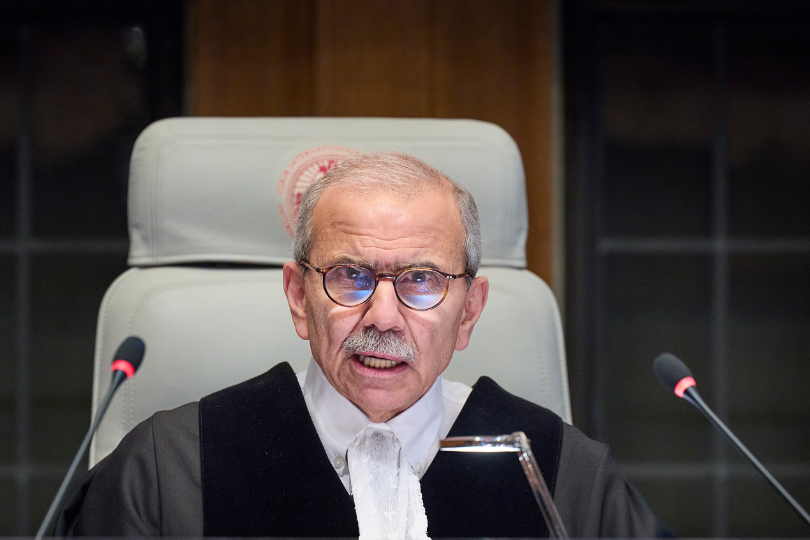
The ruling is a response to request for the ICJ to amend its initial order against Israel regarding charges Israel was committing the crime of genocide in Gaza. The ruling was issued on January 26, 2024.
That order stopped short of finding Israel guilty of genocide but did order Israel to bring an end to military and other action which might constitute genocide, along with preservation of evidence which could provide further proof of that crime. It also demanded the immediate free flow of humanitarian aid into Gaza
Israel has ignored both parts of that original order.
On May 10, shortly after the first of an estimated 1.5 million Palestinians living in and around Rafah were ordered by Israel Defense Forces to begin a mandatory evacuation of the city to make way for a mass ground assault, South Africa submitted an ““urgent Request for the modification and indication of provisional measures” the ICJ had ordered in January, with slight updates through March.
The mass bombing of Rafah is now in full swing, as is the vicious ground invasion of the city.
In its submission, South Africa demanded that Israel shall immediately:
“Withdraw and cease its military offensive in the Rafah Governorate, and
“Take all effective measures to ensure and facilitate the unimpeded access to Gaza of United Nations and other officials engaged in the provision of humanitarian aid and assistance to the population of Gaza, as well as fact-finding missions, internationally mandated bodies or officials, investigators, and journalists, in order to assess and record conditions on the ground in Gaza and enable the effective preservation and retention of evidence, and shall ensure that its military does not act to prevent such access, provision, preservation or retention."
As he introduced the ruling on South Africa’s request for action in a public address yesterday, International Court of Justice President Nawaf Salam called the situation in Rafah now “disastrous” and cannot continued. He underscored that point by noting that the United Nations has “consistently underscored the immense risks associated with a military offensive”.
“The court is not convinced that the evacuation efforts and related measures that Israel affirms to have undertaken to enhance the security of civilians in the Gaza Strip, and in particular those recently displaced from the Rafah governorate, are sufficient to alleviate the immense risk to which the Palestinian population is exposed as a result of the military offensive in Rafah.,” Salam added.
In the ruling released yesterday that Salam and the Court approved by a vote of 13 to 2, it directed that:
“In conformity with its obligations under the Genocide Convention, Israel must immediately halt its military offensive, and any other action in the Rafah Governorate, which may inflict on the Palestinian group in Gaza conditions of life that could bring about its physical destruction in whole or in part.”
“In the present circumstances, the Court is also of the view that, in order to preserve evidence related to allegations of acts falling within the scope of Article II and Article III of the Genocide Convention, Israel must take effective measures to ensure the unimpeded access to the Gaza Strip of any commission of inquiry, fact-finding mission or other investigative body mandated by competent organs of the United Nations to investigate allegations of genocide.”
With a reminder of its obligations under the original January 26 order which it has ignored, the Court directed that Israel must allow “the ‘unhindered provision at scale by all concerned of urgently needed basic services and humanitarian assistance’, necessitates that the Respondent maintain open land crossing points, and in particular the Rafah crossing.”
South Africa quickly thanked the Court for its quick and definitive actions regarding their filing.
Zane Dangor, an official with the South African government, called the ruling “groundbreaking” and “de facto calling for a ceasefire!”
Egyptian Foreign Minister Sameh Shoukry said the ICJ ruling was a “positive step”. He called for the world community at large to support the orders and take the necessary steps to secure Israel’s compliance with the order.,
Jordan, a country which has been a strong supporter of the plight of the Palestinian people in Gaza, was even stronger in his support of the Court’s decision.
“Once again, the ICJ exposes Israel’s war crimes in Gaza, Jordanian Foreign Minister Ayman Safadi wrote in a post on the social media platform X yesterday. “And once again, the Israeli Govt reacts with disdain to Int’l law, refusing to heed the Court’s orders. The SC must shoulder its responsibility, put an end to Israel’s impunity & to double standards in enforcing Int’l law.”
Israel responded with multiple fiery outbursts rejecting the ICJ orders in their entirety.
Israeli Prime Minister Benjamin Netanyahu, who was charged by the International Criminal Court on May 20 for his actions in Gaza with war crimes and crimes against humanity, issued a statement via his office after the orders came down.
He said the accusations South Africa made regarding claims of genocide by Israel were “false, outrageous and disgusting”.
“Israel has not and will not carry out a military campaign in the Rafah area that creates living conditions that could lead to the destruction of the Palestinian civilian population, in whole or in part,” Netanyahu added, despite that 13 members of the ICJ disagree with him, even after reviewing counter evidence Israel submitted to the Court earlier this month to negate South Africa’s latest claims.
Itamar Ben-Gvir, the right-wing Israeli National Security Minister which has publicly championed the mass murder and forced evacuation of Palestinians for some time, reacted with anger to the ICJ orders, declaring it to be an “antisemitic” legal body.
In a message on the social media platform on X, Ben-Gvir said the ICJ’s ruling “should have only one answer – the occupation of Rafah, the increase of military pressure and the crushing of Hamas, until the complete victory in the war is achieved”.
Ben-Gvir also backed up his position by quoting the defiant words of David Ben-Gurion, Israel’s first prime minister, who said many decades ago that, “Our future is not dependent on what the gentiles will say but rather what the Jews will do!”
Israel’s Finance Minister Bezalel Smotrich also attacked the ICJ orders in his own statement.
“If we lay down our weapons, the enemy will reach the beds of our children and women throughout the country,” he said.
Avi Hyman, an Israeli government spokesperson, added to the chorus of voices defending his country’s defiance of the Court and continued genocidal attacks on Palestine.
“No power on earth will stop Israel from protecting its citizens and going after Hamas in Gaza,” he said.
From outside the government, opposition leader Yair Lapid called the ruling a “moral collapse and a moral disaster” for that body.
Most western powers said little about the decision, but a statement released by Josep Borrel, the European Union Foreign Policy Head, was typical of many and illustrates the challenges ahead for all of them in the coming days.
“We will have to choose between our support to international institutions of the rule of law or our support to Israel,” he said in a formal statement on behalf of the EU.
In the United States, puppet Joe Biden has so far not issued a public statement responding to the ruling. The closest to any public reaction came from a spokesperson for the White Houe, who offered the press yesterday only the enigmatic statement, that, “We’ve been clear and consistent on our position on Rafah.”
Republican Senator Lindsay Graham responded to the orders issued yesterday by telling the world in a post on social media that, “ As far as I’m concerned, the ICJ can go to hell.”
As these developments took hold, Egypt just opened its supply routes to allow large convoys of humanitarian aid to enter Rafah from the south side of the border. It is not clear if Israel will allow any of them inside.
The ruling by the International Court of Justice is legally binding but there are no automatic enforcement provisions for it. The orders from the ICJ will now go to the UN Security Council for implementation, where it is expected the U.S. will block any attempt to make Israel comply with its directives.