South Africa’s ANC Party Loses Majority Control for First Time Since Nelson Mandela Rose to Power
Lead StoryPolitics
It is hard to underestimate the significance of the overwhelming victory of Nelson Mandela’s African National Congress (ANC) in the 1994 elections.
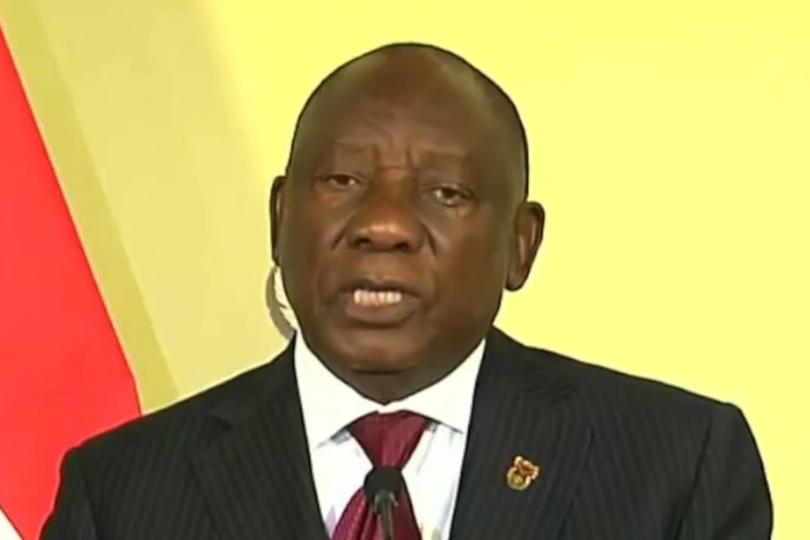
So too is it also impossible to underestimate the significance of the party he represented for the first time not only losing majority control of the country’s parliament, but also unexpectedly falling so far short of that majority target which would give it the power to easily reelect the ANC’s Cyril Ramaphosa as its president.
After the results of the highly contested May 31 elections were counted, the ANC drew just 40% of the votes. While that still amounts to 159 seats in the 400-person national assembly, it still represents a shocking fall for a party which commanded most of the assembly continuously since Mandela took power as the ANC’s representative in 1994 and transformed the nation as its first black president in history.
While any coalition government formed out of the chaos of this latest election is expected to include the African National Congress because of that 159-seat win, the compromise and partnerships required to form a minimum 51% ruling bloc is expected to bring major changes in the new government going forward. That could involve a return to power of former South African President Jacob Zuma, new heading a different party, and with very different opinions on how to run the country which is now part of the BRICS geopolitical alliance with China, India, Russia, and Brazil.
It also could include abandonment of some key tenets which guided the ANC since 1990s leader of that party, Nelson Mandela, became the country’s first black president. Among those could be how rights are balanced between ordinary citizens in South African and a still-powerful ruling class, even if the racist apartheid Afrikaner regime which ruled South Africa for centuries is long gone.
A Brief History of South Africa and the Founding of the African National Congress
To help understand why what 1994 was so important and why what just happened now in 2024 matters so much to South Africa, a bit of history is helpful.
The original rise of South Africa’s geopolitical importance can be considered to date back to 1652. That is when the Dutch East India Company, then one of the most important global trader groups in the world with its spice routes to Asia, set up a permanent colony at the Cape of Good Hope as a stopping point for its global shipping group. The Dutch controlled what eventually became known as the Cape Colony for over 150 years, strongly influencing culture, customs, norms of governance, and even the local language. With generation of colonists having lived there during this time, it also shaped the makeup of a dominant northern European ruling class for the colony, replacing the native Africans who were there from the earliest days of homo sapiens itself.
As the settlement expanded, it eventually expanded northwards from the Cape area proper. That occurred in part because the colony soon became a refuge for more Dutch settlers who came in from northern Europe, along with some Germans and French Huguenots, the latter group escaping from religious prosecution when Louis XIV was king.
The colony eventually flourished thanks to diversifying the economy there, primarily into agriculture in addition to logistics support for its trade base. To support that, the country imported over 71,000 slaves. They were sourced from as far away as Indonesia and India, and closer in from Madagascar, Mauritius, and East Africa.
As the decades passed, the colony became one of the most valued assets in all of Africa, thanks to its geographic location and the investments the Dutch had poured into it. It also became traded back and forth as a prize awarded after multiple wars in Europe. It eventually shifted to British ownership during the Napoleonic War era at the end of the 18th century.
The British influence, which strongly supported the minority white ruling class approach put in place by the Dutch, helped shape the rest of what South Africa is today. In 1909, after having separately established and acquired other the adjacent colonial territories of Transvaal, Natal, and Orange River, Britain merged those regions with Cape Colony to form the Union of South Africa.
In 1934 the United Kingdom restructured the arrangement with the colony, officially recognizing it for the first time as a sovereign nation with its own government and law-making capabilities.
In 1948, the Union of South Africa officially established and recognized apartheid rule as the official law of the land. That meant there was a ruling class which was dominantly white and of European descent, with its minority population controlling voting power over descendants of the slave populations and indigenous Khoikhoi. Racial segregation was practiced in almost every aspect of daily life, from where people lived, what jobs they might be considered for, what schools they could attend, and what little role any of them were allowed to have in how the country was governed.
In 1961, at the same time as the U.K. was offloading other former colonies, it officially let loose of South Africa as part of the British Empire. South Africa was now a fully independent nation.
From 1961 to 1990, the new nation was ruled by an Afrikaner nationalist coalition, which drew its name and guiding traditions going back to its early days as a colony.
Those three decades began smoothly enough, but eventually revolts began to break out among the oppressed of mostly black descent. Violence ensued, people were subjugated not just by the government but also by its police, and those fighting for equal rights in the country were widely imprisoned, often without any chance of defending themselves.
One of the early activists who hoped being an independent nation would offer a chance to win those equal rights was Nelson Mandela, who was associated with the radical South African National Congress.
That organization, founded in 1912, was formed to fight for the rights of subjugated blacks first in the Union of South Africa, then in the Republic of South Africa in the 1930s but still part of the British Empire. As it restructured into the African National Congress within the new nation, the human rights focused political organization ran into major opposition from the Afrikaner-led apartheid leadership.
That opposition resulted in the imprisonment of Nelson Mandela beginning in 1964, after being first arrested in 1962. His capture and incarceration helped raise his presence as a hero for the oppressed blacks, allowing him to influence the continued cause of fighting for the rights of the majority black population in his country.
During that time, the original South African National Congress was renamed as the African National Congress. The clashes with the government became more widespread, eventually resulting in violent riots and many deaths. That eventually resulted in the organization being banned in the country, after being designated by the official government of South Africa as a terrorist organization.
The United Kingdom and the United States followed the apartheid nation’s lead by also formally designating the ANC as a terrorist organization.
That may have halted the lawful existence of the ANC but if anything, it only energized the activism further. Fearful that the fighting would explode into an outright civil war, the still-imprisoned Mandela encouraged the ANC of which he had been a part to tone down the violence and focus more on a peaceful approach to transitioning the nation forward.
His actions helped the world see South Africa as a nation in turmoil and with a more sympathetic opinion of the ANC itself. Multiple countries applied stringent economic sanctions on the country in the hope to influence it to change its ways, sanctions sufficiently economic damaging that the Afrikaner-led white government eventually came to realize could cripple the nation for the indefinite future.
That led to South African President FW de Klerk on February 2, 1990, to lift the ban on the ANC and free Nelson Mandela from his term of life imprisonment on Robbin Island. It also led both Mandela and de Klerk to take early steps to see if there was a more peaceful path forward for the country than there had been in the past.
The two co-led the CODESA talks which ended up with the drafting and passage of the first constitution which gave the majority black residents rights previously held only by the northern European leadership class. That led to Mandela and de Klerk being jointly awarded the Nobel Peace Prize for enabling such a dramatic change to take place.
It also resulted on April 27, 1994, in the African National Congress winning most seats in the national parliament, during the first election held under that new constitution. The parliament then followed that by electing Nelson Mandela as the first black president in the history of South Africa.
Nelson Mandela was president of South Africa from 1991 through 1999. During that time he oversaw a fundamental structural change in the way the country was run, the Reconciliation Commission which led to acknowledging the brutal apartheid regime of the past and setting it aside, and setting in place an entirely new way of living together and governance in the country.
The democratic reforms Mandela and former president de Klerk architected, and the election surprise which followed, left a long=standing legacy. It also enabled the ANC party to consistently win a commanding majority of seats in the legislature – and put a member of its party in charge as president – for a full thirty years after Mandela took office.
The Current Election Results and What Happens Now
During the administration of President Cyril Ramaphosa, who is also the current head of the African National Congress, has been plagued by substantial economic challenges which his government has been unable to address properly through tax breaks, government stimulus, and other means. As the economy fell, especially during the pandemic period, lower government receipts and administrative mismanagement have jointly contributed to a decline in quality of internal infrastructure across the country. Widespread power supply problems affected many, as did problems related to drought as the climate crisis made its mark in many areas, including within some of the wealthiest parts of Cape Town itself, which just a few years ago was counting down its days until it expected it would completely run out of water.
A damaged economy also contributed to the growth of crime in general in many areas of South Africa. Violent crime rates have also surged since 2019, the time of the last parliamentary election and when Ramaphosa began his current term as president.
It is because of all this that even as the ANC secured the plurality of votes in this election, at 40%, the country’s Democratic Alliance (DA) party, a pro-business political organization, saw its numbers come at a surprisingly strong 21.7% percent of the total. Dissatisfaction more specifically with Ramaphosa himself is also believed to be why the new uMkhonto weSizwe (MK), which was formed just five months ago in December by former South African president Jacob Zuma, pulled in a far stronger-than-anticipated 14.6% of the vote count.
In addition to losing majority control of the national assembly, Ramaphosa’s ANC also failed to secure a majority of the votes in three key “power” provinces within the country. The ANC lost in the important Northern Cape area; in Gauteng province, the home of the country’s capital city of Pretoria and Johannesburg, its primary business hub; and KwaZulu-Natal, where Zuma’s MK party swept the polls.
In fourth place following the lead three parties was the far-left Economic Freedom Fighters party, which won 9.5% of the vote. Headed by former ANC youth leader Julius Malema, its political platform includes allowing the government to expropriate land without compensation, if it serves the greater good.
The much smaller Inkatha Freedom party, a group which derives much of its support from the Zulu voters in the country, drew just 3.9% of the election tallies.
Under the South African constitution, the new parliament must be formed based on these electoral results and be seated by 14 days after the votes are officially certified. It is also during that first seating that the parliament must elect a new president.
That new president could by Cyril Ramaphosa himself. Despite the internal problems Ramaphosa has not resolved for the nation, has made what many consider very positive moves via his strong organizational support of the BRICS alliance of nations, and acting as host nation for multiple activities of the group throughout 2023. That also notably included the hosting of the 15th BRICS summit of the member nations and representatives of 67 other countries who Ramaphosa invited to be a part of it from outside the group.
Ramaphosa also helped raise the international stature of his government as the country which filed charges with the United Nations’ International Court of Justice against Israel for committing acts of genocide against the Palestinian people in Gaza. An amendment to its original motion with the ICJ recently resulted in the ICJ ordering Israel to immediate shut down the war in Gaza. While the original motion did not result in Israel being charged with genocide and the ceasefire order has been ignored, the acts helped establish South Africa as a more important force on the international stage.
Even with that, Ramaphosa is already feeling pressure just days after the election not just because his ANC party lost the majority, but also because of where it lost support. It notably failed to win a majority of the votes in three key “power” provinces within the country. The ANC is now a majority representative in the important Northern Cape area; in Gauteng province, the home of the country’s capital city of Pretoria and Johannesburg, its primary business hub; and KwaZulu-Natal, where Zuma’s MK party swept the polls.
Ramaphosa’s future is also at risk because of strong disagreements between the ANC and the other parties, regarind what they believe the country must do to pull itself out of its current economic and governance quagmire.
The MK party led by former president Zuma, who led the nation from 2009 to 2018 then was forced to resign due to pressures from the ANC, has had bitter fights with Ramaphosa on multiple issues. Those include Zuma’s support for a plan allowing the government to seize land without paying for it, the same position the Economic Freedom Fighters’ (EFF) party is also in favor of.
Zuma also stands against Ramaphosa’s campaign pledge for guaranteed minimum wages for all, something that economic experts say could contribute to rapid inflation if not managed properly.
It all adds up to Zuma being strongly opposed to Ramaphosa heading the new coalition.
With Zuma and Ramaphosa being at odds to each other, it appears likely that Malema, whose EFF controls less than half Zuma’s party’s vote count from Friday’s election, could be the power player who will control what the next ruling coalition will be.
Malema has consistently spoken of Zuma in supportive terms and backs many of his policies. In a recent interview when asked about Zuma, Malema jokingly described he and Zuma as “relatives” of a sort.
And while Malema remains strongly critical of Ramaphosa, the two still have strong bonds connected to the ANC itself, which influenced his rise to political power in the country. He also comes across understanding that there may be compromises possible if the ANC and EFF were to work together in the new government.
“Ramaphosa is not our preferred cup of tea,” Malema told the press after the election results came in. “But he can’t be a dealbreaker.”
Another wildcard suggested by those close to what is going on could be a coalition bringing together Malema’s EFF and the Inkatha Freedom representatives. With the ANC’s 40% of the votes, those three parties would bring together a workable majority of 53.4% of all seats in the parliament. While not an overwhelming majority, the Inkatha Freedom party might be willing to line up with this group to raise their stature, while Malema’s background as an ANC youth leader could make an alliance between him and Ramaphosa’s party work constructively.
Heavy behind-the-scenes background negotiations between each of the parties, with the outcome far from clear at this point.
Nomvula Mokonyane, the African National Congress’ first deputy secretary general, acknowledged her group is reaching out to all it can right now.
“We are talking to everyone,” she told the press this weekend. “We are just chatting,”
She and others will be doing a lot more chatting – and dealmaking – as the 14-day clock ticks down before the new national assembly is in place and a possible new president takes the reigns of government.