Chiquita Brands Ordered to Pay $38M to Victims of Terrorists It Hired to Protect Its Colombian Facilities
Lead StoryCrime
This is a story about how American capitalism became corrupted in the jungles of Colombia, all to bring bananas and other fruit to the U.S. and beyond in the 1990s and early 2000s and ended up hiring a narco-terrorist gang to protect its interests there.
In the early 2000s, one of the most powerful armies in South America was the Autodefensas Unidas de Colombia (AUC). Led by commander Carlos Castano, the AUC was formed in the early 1990s as a counterbalance the violence and destructive forces of the Revolutionary Armed Forces of Colombia, or FARC, a leftist insurgency movement which at the time had over 18,000 members in its ranks.
FARC was at the time waging a brutal civil war against the U.S.-supported right-wing Colombian government. Its troops were securely in control of the jungles and other countryside outside the urban districts including the capital city of Bogotá.
The U.S. at the time was publicly proclaiming it was helping the government of President Andres Pastrana push back against the drug cartels in his country which grew coca plants and were then one of the biggest providers of cocaine in the world. This was, after all, the home where Medellin-based drug kingpin Pablo Escobar once ruled the biggest of those groups in the early 1990s. By the early 2000s, the United States was supplying an estimated $1.3 billion a year to Colombia, ostensibly in support of Pastrana’s “Plan Colombia” with its ambitious plan to destroy the cartels’ coca farms and processing facilities, while also investing in other businesses in the country to develop an economy no longer dependent on drug dealing for its existence.
Most of the aid publicly provided by the U.S. for Colombia was in the form of transport helicopters, military training, and other related needs. In parallel with the public aid, the U.S. Central Intelligence Agency was privately cultivating its own drug partners in the country, some indirectly. Although never held accountable itself, the CIA was later revealed to have helped provide indirect financial support to drug traffickers in Colombia and in surrounding countries, some by ignoring the crimes of those they were assisting and some by more intentional involvement.
The AUC paramilitary alternative to FARC, as well as local government forces and those of the U.S., proved equally as brutal as many of the guerrilla organizations in the area. Its 8,000 military troops may have been smaller than FARCs, but in the early 2000s it claimed to control almost as much territory as that FARC claimed to handle. Castano, its head, said the AUC was there to help others and prevent the country from deteriorating into a full-scale civil war.
The AUC thrived by being given what Castano called “taxes” from those farmers and others who he claimed asked the AUC to protect them from attacks by FARC and the Colombia government. He protected his clients with vicious force which the government said was then responsible for more annual killings even than FARC.
Under Castano, the selection of those he protected was highly capitalistic and without judgment of what the enterprises and farms came to his group for help. He protected legitimate farming interests such as those run by fruit-supplier Chiquita Brands. He also supported others growing coca for the illegal drug trade. Castano argued the “taxes” he charged those enterprises and the murderous approach to protecting them was just business – and a necessary evil.
“Nobody has said that the AUC represent the best solution to Colombia's problems," Castano explained to a reporter in the early 2000s from a safe place some 200 miles outside of Bogotá. "But it is one, perhaps the only one, and one that the Colombian people see at this moment."
For its record of violence, kidnappings, assault, mass bloodshed, and what many referred to as a widespread criminal protection racket, the AUC was designated a “terrorist organization” by Colombia and as a “foreign terrorist organization” by the United States as of 2001.
It was during that turmoil which began in earnest in the 1990s that land values in Colombia began plummeting. Chiquita Brands, formerly known as United Fruit, took advantage of the chaos and depressed land prices to purchase sizeable blocks of agricultural fields then, planting extensively, and expanding operations significantly in the country.
Chiquita Brands is currently headquartered in Etoy, Switzerland, with operational headquarters in multiple countries, including ones in New York City and Fort Lauderdale, Florida. It is the American parts of that company which were the subject of the murder convictions against it which were ruled on yesterday.
That was also when Chiquita hired that AUC “terrorist organization” for a period running from 1997 to 2004 to protect its produce growing, harvesting, and packing operations in Colombia.
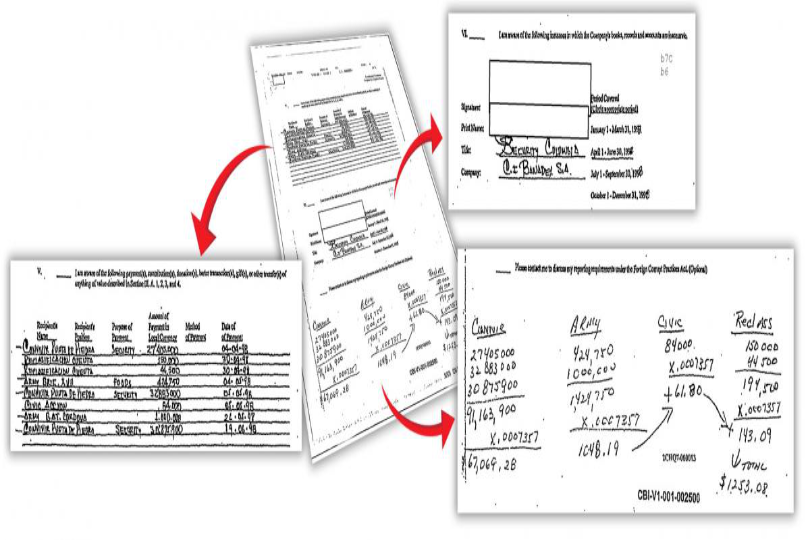
Some years after Chiquita made its pact with the AUC, it was revealed that the paramilitary group was likely to have killed thousands of individuals who came close to or trespassed on Chiquita Brands’ leased land in Colombia. A combined investigation by a joint U.S. -Colombian government team ended up proving AUC’s complicity in some of those killings. It also revealed Chiquita Brands had paid the AUC forces at least $1.7 million for its “services”, via a total of over 100 separate payments.
The U.S. Justice Department then began its own investigation of Chiquita. It ended up filing charges against Chiquita for what it called the “prolonged, steady, and substantial” support of AUC over a period of years. The charges were for violating a U.S.-based statute banning American companies from supporting groups designated as “terrorists” by the U.S. government.
In 2007, a U.S. court ruled Chiquita was guilty of those charges. It fined the company $25 million for supporting the group via Banadex, its wholly owned Colombian subsidiary.
What that ruling did nothing about was to address Chiquita’s direct complicity in the many people tortured or killed on the company’s behalf at the hands of Castano’s paramilitary forces.
A case was filed to address that soon after the ruling came down in 2007 from the court in the anti-terrorism charge case. The families of eight men who were murdered by the AUC while serving as Chiquita’s minions filed civil charges in U.S. District Court in West Palm Beach, Florida, against the produce giant for their part in seeing those men killed.
Multiple legal teams were involved on the plaintiffs’ side of the case. One of those, EarthRights, filed its case against Chiquita in July 2007 in support of the family of one of the victims AUC had killed.
In the ten years following the 2007 court decision and the filing of the new case, extensive new information was discovered showing Chiquita Brands was far more intricately involved in unlawful activities in Colombia than just paying the AUC as killers-for-hire to protect its company assets. Extensive details of those activities were eventually revealed in what are known as the Chiquita papers, including receipts of payments not just to the AUC but to other right-wing organizations in the country. Chiquita still refers to those outlays of money as “security payments”, despite growing proof of the many criminal actions they were responsible for.
That investigation resulted in multiple criminal indictments and convictions, mostly in Colombia. One included the Colombian taxi driver who reportedly acted as the “bagman” who brought Chiquita’s money to the AUC.
Many motions and years later, that case finally went to trial. Yesterday the U.S. District Court jury in West Palm Beach ruled in favor of 16 surviving family members of the eight who died thanks to money Chiquita provided to AUC.
The ruling ordered Chiquita Brands to pay the victims’ families $30 million in compensation for the deaths.
Marco Simons, EarthRights’ general counsel for the case, commended the jury on its verdict.
"We think the jury saw through Chiquita's defense, that they were threatened and had to make payments to save lives," Simons said in a press conference after the ruling was announced. "The jury also rejected Chiquita's defense that they put forward, which is known as a duress defense, that they had no other choice, they had to do this."
EarthRights’ director of legal strategy, Marissa Vahlsing, backed up Simons’ comments, explaining that Chiquita knew well what they were getting into when they bought land at bargain-basement prices and planted large farms in the Colombia of the 1990s.
“They knew this would put a target on their back, being a large multinational corporation," she said, with the potential that FARC as a minimum would target their facilities for ransacking and theft. That pushed Chiquita to find somebody local to protect them, with AUC effectively receiving the winning bid for those services.
"Chiquita had a very high degree of understanding of the armed conflict in Colombia," added EarthRights general counsel Simons at the press conference yesterday. "This wasn't some bumbling U.S. corporation that didn't know what was going on in the country where it was operating."
Chiquita Brands responded to the ruling with its own statement, expressing sympathies for the losses of the families who lost eight men to the terrorist group they funded, while continuing to claim the company’s innocence.
“The situation in Colombia was tragic for so many, including those directly affected by the violence there, and our thoughts remain with them and their families," the statement read. “However, that does not change our belief that there is no legal basis for these claims. While we are disappointed by the decision, we remain confident that our legal position will ultimately prevail."
According to court records filed in the case, Chiquita says it was forced to make the payments to AUC out of fear the AUC forces would hurt them if they did not.
The decision is about to open the doors to a wave of other cases pending Chiquita with the same crimes for thousands of other deaths attributed to AUC’s guerrillas. The next of those cases goes to trial in July.
Further, as this was “the first time an American company has been held liable by an American jury for human rights violations abroad,” as EarthRights’ Vahlsing added at yesterday’s press conference, this could set a precedent for prosecutions against countless other illegal operations run by American corporations on foreign soil.
For a broader take on Chiquita’s involvement with the AUC and other players in Colombia, please see the May 3, 2023, Trillions article, “Chiquita’s Bagman: Key Intermediary Sentenced in Paramilitary Payments Case”.