Yesterday the United States Office of Foreign Assets Control (OFAC) added three shipping companies to the list of organizations it is sanctioning for alleged activities supporting Iran in violation of other U.S. international trade restrictions imposed against the country years ago.
The original sanctions imposed against Iran were related to that country’s continuing to develop nuclear weapons and their key components, in direct conflict with directives from the United States, the European Union, the United Kingdom, and their allies had already warned Iran about. They apply generally to most foreign trade with Iran, with a focus on controlling the movement of money to and from Iran via various institutions, both in Iran and from outside the nation.
The latest sanctions were imposed yesterday by OFAC on Al Anchor Ship Management FZE, Almanac Ship Management LLC, and Sea Route Ship Management FZE. All are companies registered in the United Arab Emirates. The first is located in Ajman, the second in Dubai, and the third in Sharjah.
Those follow other sanctions imposed on June 25 on 50 separate individuals, along with multiple firms, based in Hong Kong, the Marshall Islands, and the United Arab Emirates. These asset freezes and other restrictions were imposed as the U.S. asserts these people and companies constitute a “sprawling shadow banking network” funding the Iranian military. By supporting the Iranian military, the United States asserts this network is a direct enabler for the supply of weapons and financial aid in support of Hamas, as well the Yemeni forces the Houthis are using to throttle shipping traffic in the Red Sea unless western powers halt their aid to Israel in its genocidal war in Gaza.
Iran is also known to be supporting Hezbollah, which has its primary base in southern Lebanon and has in the past few weeks escalated its attacks against Israel from the north. The sanctions against the “shadow banking network” which were put in place on June 25, plus the ones against the U.A.E. companies which have found ways to continue to do business with Iran, are all intended to substantially restrain Iranian access to trade and much-needed cash, assuming it plans to at least partially fund a broader war effort by Hezbollah against Israel.
As the location of so many of these new sanctions indicate, the United Arab Emirates has been a strong business partner of Iran’s for years. With it and Iran as of this year part of the BRICS economic and political alliance which was founded by Brazil, Russia, India, China, and South Africa, it has an interest in building even stronger ties with the nation on multiple fronts. Further, as far as the U.A.E. is concerned, though they have avoided speaking about it publicly, the U.S. sanctions represent a substantial overreach of power which attempts to regulate countries which it has no direct legal authority over. It instead uses the fact that the U.S. dollar dominates the global financial networks which the U.A.E. – for now, at least – must operate within as a means of coercing other countries to follow the political agenda the U.S. dictates.
The purported reason for the sanctions just placed on these three major U.A.E.-based shipping entities and their related financial interest is that they may have played significant roles in assisting Iran in the growing war effort it is subsidizing against Israel, and in one other area. That other area is Tehran’s substantial nuclear weapons development effort.
Just a little over a week ago the Iranian government notified the International Atomic Energy Agency (IAEA), the international monitoring group which has been monitoring activities at Iran’s nuclear development facilities for the better part of the past decade, that it had launched a major upgrade at two of its plants connected with those efforts. One was at its primary uranium enrichment location near Narantz. The other was the Fordow enrichment plant, constructed deep underneath mountains located in north-central Iran.
The IAEA conferment confirmed soon after this information exchange with Iran that there was extensive new construction going on within the Fordow structure.
According to the IAEA and others, Iran has already stockpiled some 300 pounds of highly enriched uranium within both structures, with most within the Fordow plant because it is a more secure location in the event of aerial attack. Iran began increasing its high-concentration uranium there soon after the Trump team refused to extend the 2015 Joint Comprehensive Plan of Action (JCPOA). That was the quasi-treaty which the Obama administration had signed off on as a means of allowing Iran to continue to develop nuclear fuel for power plants, while theoretically rewarding the country for restricting any substantial increase of enriched uranium which could be used for nuclear bombs.
Even with just that existing stockpile of nuclear weapons grade uranium, technical experts believe Iran could apply an additional refining step on that quickly enough so that it could have several nuclear bombs ready for use within days. That of course is assuming the country has not already built several of those warheads in advance, in anticipation that perhaps Israel, who has already engaged in military attacks against Iran multiple times in just the last few months connected with its support of Hamas and Hezbollah. Israel also struck back directly against Iran for its counteroffensive on Israel some months ago after Israeli Defense Forces destroyed its consulate in Damascus, Syria.
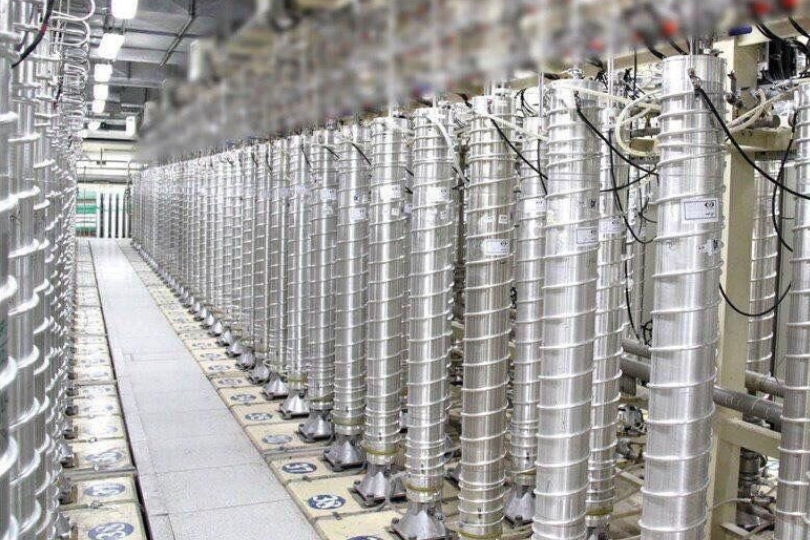
Iran’s private communications with the IAEA about its new construction at Fordow and near Narantz describe a surprising jump in the capabilities the country will be installing at those locations. The plans describe Iran putting in place almost 1,400 new uranium enrichment centrifuges at Fordow, and another 3,000 at Narantz possibly as soon as the end of July.
The details behind those plans come from internal documents the IAEA was sent from the Iranian government as part of its still-existing nuclear nonproliferation compliance agreements. They show Iran has already installed two new cascades, structures which work together in sequence to continuously enhance the concentration of uranium in-line, of 174 IR-6 centrifuges at its Fordow plant as of June 11. The documents say another four cascades of the IR-16 centrifuge lines are already being built to add to that. The full plan is to set up a total of eight cascades, with a net of 1,392 separate centrifuges embedded in those additional cascades.
According to an analysis of those plans by David Albright, President of the Institute for Science and International Security, the new centrifuge installations will increase weapons-grade uranium (WPU) outputs at Fordow alone for enough to produce at least five new nuclear warheads per month.
The new installations at Narantz are still of concern, but the 3,000 new centrifuges to be built there are not expected to produce weapons-grade uranium. They are instead principally for convention nuclear reactor fuel, though the lower grade uranium produced there could, if used as “feed” for the Fordow-class systems, accelerate the availability of additional fuel faster.
In announcing the new sanctions Tuesday against Iran’s “shadow banking network” associates, State Department spokesperson Matthew Miller said they were being put in place to penalize Iran for further enabling its nuclear weapons creation capabilities.
“Iran aims to continue expanding its nuclear program in ways that have no credible peaceful purpose,” State Department spokesman Matthew Miller said Thursday. “These planned actions further undermine Iran’s claims to the contrary.”
“If Iran implements these plans, we will respond accordingly,” Miller added, suggesting that further sanctions could be applied because of this possibly as early as July.
State Department officials identified the sanctions against the three U.A.E. shipping companies this week as related to those enterprises’ role in assisting Iran in evading existing sanctions regarding the sale of its oil and petrochemical products. By helping with those shipments, the shipping companies stand accused of aiding and abetting Iran in securing critical financial support for its nation. This comes as the U.S. is saying that money is a key to providing drones and missiles to the Houthi forces in Yemen, to Hamas in Gaza, and Hezbollah in Lebanon, as well as to fortify its own munitions stock which could be used to carry out further airstrikes against Israel.