Supreme Court Overturns Landmark Decision Which Was Fundamental to How Regulatory Agencies Operated for 40 Years
Lead StoryGovernment
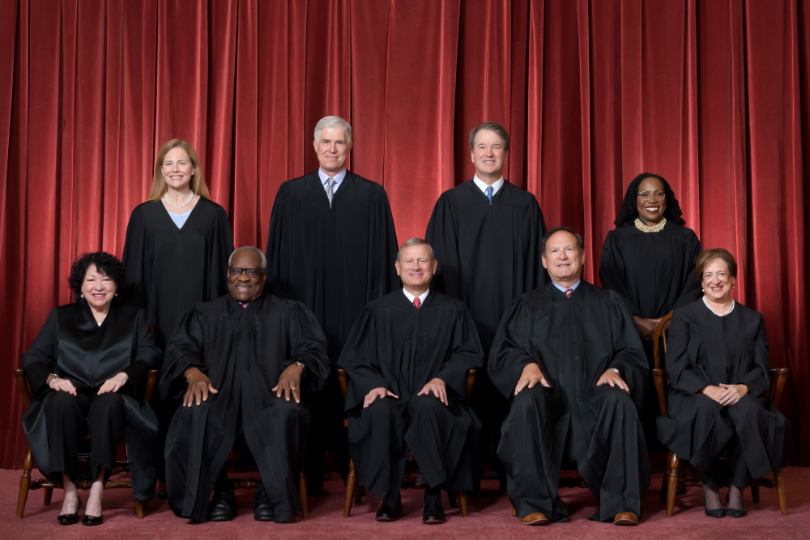
Unlike past major Supreme Court actions regarding regulatory decisions by agencies ranging from the Consumer Financial Protection Bureau and the Environmental Protection Agency, the central decision this time was not about how federal agencies have been accused of creating policies and regulatory rules which extend far beyond what the laws which give them their authority.
As just one example of those earlier cases, in December 2022 the EPA issued a new regulatory rule redefining its authority regarding the 1972 Clean Water Act, which was itself a landmark piece of legislation which has protected America’s freshwater sources for four decades. That act included the phrase “Waters of the United States”, or WOTUS for short, but which lacked specificity as to all the waters that might be considered to mean. Using the context and long-standing precedents regarding the law, the EPA issued a new rule “establishing a durable definition of ‘waters of the United States’” that would encompass almost all freshwater areas in the United States.
The purpose of the expanded definition was to clarify what the EPA’s jurisdiction in ensuring the nation’s waters are kept safe from excessive contamination by industrial and agricultural sewage and runoff, whether caused by accident or deliberate intent. It included the phrase “navigable waters” in the new definition both to clarify matters and to invoke the U.S. Constitution’s callout that any issue which might cross state boundaries fall under the jurisdiction of the federal government and not the states. It also included language which extended to wetlands connected with those navigable waters.
That new definition was challenged in court soon afterwards, on the grounds that that the new definition went way too far. The Supreme Court heard the case, and in May 2023 the current slate of Court justices declared the Environmental Protection Agency did not have the power to do that. In the majority decision authored by Justice Samuel Alito, the Court ruled then that encompassing wetlands under the new rule was not lawful because it had not been explicitly specified in the original law.
“We hold that the CWA extends to only those wetlands with a continuous surface connection to bodies that are ‘waters of the United States’ in their own right, so that they are ‘indistinguishable’ from those waters,” Alito wrote at the time.
When that decision came down, Joe Biden reacted strongly, stating that this decision, which effectively said that if the specific language is not present in a law, then the federal government cannot attempt to interpret it more broadly, “will take our country backwards”.
Biden went on to say in a public statement the n that that May 2023 “decision upends the legal framework that has protected America’s waters for decades.”
“It also defies the science that confirms the critical role of wetlands in safeguarding our nation’s streams, rivers, and lakes from chemicals and pollutants that harm the health and wellbeing of children, families, and communities,” he continued.
The case the Supreme Court ruled on yesterday covered regulatory ground which initially seemed similar to the tone of this past case. But it ended up substantially widening the judicial challenge leveled about how all regulators function, and even the fundamentals of how the Executive Branch (where the regulatory agencies reside) and the Legislative Branch (where the laws are passed which authorize the agencies to do their work) work together.
Yesterday’s ruling involved a lawsuit filed by Atlantic herring fishing enterprises operating in Rhode Island and New Jersey against the National Marine Fisheries Service. The complaint challenged a 2020 rule issued by that Service which required the herring fishing companies to pay for government inspectors who would track their fish intake. The plaintiffs asserted that there was nothing in the laws setting up the authority of the National Marine Fisheries which clearly stipulated its authority to charge that fee or install those observers.
The issue in this case was not the concept of the fees or the issue that having observers might avoid over-fishing or potentially using inappropriate ways to catch the fish. It was instead that the laws which give the National Marine Fisheries Service were both vague and apparently also conflicting in nature, each enacted by Congress, by different lawmakers and using different language. Those laws overlapped in what they covered but with different descriptions of what the fisheries were required to do and what the administrative authority was for the National Marine Fisheries Service to do it.
The Fisheries Service was left with the decision of either attempting to enforce the intent of the collective of laws covering these sorts of regulations, or pushing the Congress to pass new laws which were clearer. They chose the former path.
The precedent they used to support this was a June 2024 ruling by the Supreme Court in the Case of Chevron U. S. A. Inc. v. Natural Resources Defense Council, Inc.
That case covering a regulatory agency rule created by the Environmental Protection Agency to manage permit authorization covering modifications to existing stationary industrial plants or construction of new ones that might cause air pollution in excess of federal standards. The rule involved the interpretation of a collective of laws which were already on the books regarding both air pollution and the federal authority to regulate this.
Soon after the Clean Air Act was passed, industries with multiple plants found themselves embroiled in a regulatory morass which required separate filings to have the EPA approve each new modification as a separate issue. Individual laws covered each specific installation, but, especially because of the nature of air pollution as a flowing field rather than a specific dump site, this made the burden for industrial compliance complicated. In the early 1980s the EPA resolved that by creating a new regulatory rule – based on often conflicting or vague laws – which created the concept of grouping multiple plants as a single “stationary source” or “bubble”. That was considered a “win-win” proposition by both sides, with the EPA securing its power to regulate new industrial emissions outputs while also treating the collective of a group of plants as one “stationary source”, provided that “stationary source” covered a group of facilities originally authorized for construction under a single EPA permit in the first place. The rule allowed for new permits to be issued based on the impact of the pollution from the new or modified plant and balance it against the outputs of the collective. It simplified the process and, at least in the opinion of the EPA, met the intent of what the Clean Air Act was intended to provide for, despite numerous attempts to describe that in additional laws passed since that Act was originally passed.
Multiple environmental groups, including the National Resources Defense Council (NRDC), challenged the EPA “stationary source” definition as too far-reaching, and in conflict wit the intent of the Clean Air Act. In 1984 the Supreme Court ruled against the NRDC, arguing that even though the definition of a “stationary source” in that Act and other acts might have been difficult to interpret, it was fully within the authority of the EPA to interpret what that phrase meant and establish regulations based on it.
That precedent has stood for four decades as the standard of how all federal agencies handle conflicting or inadequately defined regulations. It has been applied in an estimated tens of thousands of cases adjudicated in the forty years since the Chevron decision was announced.
Yesterday the Supreme Court, using the specific issue raised by the Atlantic herring fishing companies as its basis, threw out the standard defined in Chevron precedent. It ruled that it is not appropriate for regulators to interpret the laws on their own and has in fact created a bigger mess than the underlying legislation had left on its own. It instead turned over to judges (and the Supreme Court, if necessary) the ultimate authority to interpret those laws on behalf of the federal government, even while the issues the judges might need to rule upon were highly technical in nature and well beyond the skill base of those judges to decide upon.
The ruling came down with the six conservative justices supporting the majority decision and the three liberal ones dissenting strongly.
Operationally, the ruling threw out the right of the National Marine Fisheries Service to interpret the laws allowing it to ensure fishing compliance by establishing inspectors on site where the fishing was carried out and charging for that service. But the decision went far beyond that, dumping the Chevron precedent aside completely.
“Chevron was a judicial invention that required judges to disregard their statutory duties,” Chief Justice John Roberts wrote as author of the majority opinion.
Effective immediately, he said, judges will be given the final say on whether how regulators operate according to the array of laws they are supposed to follow does itself constitute a reasonable interpretation of the regulations. This applies regardless of how technically or scientifically either the laws or the regulators’ rules which were written to enforce those laws might be.
Justice Roberts emphasized that the new ruling would not be allowed to apply to past litigation which relied on the Chevron precedent for their conclusions. It would instead apply to all future cases of this kind.
In the strongly worded dissenting opinion, written by Justice Elena Kagan and co-signed by Justices Sonia Sotomayor and Ketanji Brown Jackson, the liberal minority condemned the decision as having turned the country’s judicial system into “the country’s administrative czar”.
Kagan wrote definitively that there was no question that regulatory agencies are the only logical place to make the complex scientific, financial, and operational rules which help enforce the laws those agencies were set to enforce. Judges are there solely to interpret the legal language in laws and regulations, she wrote.
“In every sphere of current or future federal regulation, expect courts from now on to play a commanding role,” Kagan wrote. “It is not a role Congress has given them. … It is a role this court has now claimed for itself, as well as other judges.”
With the conservative court now running things, and hundreds of federal judges appointed while the Trump team was in power who are also known to hold views similar to that conservative Supreme Court majority also in position now, expectations are that the new ruling will invite many hundreds – if not thousands – of challenges to federal regulatory agency actions across the board, with the judges making the final statement in each case. Besides business regulations such as those the National Marine Fisheries Service had put in place, this could broadly impact rules in place at the Department of Agriculture restricting the pesticide use for public safety purposes, the EPA’s authority over “forever chemicals” pollution, banking requirements to minimize the risk they might collapse in a recession, Securities and Exchange Commission filing requirements, and even the Consumer Financial Protection Bureau’s authority to regulate lending, credit reporting, and related matters.
With this ruling tossing out the Chevron precedent which attempted to address the challenge of Congress to think of every possible issue about a new regulatory matter when they pass a new law, and the need for experts in the federal agencies to do the best possible job to interpret them, the U.S. will now need to rely on the judgment of judges to interpret those mechanisms to implement the intents of the laws as whether they are inadequate, reasonable, or too much. It effectively radically diminishes the power of the Executive Branch for the foreseeable future.