The announcement itself was mostly surprising because of its timing rather than the decision itself.
Since Joe Biden’s disastrous performance at the first presidential debate, one in which he physically froze once, scrambled his words multiple times, and lost track of the thread of conversations, there was heavy pressure on Biden either to prove that was a momentary lapse or get out of the race.
The proof never came. If anything, there were more lapses and freezes. Those included some awkward moments at the NATO 75th anniversary celebrations earlier this month, in which Biden had trouble speaking and moving, and another at a recent fundraiser where Biden seemed locked in position from head to toe, and former President Barack Obama had to pull him aside by the hand.
With donations to the Democratic Party drying up as it appeared Biden’s clear physiological and neurological weaknesses were already severely limiting him, and Donald Trump surging in the aftermath of an assassination attempt and the normal bump which occurs when a party national convention takes place, Biden’s handlers, colleagues in Congress and other party faithful delivered a clear message that the party would likely go down in broad defeat – from the presidential race down to other critical elections in the Senate and the House – if Biden were to continue his campaign to the finish.
Biden announced his decision to make his a one-term presidency in a letter to the American people rather than by making a televised address to the nation about it all yesterday. In that letter, he wrote:
“It has been the greatest honor of my life to serve as your President. And while it has been my intention to seek reelection, I believe it is in the best interest of my party and the country for me to stand down and to focus solely on fulfilling my duties as President for the remainder of my term.
“I will speak to the Nation later this week in more detail about my decision.
“For now, let me express my deepest gratitude to all those who have worked so hard to see me reelected. I want to thank Vice President Kamala Harris for being an extraordinary partner in all this work. And let me express my heartfelt appreciation to the American people for the faith and trust you have placed in me.”
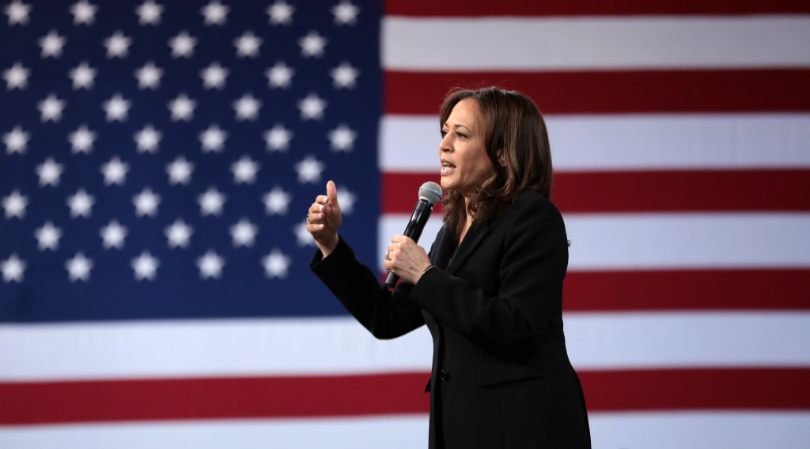
Soon after, Biden announced he was endorsing Vice President Harris as the new Democratic Party candidate for president. He was joined almost immediately by similar endorsements from throughout the rank-and-file in Congress and around the nation.
World leaders were publicly gracious over the announcement.
What comes next is mostly routine, with Harris’s name about to be formally introduced at the party’s August convention as the replacement for Biden in the race. There seems little doubt she will secure the nomination easily, though she herself has already pledged she will work hard to “earn” it.
Beyond that is to secure a running mate. Like Biden’s resignation and Harris’ rise to take over, that too is a process which the party is already orchestrating, to balance the ticket without challenging the positions Harris and Biden have stood for on so many issues, including many controversial ones such as the unbending support for Israel. Announcements on that will happen well in advance of the convention.
Will Harris win? Trump is doing well in the polls now, so the outcome is uncertain. But politically Harris will offer a sharp contrast to Trump and potentially show some differences from Biden’s policies as she begins stump speeches across the nation, which are expected to begin in days. That could be enough to overturn the momentum from the Republican convention, at the very least.