Venezuela Explodes into Mass Protests After Maduro Claims Victory in An Election He Lost by a Landslide
Lead StoryPolitics
Citizens of Venezuela went to the polls on July 28 in record numbers to elect a new president of the country.
The contest was between Maduro, the incumbent, and former diplomat Edmundo González.
The campaign was so charged with energy, as the first possible real chance in a long time to unseat Maduro, that people waited in lines for hours to vote.
As to the results of the voters’ efforts, according to Edison Research, a respected international exit polling company, exit polls show González won the election handily, with 65% of the total people leaving the polls surveyed saying they voted for him. Only 31% said they voted for Maduro.
Meganalisis, a Venezuelan exit polling Enterprise, confirmed the landslide win for González by an even larger margin. Their numbers showed González delivered an identical 65% of the votes, again based on surveys of individuals leaving the voting centers. For Maduro the numbers were even lower than those Edison had projected, with the local polling firm saying only 14% of those spoken with as they left the polls claiming they voted for the incumbent president.
If that were not enough to confirm González’s large margin of victory, polling representatives at many stations tracked ballot information and transmitted it to central sites for parallel counting. Those sites are about to become public, according to González’s campaign organization, but also point out that the electronic transmission is not something they had anything to do with; these electronic vote counting systems were part of the government’s own election management process. The counts to be shown on those sites will reportedly have the ability for individual voters to locate their recorded ballot information based on their individual voter identification information.
The sites also will reportedly confirm what both Edison and Meganalisis said, that González beat Maduro by at least a factor of two in the total vote counts.
After all that data was processed, the government-controlled national election commission, an organization run by Maduro’s cronies, announced its own set of numbers. With 80% of the ballots reportedly counted, declared Maduro received 51.2% of the vote and González only 44.2%.
The national election commission also said it had difficulties completing the count of the votes. Maduro claimed there had been a major “hack” of the electronic voting system, and even declared prior to final official numbers coming in that, “the demons and the devils do not want the vote to be completed”. That was part of their apparent excuse for why the numbers they came up with were so at odds with what the government ultimately published as the “real” result.
The election commission claims they had some glitches publishing results from each of the nation’s approximately 30,000 voting stations which would align with these numbers. They said those results would be published sometime on July 29.
Maduro has dealt with surges of electoral opposition in the past, mostly by crushing opponents far in advance of the actual balloting. Sometimes it rejiggered the final numbers based on a claim that some substantial percentage of the votes in given regions might not have come out right. But in the past, there had been no opposition like that represented by González, and far less hard evidence that the national election commission had simply made up the final vote counts.
When the national election commission made its official declaration that Maduro won yesterday morning, the incumbent faced the media with a wide grin thanking all for their support, despite all evidence to the contrary.
“I assume the mandate of the people to be their president and lead our country towards peace and prosperity,” Maduro told his followers in a televised brief acceptance speech.
Later, in his hometown of Caracas, the capital city of Venezuela, Maduro gave a nod to the legendary Hugo Chávez, the president who preceded Maduro and gave him his job by appointing him as heir apparent as he was dying, in 2013.
“Long live Chávez. Chávez is alive!” he told a cheering crowd. “I am Nicolás Maduro Moros – the re-elected president of the Bolivarian Republic of Venezuela … and I will defend our democracy, our law and our people.”
Elsewhere in the country, Edmundo González, the real winner of the election contest, scoffed at the election commission’s claim that Maduro had won.
“The Venezuelans and the entire world know what happened,” González said in his first speech after the elections.
As to proving that apparent truth, González spoke with authority that his party can prove they won the election, and by exactly how much.
"I speak to you with the calmness of the truth," González told his followers. "The will expressed yesterday through your vote will be respected…. We have in our hands the tally sheets that demonstrate our victory."
In a separate speech, María Corina Machado, the founder and head of the Plataforma Unitaria (Unitary Platform) party which backed González declared the election results a sham, with the implication she would fight to defend the rights of the citizens in having finally ousted Maduro in Sunday’s elections.
Machado, a politician, lawyer, and highly successful businesswoman, ran as the lead candidate for her party last year in a primary campaign which concluded on October 22. She won that election with 93% of total votes counted that day. Her platform was radically different than that of the socialist dictator Maduro. It called for a restructuring of the economy to a pro-business one and with capitalism as its base, increased transparency into governmental operations, a call to root out corruption from the highest levels of government on down in a country ranked as one of the most corrupt in the world, and a transformation of the entire structure of government into one far more representative of the needs of the people than the current administration.
Machado also called for the privatization of Petróleos de Venezuela, S.A. (PDVSA), the state-run oil company, as a means to put plundering the riches of the vast oil reserves owned by the country out of reach of governmental hands for the first time since last century.
Machado’s bid for the presidency was eventually rejected just days later by the country’s Supreme Justice Tribunal, its highest court and one staffed and directed with allegiance to Maduro. It ruled her bid was invalid for multiple reasons, including assertions she had committed the equivalent of treason some years earlier by publicly endorsing tough U.S. sanctions over Maduro’s anti-democratic government and oppression of all who would stand against him.
Machado’s representatives appealed the rejection of her candidacy, only to fail in a final ruling which the same Tribunal put down in late January of this year.
Still Machado fought on, eventually identifying Corina Yoris, a philosophy professor who is aligned with Machado’s campaign pledges, in March 2024 as a surrogate to replace her in the presidential race. Yoris’ candidacy was also rejected by the Maduro-run state election commission on technicalities, which Machado asserts were made up to throw one last stumbling block between the surging support her Unitary Platform was gaining as the presidential election which just happened drew nearer.
After Yoris was removed as a candidate, Machado’s team pivoted again. This time they threw their weight behind Edmundo González as the Unitary Platform’s new candidate. As the former Venezuelan ambassador to Algeria and Argentina, he had extensive visibility in governmental affairs and in international communications across the Americas. He was also on the editorial board of El Nacional, one of the country’s major news publications.
As they campaigned separately and together, González and Machado gained traction quickly, ultimately growing grass-roots support in many of the poorer parts of the country, a region Maduro had typically dominated in past elections. That, plus strong support in many of the cities, where Maduro’s oppressive policies led to increasing poverty for large segments of the population, appears to be what added up to González’s surprisingly large electoral victory this weekend.
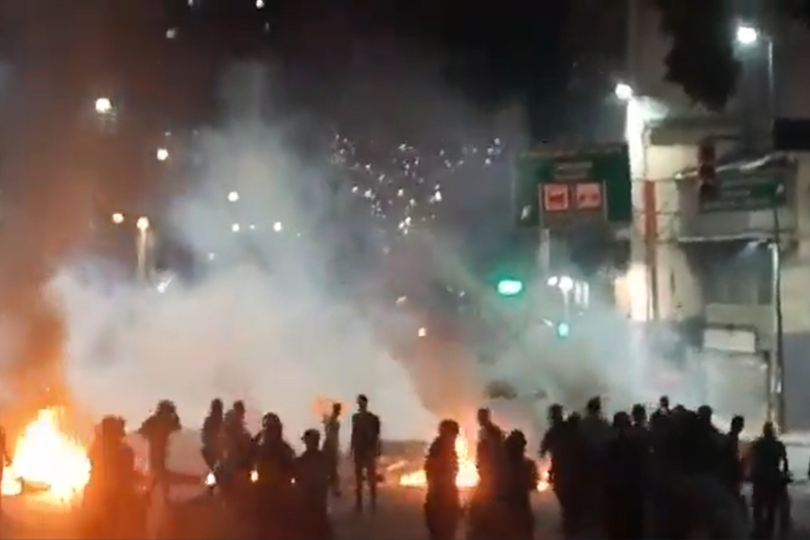
Since the absurd restatement of the election results by the election commission, street protests by those supporting González have begun popping up in many locations across the nation. Maduro has as expected rolled out the military to bring an end to the protest, but at this point they show no signs of diminishing.
There are also many calls from outside the country for Maduro to release the full election results, via entities such as the Carter Center, which was granted permission to monitor the last president election six years ago, and other international human rights bodies.
Although allies such as Cuba, Bolivia, Honduras, and Russia have already congratulated Maduro on his victory, a far larger number of nations is complaining that the election was clearly rigged.
“Maduro’s regime must understand that the results are hard to believe,” wrote Chilean President Gabriel Boric in a message on the social media platform X after the national election commission awarded Maduro the win.
“The international community and, above all, the Venezuelan people – including the millions of Venezuelans in exile – demand total transparency,” Boric continued. “Chile will not recognize any result that is not verifiable.”
José Raúl Mulino, President of Panama, declared he is putting diplomatic relations with Venezuela “on hold” pending release of full elections results.
“We’re going to wait until they finishing counting the votes,” Mexico’s outgoing President Andrés Manuel López Obrador said about the results.
“It’s critical that every vote be counted fairly and transparently, that election officials immediately share information with the opposition and independent observers without delay, and that the electoral authorities publish the detailed tabulation of votes,” said U.S. Secretary of State Antony Blinken about the results.
From Spain, its Foreign Minister José Manuel Albares also demanded Venezuela release its full election results.
“The people of Venezuela yesterday voted democratically and in very large numbers,” Albares said in an interview with the press yesterday. “We want total transparency, and that’s why we’re asking for the results to be published, polling station by polling station,” he said.
Maduro’s response to regional critics from Argentina, Chile, Costa Rica, Peru, Panama, the Dominican Republic, and Uruguay was to expel their diplomatic corps from his country, and to recall his own representatives from consulates in each of those nations.
Within the nation, the citizens siding with Edmundo González continue to rise and demand accountability from the Maduro government for its claims that it won the election. While Maduro may be able to push that off for a while by simply claiming the real results are not ready to release yet, that may prove hard to avoid much longer, especially as it appears the opposition’s independent tallies of polling station results, something they gathered in person at as many locations as possible on Sunday, are said to be near ready to be released publicly on their own.