Israel Claims Senior Hezbollah Leader Killed in Attack on Beirut Suburb
Lead StoryConflict
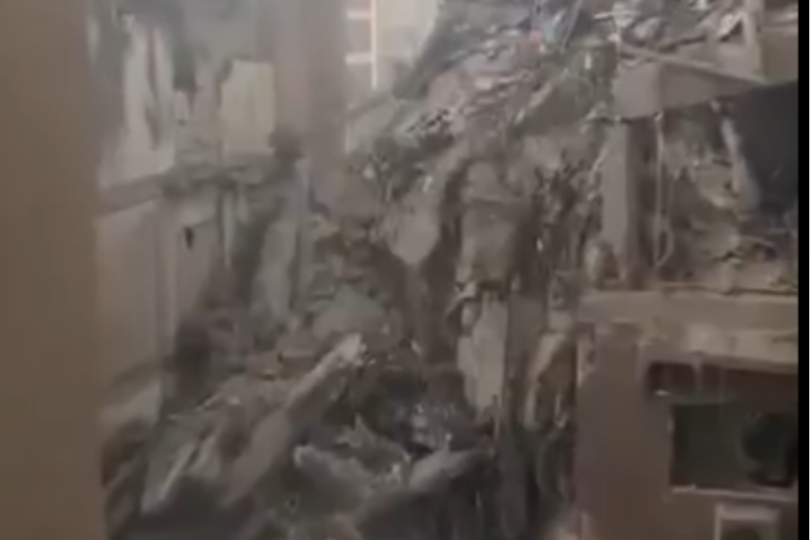
On July 30 at around 7:45 PM local time, Israeli Defense Forces carried out a targeted airstrike in Haret Hreik, a southern suburb of Lebanon’s capital city of Beirut.
Witnesses said the strike was quick but violent, exploding and destroying a group of apartments in an urban area known to be a place where Hezbollah officials and families lived. The shell or shells which hit the building caused the collapse of its top two floors, with scattered debris thrown far from the center of the blast zone.
Emergency response vehicles including multiple ambulances rushed to the scene quickly to save who they could. The Lebanese Ministry of Health said in a statement that three people died in the attack, with two children among the dead. A separate accounting said the third confirmed death from the blast was a woman. The Ministry of Health said another 74 people were also confirmed injured because of the blast and the collapse of the apartment structures.
Rescue teams said they expected more injured and dead to be discovered after they complete scouring the rubble for survivors.
According to Israeli Defense Forces Spokesperson Rear Admiral Daniel Hagari, the target of the attack was Hajj Mohsin, the most senior military commander reporting to the leader of Hezbollah, Hassan Nasrallah.
Mohsin, also known by the names Muhsin Shukr or Fuad, is alleged to have coordinated a deadly rocket attack launched on the Druze town of Majdal Shams this weekend. The rockets struck a “football pitch” (soccer field) in Majdal Shams, located in the Israeli-occupied Golan Heights region in northern Israel on July 27. At least 12 people were killed in the attack, with most of them children between 10 and 16 years of age and who were on the playing field at the time. The rockets also injured more than 42 others at the scene.
Israel’s military tracked the rocket from where they were launched, and identified it based on fragments found afterwards as an Iranian-made Falaq-1 missile, which carried 53 kilograms (just under 120 pounds) of explosives. They also claimed Hezbollah was behind the attack, based on evidence of the missile findings and confirmation of where the missile came from.
The U.S. also agreed with those conclusions, likely largely based on Israel’s own summary of the attack.
“It was [Hezbollah’s] rocket, and launched from an area they control,” said National Security Council spokeswoman Adrienne Watson on July 28, the day after that strike.
In a post authored by Israeli Defense Minister Yoav Gallant after the Golan Heights assault, he declared that the mass deaths of children there were proof that, “Hezbollah crossed the red line.”
Hezbollah denied having anything to do with the attack. In a statement of their own this weekend, they said instead the football pitch was hit by a projectile from Israel’s Iron Dome defense system.
Those denials did not stop Israel making the deadly counterstrike last night in Beirut, a strike which Israeli officials say achieved the result they hoped for: the death of Muhsin Shukr, Hezbollah’s second-in-command in the military.
“The IDF will not tolerate terrorist attacks on Israeli civilians,” said IDF spokesperson Hagari yesterday. “We have been responding to these attacks with precise strikes on Hezbollah commanders, terror operatives and military infrastructure in Lebanon.”
“The IDF carried out a targeted strike in Beirut, on the commander responsible for the murder of the children in Majdal Shams and the killing of numerous additional Israeli civilians,” the Israeli military said in a separate statement about what just happened.
According to Israeli intelligence, Shukr was responsible for most strategic and tactical military planning for Hezbollah. He also was managing an array of weaponry, which included cruise, long-range, and other guided missiles, along with UAVs (Unmanned Aerial Vehicles, or UAVs), and rockets capable of striking at a significant range.
There was also a bounty of U.S. $5 million for actions leading to the death or capture of Shukr, according to Israeli and U.S. sources, based on two decades of leading warfare against Israel.
Israel says it has confirmed Shukr was killed in the Beirut attack. Hezbollah is officially denying that for now.
Although the multiple deaths both in Saturday’s attacks in the Golah Heights and the ones now in the southern suburban region of Beirut are of concern, and it is yet to be confirmed by both sides if Shukr is indeed dead, a far more serious question now is whether these attacks will lead to a more serious attack in response by Hezbollah on Israeli.
It is also clear that for Lebanon, Israel’s reprisal attack in metropolitan Beirut was an uncalled-for escalation.
Abdallah Bou Habib, Lebanon’s Foreign Minister, was the first to respond with an official statement from the government. He said Israel’s bombing of the flats complex in Haret Hreik came as a complete surprise, after having been assured by Israeli authorities that at best Israel would be planning a “limited response” in Lebanon, one that Israel officials promised “would not produce a war”.
“We did not expect to be hit in Beirut,” the foreign minister said in an interview about the Israel shelling yesterday. “We thought these were red lines that the Israelis would respect.”
Najib Mikati, Lebanon’s caretaker prime minister, condemned Israel’s actions yesterday in Beirut as a “criminal act”.
“The Israeli killing machine has not been satisfied by targeting the south of Lebanon and the Bekaa, it has now reached the heart of the capital Beirut, just meters away from one of the largest hospitals in Lebanon,” Mikati said in a written statement.
Mikati has called for an emergency session of his cabinet today to review what happened and decide on what official actions the country needs to take in response.
His government has already announced his country will file a formal complaint with the United Nations Security Council over the incident. It has also reportedly asked Hezbollah to hold any response of its own to just a “proportional retaliation”, but it is also clear that may be more than enough to inflame Israel to expand the war against Hezbollah in Lebanon to a much higher level.
“Hezbollah’s ongoing aggression and brutal attacks are dragging the people of Lebanon and the entire Middle East into a wider escalation,” said IDF spokesperson Hagari in his formal briefing with reporters on what happened in Lebanon last night. “While we prefer to resolve hostilities without a wider war, the IDF is fully prepared for any scenario.”
After Israeli Prime Minister Benjamin Netanyahu promised on July 28 that his forces would deliver a “harsh” response for the Golan Heights attack the previous day, Hezbollah officials said they would respond quickly to whatever Israel might do.
Soon after the Israeli airstrike on Haret Hreik last night, Russia issued a statement calling out what Israel did as a violation of international law.
The government of Iran also responded quickly, saying the IDF response in Beirut amounted to “sinful and cowardly aggression”.
Now the big question for all involved in this conflict, including the United States, is how to keep this continuous bloody attack-and-counterattack cycle between Hezbollah and Israel from becoming something much bigger.
Hezbollah continues to say it will not back down in its fight against Israel until there is a real, sustained, ceasefire in Gaza. Israel will also never ease up on its airstrikes. And with the aftermath of the Golan Heights rocket attack this weekend demonstrating even those who disagree with Netanyahu regarding Gaza are fully aligned in seeking retribution for the deaths on the football pitch in Majdal Shams, the chances that the war between Hezbollah and Israel could escalate just grew substantially in just the past three days.