World Braces for Wider War in Middle East After Latest Israeli Actions
Lead StoryConflict
The latest of these unconscionable assaults took place August 3, this time on Israeli-occupied Palestinian territory on the West Bank.
This one involved two airstrikes located near Tulkarem.
The first blew up an automobile traveling in the region which Israel claimed had a “terrorist squad” on board. As is becoming common in Israel’s most recent terrorist attacks on Palestinians in Gaza and the West Bank, the Israeli Defense Forces declared their version of the story as hard fact but without any evidence supporting their story either before or after the assault.
One of those confirmed murdered in this most recent airstrike was Haitham Balidi, the head of the Nablus regional branch of the Qassam Brigades, the military part of Hamas. A second individual identified as assassinated in the same strike was identified as one of the local heads of the Islamic Jihad organization’s al-Quds Brigades.
The Qassam Brigades had been led up until last month by Hamas’ Gaza Strip military head Mohammed Deif when Israeli military forces ran another mission in the so-called safe zone for refugees on July 13 in al-Mawasi, near the Mediterranean Sea border of Gaza. That attack resulted in the mass killing of 90 innocent Palestinians. It also killed both Deif and Rafa Salami, the head of Hamas’ military forces in Khan Younis in southern Gaza.
The second airstrike took place in the same area just hours afterwards. Like the first one, the target this time was another automobile which the IDF claimed was traveling in Bal’a on a mercenary mission. This one also turned the vehicle into twisted wreckage and killed four people. Those killed have not been publicly identified at this time.
At least nine were killed in Saturday’s airstrikes.
Shortly after the IDF fighter runs which destroyed the vehicles, Israeli Defense Forces ran a land-based raid into the town of Tulkarem, resulting in a ground battle with unknown casualties. Journalists who attempted to cover the raid were hit with tear gas to deter them from taking photographs and videos.
Israel’s August 3 Killings Add to A Recent Relentless String of Assassinations of Hamas and Hezbollah Leaders
Those targeted murders came less than a week after IDF forces invaded Lebanese air space and shelled an apartment building on July 30 in Haret Hreik, a suburb just south of the country’s capital city of Beirut. Their target this time was Muhsin Shukr, the head of Hezbollah’s military forces. He was confirmed dead after the attack.
The excuse for killing Shukr was Israel’s assertion that Hezbollah was behind the horrific killing of at least twelve when rockets reportedly landed on a soccer field in Majdal Shams, a Druze (Arabic) village in the Israeli-occupied Golan Heights region in northern Israel on July 27. Most of those who died were children less than 16 years old.
The Israeli Defense Forces blamed Hezbollah for the attack, describing as their proof that they had found an Iranian-built Falaq-1 missile among the ruins of the “football pitch” field where the children died. Hezbollah consistently denied having anything to do with the attack. It instead pointed to those on the ground who said the rocket that struck the schoolground appeared to be a misfire of Israel’s “Iron Dome” defense system. Further evidence gathered from eyewitnesses suggests the Iron Dome malfunction the more likely cause, but Israel continues to assert – without any direct evidence other than the claim of a missile fragment found on the ground – that Hezbollah was the criminal element involved in these deaths.
Lebanon’s Prime Minister Najib Mikati lashed out against Israel’s having crossed yet another “red line” by choosing to invade its country once again illegally. He called the bombing of the apartment building complex “a criminal act”.
The very next day Israel added to its assassination headcount when Israeli forces assassinated Ismail Haniyeh, Hamas’ political head, while he was in his residence in Tehran in connection with the inauguration of Iran’s just-elected President Masoud Pezeshkian. Hamas and Iranian investigation of the site showed a rocket had been fired at Haniyeh at relatively close range, possibly by Israel’s Mossad forces which may have penetrated the inauguration location. The missile was said to have been sufficiently carefully aimed to have blasted directly through Haniyeh’s body.
At the time of that murder, Israel was telling the world it was serious about ongoing negotiations for a long-term ceasefire in Gaza. As the person with the final say regarding Hamas’ position on the terms of that ceasefire, Haniyeh was pivotal to those discussions. Though Israel has not claimed responsibility for Haniyeh’s death, its leaders have uniformly celebrated the death as a big win for the country and, more importantly, have not denied they murdered him.
Iranian Supreme Leader Ayatollah Ali Khamenei said after Haniyeh’s murder that, “the criminal and terrorist Zionist regime martyred our dear guest in our house and made us bereaved.” He promised Israel “a harsh punishment” for the heinous crime not just of Haniyeh’s murder but for having attacked him in Tehran during such an important ceremonial occasion.
The newly inaugurated Iranian President Masoud Pezeshkian added that his country would “defend its territorial integrity, dignity, honor, and pride, and will make the terrorist occupiers regret their cowardly act”.
The Middle East and the U.S. Prepare for the Strongest Counterattack Yet Against Israel
As a clue to what Iran might be planning as a revenge strike this time, after a previous murderous IDF airstrike killed two Iranian generals at the country’s consulate in Damascus, Syria, on April 1 in a terrorist attack which violated international law, Iran took a measured approach to its counterattack. Iran wanted to run an airstrike to cause targeted damage of its own, while apparently doing everything it could to avoid collateral killings of Israeli citizens.
That time it gave a week of advance warning that it would be running a strike as a first step, which appears now after the fact to have been done to allow Israel to ready itself for what might come. Given that lead time, the IDF redeployed its forces mostly out of Gaza and into Israel itself at the time and positioned its Iron Dome defense system anticipating the response. When the Iranian counterstrike came two weeks after the Iranian consulate destruction, a first wave came as hundreds of simple Iranian drones crossed much of the airspace over Israel. Most were shot down, but it also appears Iran never expected them to cause much damage. Iran may even have been using the low-cost drone attack to map out how Israel’s Iron Dome works in a widespread attack like this, though that has never been acknowledged.
The only real damage Iran is known to have caused in that barrage was at an Israeli military airfield believed to be the launch point for the IDF bombing run which killed the two Iranian generals in Damascus. Israel has never commented on what happened there and moved quickly to bar any reporters from getting close enough to report in detail.
Current speculation based on intelligence sources say Iran may be planning a far more deadly response to Haniyeh’s murder. According to Western intelligence sources including the United States, the attack will be coordinated with Hezbollah forces. It may also take place on Tisha B’Av, the annual day in which the Jewish people hold nationwide prayers of sadness regarding the destruction of their people’s first two temples. Those are Solomon’s Temple, which came down during the Neo-Babylonian Empire in 423 BCE, and the Second Temple, which was destroyed by the Roman Empire in 69 BCE. Tisha B’Av, which is honored on the 9th day of the historical month of Av, begins this year on August 12 and runs through August 13.
Tisha B’Av, sometimes referred to as the “Time of Tragedies”, is considered the saddest day of all Jewish remembrances. It is honored with fasting, prayers, and special gatherings to reflect on loss and suffering.
The intelligence sources say Iran has selected this time as a means of exacting the strongest possible emotional response from whatever action it takes.
Rumors which came out since these intelligence reports claim Iran might accelerate its response to as early as the next few days. Those so far have not been confirmed. It also seems unlikely the Iranian military would move so quickly to attack, if indeed that attack is broad and severe.
In preparation for what may be about to take place, France directed its citizens to exit Iran as quickly as possible, in anticipation of Israeli forces striking again on Iranian soil possibly soon.
International airlines Lufthansa, Delta, and Air India have cancelled flights to and from Beirut and Tel Aviv, in anticipation of this becoming a major war zone.
Cyprus, which has been an ally for Israeli and American forces deployment in the region, began stockpiling supplies and setting up emergency camps for refugees possibly numbering in the tens of thousands, if the upcoming expansion of the Middle East war is an expansive as many worry it could be.
In Israel, the government took the step of widely deploying satellite phones throughout the country, after receiving warnings the country’s normal communications systems may be a target.
Israeli Prime Minister Benjamin Netanyahu announced more generally this weekend that he believes his country is “in a state of very high readiness for any scenario”.
The U.S. Department of Defense is moving more military forces of its own to the Middle East as well.
In a statement released on August 2, Deputy Pentagon Press Secretary Sabrina Singh confirmed that Secretary of Defense Lloyd Austin has authorized extensive redeployment “to improve U.S. force protection, to increase support for the defense of Israel, and to ensure the United States is prepared to respond to various contingencies.”
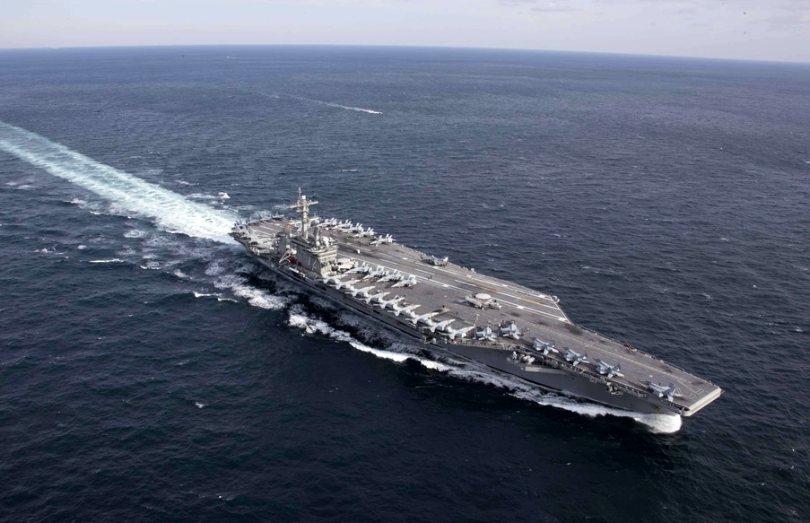
The statement went on to say it is already moving the USS Abraham Lincoln Carrier Strike Group into the region to bolster its military forces in the Middle East. It has also “ordered additional ballistic missile defense-capable cruisers and destroyers to the U.S. European Command and U.S. Central Command regions” and is “taking steps to increase our readiness to deploy additional land-based ballistic missile defense”.
Secretary Austin also “ordered the deployment of an additional fighter squadron to the Middle East.”
All these repositioning and buttressing of resources are in addition to the USS WASP Amphibious Ready Group / Marine Expeditionary Unit (ARG/MEU) which is already positioned in the Eastern Mediterranean.
The reported purpose of these forces is defensive, with the goal of assisting in shooting down missiles which may be fired upon Israel from any location nearby.
The United States is hoping it will bring allies such as the United Kingdom to aid in defending Israel against the expected Iranian attack to come. But this time, unlike when Iran struck back at Israel in April after IDF forces bombed the embassy in Damascus and killed the two generals, it is not clear those allies will line up so automatically to support Netanyahu.
In the United Kingdom, for example, the Foreign Office of new Prime Minister Keir Starma said in response to an International Court of Justice ruling last month, which concluded Israel was illegally occupying the West Bank and Gaza and must leave immediately, that the UK government is “strongly opposed to the expansion of illegal settlements and rising settler violence”. That statement represents a strong shift from the position of former Prime Minister Rishi Sunak.
The heads of state of Spain, Ireland, and Norway also declared their agreements with the ICJ ruling, and condemned what amounts to Israel’s illegal annexation of Palestinian lands and brutal oppression of the Palestinians who live there.
In France, President Emmanuel Macron is in danger of losing his job because his party suffered a strong defeat at the European Parliamentary elections which took place from June 6-9. He asked that regional parliamentary voting on who would be the next president be delayed until after the Paris Olympics are over. Considering how poorly that appears to be running from an operational sense, on top of public sentiment now growing against Macron’s past backing of Israel, he may be reluctant to throw as much support towards Israel than in the past, just to avoid alienating anyone further.
Coincident with the release of the formal statement on the Department of Defense’s plans, spokesperson Sabrina Singh said that despite these steps, she believes there is still a way out of this becoming a bigger battlefield.
“I think we are being very direct in our messaging that certainly we don’t want to see heightened tensions and we do believe there is an offramp here, and that is that ceasefire deal,” she said, despite that Israel just murder the Hamas political leader who would have been the one to sign off on that deal.
In response to Singh’s comments and the DoD statement, Sami Abu Zuhri, a senior official with Hamas, responded to reporters with an absolute rejection of the U.S. position on this.
“Netanyahu does not want to stop the war and is using these empty statements to cover up his crimes and evade their consequences,” he said.
Yesterday Jordanian Foreign Minister Ayman Safadi traveled to Iran to meet with that country’s Minister of Foreign Affairs, Ali Bagheri Kani. The purpose was to plead with Iran to reconsider its threatened “decisive” counterattack on Israel. Safadi and his government are also concerned that Jordan might itself become a target of Iran’s wrath this time. During the Iranian mostly drone attacks on Israel in April, Jordan let France set up radar sites in its country to detect missiles coming from Iran. It also used its own anti-missile defense systems to shoot down some of the Iranian missiles bound for Israel at the time.
Safadi is said to have insisted to the Iranian Foreign Affairs Minister that he was not there on Israel’s behalf. He may be more convincing about that than before, especially after the Jordanian kingdom lashed out at Netanyahu for killing Hamas’ Haniyeh. A statement from the government called Israel’s brazen assassination of the Hamas political head “an escalatory crime and flagrant violation of international law”.
Despite those pleas, few believe Safadi’s visit will have much success deterring Iran from its present course for what leaks say could be not just a terrifying mass airstrike on Israel. Based on recently released intel, Iran could also be targeting Israeli assets in other countries across the region, as well as other nations who continue to support Israel in its genocidal war in Gaza and refuse to condemn its recent string of cross-border assassinations.
This weekend Iran also issued a direct warning to the United States not to attempt to defend Israel from the coming airstrikes. If it does, Iran says the U.S. will make itself a target as well.