Unprecedented Canadian Railway Strike to Shut Down Two Largest Railways Starting August 22, Paralyzing Shipping
Lead StoryBusiness
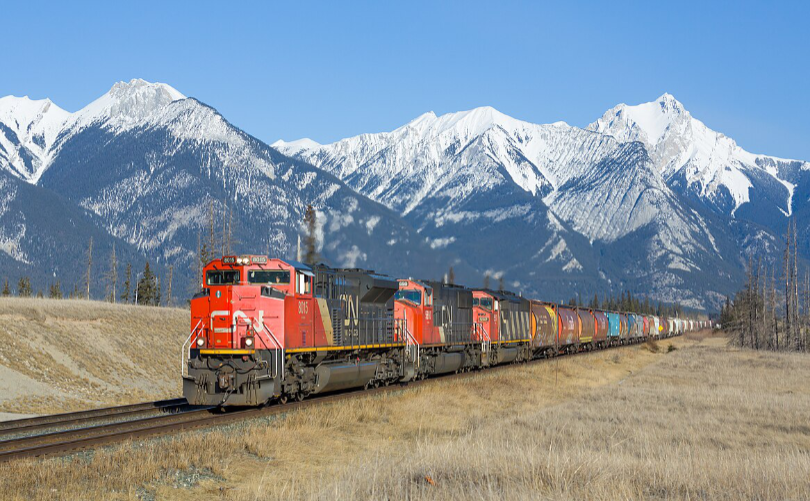
Assuming it goes through, the strike will have serious ramifications for many Canadian industries and U.S. ones as well.
The origins of the strike began with the expiration of key contracts between the Canadian National Railway and Canadian Pacific Kansas City at the end of 2022. Under provisions previously negotiated, the unions agreed to provisions which would provide for an additional year beyond the original expiration date to negotiate new contracts.
Despite the additional year to reach agreements and now another eight months in addition to that, the railway operators and the unions are still far away in their discussions on three separate contracts. CN and CPKC each have separate contracts covering locomotive engineers, conductors, and railyard workers. There is also a separate contract still under negotiation with CPKC covering rail traffic controllers.
In the CN negotiations, for example, the company says it has already made four separate offers covering basics such as a new wage pact, plus considerations regarding rest time and terms regulating labor availability.
The Teamsters Union says the proposed contract would force workers to move to new locations for up to multiple months to support emergency reallocation of support services across the CN network. It also called out new provisions which would require workers to be awake longer hours and put lives at risk, with requirements which would “gut the collective agreement of all safety-critical fatigue provisions.”
CN responded to that in a statement that its new contract “fully complies with new regulatory requirements for rest and does not in any way compromise safety”.
Canadian Pacific Kansas City also made similar changes in its contracts with the Teamsters, producing the same response from the unions.
CN and CPKC together form a duopoly of cargo service which supports virtually all rail shipments throughout most of Canada.
In view of the breakdown in contract talks, the Teamsters Canada Rail Conference (TCRC) which represents the workers for both railways, announced it will go on strike starting just after midnight tomorrow.
"Unless parties reach last-minute agreements, a work stoppage will occur at 00:01 on Thursday, August 22,” it said in a statement.
“We’re serving strike notice to defend the rights and safety of our members,” TCRC President Paul Boucher added in a separate release connected to the strike announcement.
As the strike deadline drew near. Teamsters Canada Rail Conference spokesperson Christopher Monette emphasized to the public that this was about much bigger things than better wages for its workers.
“The main issues now have to do with fatigue, rest, scheduling and forced relocation,” he said. “The companies want to try to make it seem that our members are all exceedingly well paid and spoiled. But the reality now is that these are billion-dollar corporations, and our members are giving over 80 hours a week of their lives to these companies.”
Assuming the strike does proceed, it will put 9,300 workers employed by the two railway companies out of work and onto picket lines. The Teamsters Union for the two railways represents conductors, locomotive engineers, yard workers, and rail traffic controllers, plus other positions critical for the operation of the railway.
CN Rail said after the strike declaration was released that the company would block union workers from reporting for work, once the strike begins.
“Unless there is an immediate and definite resolution to the labor conflict, CN will have no choice but to continue the phased and progressive shutdown of its network which would culminate in a lockout,” the company said in a formal statement released days ago.
In preparation for the strike, truck shipping companies in Canada are already stepping up operations as best they can, to provide an alternate means of moving everything from agricultural products and electronics, auto parts, metal, and other goods. Unfortunately, early estimates are that trucking companies may be only able to expand their operations by 10% to 20% beyond normal shipments, at least in the short term. That means much of Canada’s business will be put at high risk by the strike when it comes.
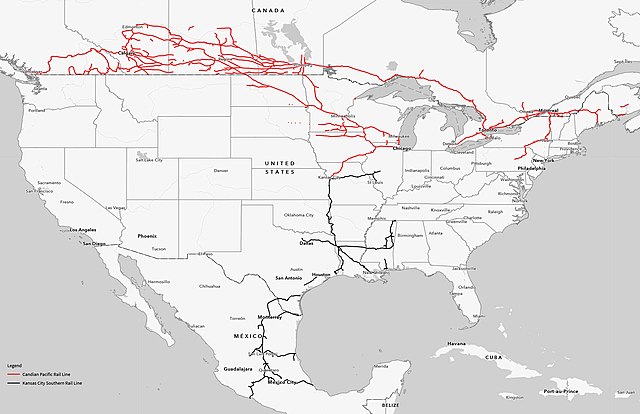
That risk is substantially in terms of direct monetary damage to Canadian businesses. According to the Railway Association of Canada, CN and CPKC together carry approximately $1 billion of goods across the country every day. With an indefinite strike ahead which could last weeks, the damage to the Canadian economy in general would be swift and deep.
That economic harm will also spread quickly to parts of the U.S. The two Canadian railway shipping systems link up with multiple major railway hubs in the U.S., including Minneapolis and Chicago in the northern U.S. Midwestern region, and as far down Memphis, Tennessee, and New Orleans. There are also links to Mexican goods transport services via railways which connect across the border.
All those linkages are there at least in part because of the USMCA trade agreement which provides for low-tariff transport of goods throughout the United States, Mexico, and Canada.
Because of the extensive damage the Canadian rail strike could cause to ripple through the American economy, the Chambers of Commerce of the United States and Canada have joined forces to lobby their respective governments to intervene in the strike before it begins.
“The U.S. Chamber of Commerce and Canadian Chamber of Commerce are calling on the Government of Canada to immediately intervene to avert a disruption in the Canadian rail network. A stoppage of rail service will be devastating to Canadian businesses and families and impose significant impacts on the U.S. economy,” the two groups said in a statement.
“The Government of Canada must take action to ensure goods continue to move reliably between our two countries,” they added.
Agricultural companies in the U.S. have also raised concerns about the harm a strike like this could cause them. With Canada representing the second largest source of agricultural imports for the U.S. and the third largest customer for American agricultural exports, there is much at stake for them.
“If a strike shuts down rail service from Canada into the U.S., it will adversely impact America’s farmers who rely on rail to ship goods between the two countries,” says Harold Wolle, president of the U.S. National Corn Growers Association. “We strongly encourage Prime Minister Trudeau, the Teamsters, and Canadian rail workers to do everything possible to avoid such a strike.”
The Canadian Industrial Relations ask conjunction with the national government of Canada, has chosen for now to stay out of the fray, and instead is asking the parties to attempt to settle the disputes among themselves first. The Board also took the unusual step of insisting there was no need for any “stopgap services” to be put in place to ensure goods continue to move even if the strike were to stop.
Companies across Canada and which do business with Canada are scrambling to find other options to ship their most critical goods by other means than rail, beginning on August 22 with no clear end in sight.