The strike, which involved some 9,300 workers for the Canadian railway duopoly of Canadian National Railway (CN) and Canadian Pacific Kansas City (CPKC), began as 12:01 AM yesterday morning.
It ended 17 hours later, after Canada's Minister of Labour Steve MacKinnon exercised his emergency powers authority to bring an end to the work stoppage.
The workers walked out after negotiations between the Teamsters Canada Rail Conference which represents them and the two railway companies failed to conclude with viable new contracts for the railway employees after a total of over one year and eight months of negotiations. Their previous contracts officially expired in 2022. The parties had agreed on a one-year period after the contracts expired to develop new ones, but they failed.
The central bone of contention in the contract talks was about changes the companies wanted to make regarding when and how the union’s collective of conductors, locomotive engineers, yard workers, and rail traffic controllers could be called back to work after what the union considered inadequate rest time. Among the new provisions the companies wanted to make was an allowance for forced relocation of employees sometimes thousands of kilometers apart, as needed, to meet staffing demands.
The companies argued they were only doing what was best for all, to preserve jobs while keeping the railroads running. They also said the new powers they sought in the contract changes were in full consideration of Canadian labor laws with respect to ensuring adequate downtime between assignments, and in consideration of the need to move employees at will to avoid freight delays.
The unions argued that even if the proposed contract alterations covering issues such as “fatigue, rest, scheduling and forced relocation” may not have violated Canadian labor laws, that did not give the railways carte blanche to abuse their employees in this way, or ultimately to put their safety at risk.
In anticipation of the strike, shippers using railway freight to carry their goods began rearranging how they were transporting goods across the country several days in advance. The railways also began repositioning where they would bring their rail cars, locomotives, and other equipment.
If the strike had proceeded “full throttle”, everything from agricultural product shipments being delivered at key harvest times in the country, to timber and fossil fuel products originating in western Canada, to automobiles and other industrial products, would have stopped moving. Though trucking companies were gearing up to pick up some of the slack if the walkout proceeded, it was still projected business losses amounting to $1 billion would have accrued for every day the railroads were not operating.
All the way until the actual time the Teamsters gave the call to workers to walk off their jobs, Canadian authorities insisted they wanted CN and CPKC and the union to reach a deal without being the government forcing the union to remain on the job.
That was as much of a decision focused on business realities, that the best resolution would be one the two sides to the negotiations would reach on their own, as it was a political one. The country’s ruling Liberal Party as well as its Prime Minister are strong union supporters and depend on their backing for remaining in power.
Once they railways stopping running early yesterday morning, it took just 17 hours for the Canadian central government to change their position.
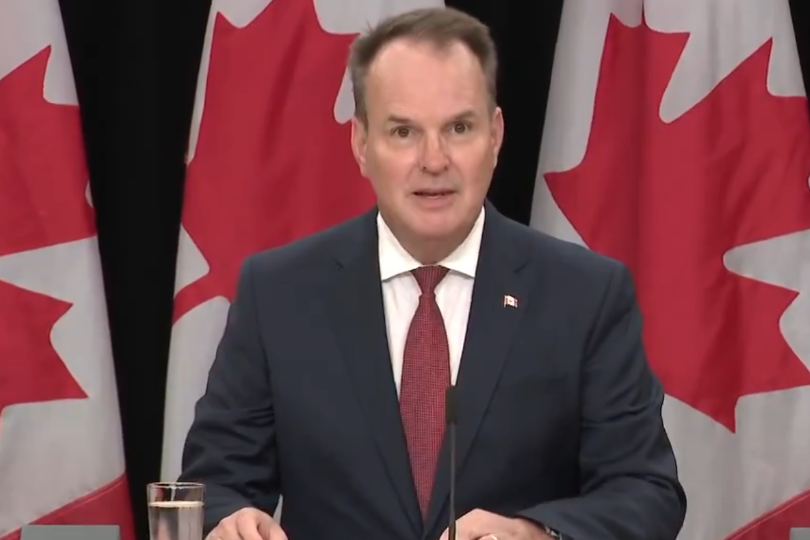
That happened as Steve MacKinnon, Canada’s Minister of Labour, operating after consultation with Prime Minister Trudeau, ordered the unions back to their jobs and the two parties to a new negotiating table.
“I am using my authorities under the Canada labor code to secure industrial peace,” MacKinnon announced in a hastily constructed news conference yesterday afternoon.
“Under Section 107 of the Code, I have directed the Canadian Industrial Relations Board to assist the parties in settling the outstanding terms of their collective agreements including by imposing final binding arbitration,” he said in a statement released on the social media platform X concurrent with the news conference. “I have also directed the Board to extend the terms of the current collective agreements until new agreements can be signed, and for operations on both railways to resume forthwith.”
“I assume that the trains will be running within days,” the minister added.
The CIRB is working with the unions and the companies to ensure full cooperation with the order. CN already announced it would begin running trains as early as 6 PM EDT yesterday.
In the runup to the strike and including the 17 hours that the strike lasted, analysts say many hundreds of millions of dollars of losses were already incurred by a wide range of industrial and agricultural suppliers.
Getting the forced arbitration off to a good start is now the next challenge for Labour Minister MacKinnon and the Trudeau administration. Forcing the parties into a room to come up with new contracts will not change the vast divide that appears to separate the positions of the railways and the Teamsters Canada Rail Conference.