Beginning November, Allstate is Jacking Up California Home Insurance Rates an Average of 34%
Lead StoryBusiness

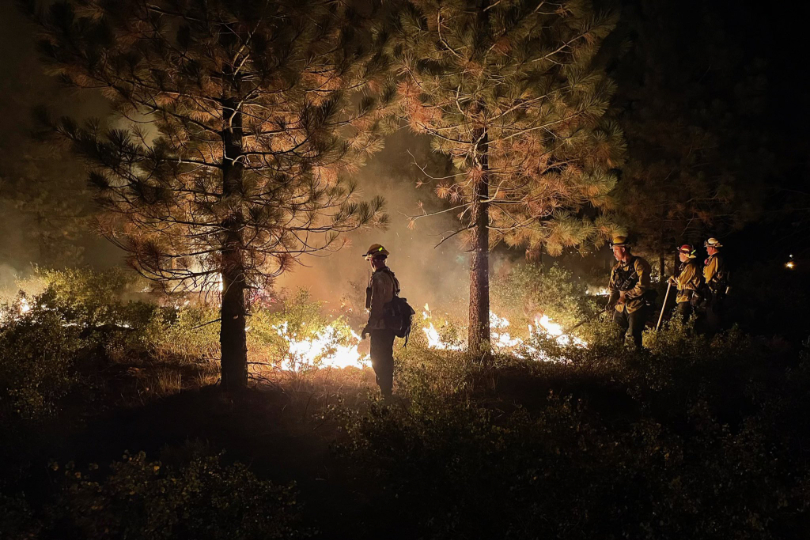
In a development which many predicted would happen any moment, Allstate announced yesterday it had secured agreement from California state insurance officials to increase mean home insurance rates by 34%, equivalent to a little over one-third.
Allstate has a one-word justification for needing the rate increase. That word is wildfires.
A continuing long-term shift in climate in California has brought with it rapidly rising temperatures and intensifying drought over the last few years. That contributed not only to this period in California history being named a 1200-year megadrought with major water shortages over the last few years, as well as a time in which the increasing number of wildfires and area damaged by them has increased dramatically.
This transformation to a region of extreme dry forests, underbrush, and other land, and much hotter temperatures, and the expensive consequences of the wildfires which have come with those changes, drove Allstate’s decision to ask for the rate increase.
In 2020, for example, the worst wildfire year on record in California, a total of 8,500 fires in the state burned down over 4 million acres of land. 32 people were killed as a direct result of the blazes. There were also over 10,000 structures destroyed with total damages of over $12 billion incurred.
The next year was not as destructive, but the numbers were still almost as staggering. There were over 2.6 million acres incinerated by the blazes that year, taking with them 3,629 buildings.
Because of a series of atmospheric river incidents which temporarily alleviated drought in the last two years, California wildfires in 2022 and 2023 burned less land, damaged less property, and involved less total numbers of individual wildfires.
Even with that, however, total wildfire damage in the state for the period from 2019-2023 was the most severe in history, with an average of 1,722,059 acres destroyed by fire every year. In the same five years, almost 25,000 homes in California have been reduced to ruins by wildfires.
Though emergency funds from the federal government and special allocations from the state were made available to fight the fires and manage cleanup after the fact, the U.S. insurance industry was left stuck with the bill for the vast amounts of insured property damage caused in the state.
It is part of why multiple insurance companies began reaching the same conclusion. They needed to bring an end to offering insurance home property and casualty insurance in California for anyone, as quickly as possible.
The first step in that process was for many insurers to announce they would stop offering new home insurance policies in the state. That is already well under way, with big insurance companies like State Farm, which in 2022 was responsible for 22% of all homeowner insurance in the state, and Allstate, the fourth-largest home insurance underwriter in California with 5% of the market, having shut down writing new insurance policies as of last year. A handful of other companies, including Kemper Independence Insurance Company, Merastar Insurance Company, Unitrin Auto and Home Insurance Company, Unitrin Direct Property and Casualty Company, also announced their intent last year to cease writing new home insurance in the state.
Other companies, including Farmers, have decided to set a maximum number of new home insurance policies in the state, rather than to stop writing new policies altogether. Farmer’s cap on that is now a maximum of approximately 7,000 policies, which in turn are carefully chosen to be in lower risk areas.
The next thing many insurers attempted to do was to cancel existing home, office, and rental policies they already had in place with property owners in the state. Those cancellations would have taken effect upon annual renewal dates. But with state regulators watching the number of insurance companies able to absorb those cancellations plummeting, they invoked their regulatory authority by asserting that, as long as a homeowner was in good standing with regular insurance premium payments, those insurance companies had no right to cancel the policies they were already paying for.
Following that, the only logical thing left with companies which were stuck with high-risk insurance policies because of the wildfire problem was to plead their case for a rate increase, which would “share the risk” with homeowners, as they put it.
The first major home insurer in California to be granted such an increase was Allstate, which announced its new pricing plans on August 29.
According to the changes the state insurance commissioners have granted the company, effective November 24 average homeowner insurance policies in the state will rise by the 34% number previously noted. It is the single largest homeowner insurance policy premium increase in California for any major insurance company since 2021.
Information provided to regulators by Allstate shows the rate increases will hit over 350,000 policyholders. While the 34% rate increase is the average, some of the companies’ customers in the state will see rate increases as high as 650% depending on where their homes are located.
The rate increases will also hit a not-surprising wide swath of cities and towns in the state. The coastal counties of San Mateo and Santa Barbara, the first located in the San Francisco Bay Area and the second just north of the Los Angeles basin, will be hit hard by the increases. But then also too will Fresno and surrounding towns, located in central California. The common thread that connects them all is the increasing high risks of wildfires.
Allstate announced its new rates yesterday along with a statement acknowledging how important it was to be able to charge these higher prices at this time.
In a statement, the company cited it had no alternative but to increase rates because of “higher home values and repair costs coupled with more frequent, severe weather”. Thanks to the approval of the new insurance premium pricing, it said “this home insurance rate approval allows us to continue protecting our existing customers”.
This is far from the last such rate announcement to come from California homeowner insurers. State Farm, which holds the largest percentage of homeowner insurance policies, was previously authorized to charge a 20% average increase in its premiums earlier this year. It is now back to the state insurance commission with a request to raise those prices even higher.
Also coming soon are increases in rental insurance premiums, again for the same reason. Several of those insurers are understood about to announce new rates of their own very soon.