Venezuela Issues Arrest Warrant for Election Winner, Triggering a New Crisis
Lead StoryRebellion-Transformation
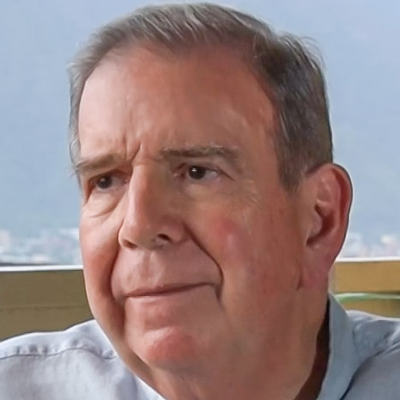
On September 9, despite overwhelming evidence that opposition candidate Edmundo González beat incumbent Nicolás Maduro by a margin of 2-1 in the July 28 presidential election, and growing demands from within the nation and from prominent leaders outside it, the corrupt government of President Maduro added to its list of crimes by ordering a warrant for the arrest of Edmundo González.
González rejected four previous demands to appear in Venezuelan courts related to the election results.
The first such appearance was soon after the election and intended to be before the Venezuelan Supreme Tribunal. That was ostensibly to give him a chance to present the hard evidence his supporters had gathered from 80% of the country’s polling places at the time of the election. It has since been posted online for all to see. González rejected the “offer”, seeing it as just an opportunity to seize him and those around, and to silence González forever, either by outright kidnapping, imprisonment, or murder.
The Tribunal sided on August 22 in favor of Maduro’s arguments that he beat González, based on information the administration supplied to it. The National Election Commission, another agency which Maduro has in his back pocket, said they could not provide the public with their “proof” – to counter the opposition’s thoroughly documented results include actual voting tally sheets – because they say their website was hacked.
The other three orders for his appearance came throughout the next several weeks. That was after the Tribunal gave its mandated rubber stamp of approval for Maduro’s election claims of having won the vote by a few percent majority. It was also after Maduro continuing to assert the improbable that he was the real victor and directing a brutal crackdown on those who continued to rally behind González and María Corina Machado, the founder of the Platforma Unitaria party which placed González on its presidential candidate after Machado’s nomination to run was blocked by Maduro.
Those three orders were increasingly threatening. The authorities demanded González give himself up to probe his role in alleged campaign fraud and for organizing a criminal conspiracy against what they referred to as the legitimate presidency of Nicolás Maduro. González openly defied those orders, calling them out for the sham they were, as just a means of getting him into permanent custody and to quell any further chance that he could ever be president. It was assumed he would simply vanish after being quietly killed, and the Maduro government would then ride out the storm afterwards once González was no longer around.
Maduro’s cronies then took their case against González to court. On Friday, a Venezuelan judge issued a formal warrant for the former diplomat and presidential election winner’s arrest. The charges included falsification of documents related to the July 28 vote, conspiracy, and usurpation of powers with the objective of removing Maduro from office.
González has previously publicly attacked Attorney General Tarek William Saab, a strong ally of Maduro, as someone who “condemns in advance” and operates principally as a “political accuser”.
The difference this time is that the threat of the arrest warrant, along with the increased risks to those who had been helping him hide from Maduro, gave González little choice but to find a way to flee prosecution.
González found that lifeline in an offer from the Spanish government to provide him with asylum from prosecution.
The opposition candidate is understood to have contacted Spain, one of many nations which rejected Maduro’s claims he won the July 28 election, around the time the arrest warrant was issued, asking for help.
The escape from prosecution was orchestrated with the Maduro government, via Venezuelan Vice President Delcy Rodríguez. She issued a statement saying González was “voluntarily seeking refuge”, and endorsed the candidate’s exile to Spain as an act which would “contribute to political peace”.
María Corina Machado sharply challenged that depiction of the choice González had made. In a post on X, she said the candidate’s “life was in danger”.
Others noted that assuming as expected, González would have eventually been arrested, he would likely been convicted for trumped-up crimes with a sentence of a least 30 years in prison.
A Spanish air force plane carrying González arrived at the the Torrejón de Ardoz military air force base located not far from the country’s capital of Madrid yesterday.
José Manuel Albares, the country’s Foreign Minister, was interviewed on local television yesterday about González’s arrival.
“He has … requested asylum and the Spanish government will of course process this and concede it,” Albares said. “I have been able to speak to [González] and once he was aboard the airplane he expressed his gratitude toward the Spanish government and Spain.”
“I told him we were pleased that he is well and on his way to Spain, and I reiterated the commitment of our government to the political rights of all Venezuelans.”
Once in Spain, González’s media team issued a statement attempting to reassure the Venezuelan public and the world that the cause he had fought for in his home country was not over. It quoted the opposition candidate as saying he was “confident that soon we will continue the fight to achieve freedom and the recovery of democracy in Venezuela”
At the same time as this happened, with most countries throughout the Americas and in Europe still refusing to acknowledge Maduro’s claim of victory, the Venezuelan government has escalated its crackdowns against those who oppose him to those nations as well.
As of the end of last week armed security personnel including the military and national police surrounded the exterior of the Argentine embassy located in Caracas, the Venezuelan capital. The embassy offered shelter to six senior members of González’s political party some time ago and continues to shield them inside, on “international soil” which for the moment retains diplomatic protection as sovereign territory of Argentina.
"The siege and threat of attack on the Argentine diplomatic headquarters in Caracas, represented by Brazil, by security agents of the Maduro regime continues," said Omar Gonzalez Moreno, one of the opposition figures there, said in public comments about developments there on September 7.
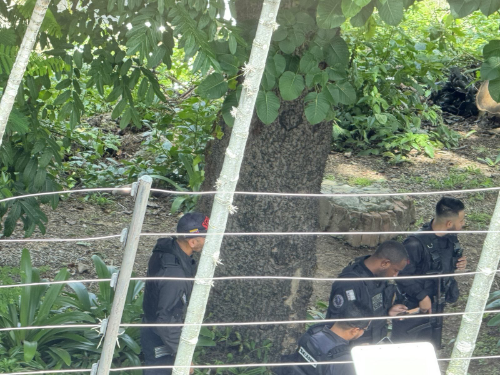
The day after that Pedro Urruchurtu Noselli, a close adviser of Platforma Unitaria head and founder María Corina Machado, confirmed further details of what Moreno had referred to in a post of his own on the social media platform X.
“At 11:15am on Saturday 7 September, the siege of the Argentine residence in Caracas, protected by Brazil, continues, he wrote. “There is an increasing presence of hooded officials. They have closed off vehicular traffic on the street. We are still without electricity.”
Maduro’s forces moved in around Argentina’s embassy after the Argentine government, which supports González as the rightful president-elect, announced it planned to ask the International Criminal Court (ICC) at the Hague to issue arrest warrants against Maduro and other Venezuelan officials who have aided him in blocking the will of the people in the country.
The government of Argentina responded quickly to the threat Venezuela is posing to its embassy, which includes removing privileges for Brazil to act as military protector for its embassy as well.
The Argentine Republic expresses its recognition to the sister Federative Republic of Brazil for representing Argentine interests in the Bolivarian Republic of Venezuela and appreciates its commitment and responsibility in ensuring the safekeeping of Argentine properties in that country. The government also denounced to the international community that at this moment patrols of the Venezuelan intelligence services and security forces are surrounding the official residence in Caracas. At the same time, the Maduro regime has announced that it has unilaterally revoked the authorization granted to Brazil to guard the official building. The Argentine Republic rejects this unilateral measure and warns the Venezuelan government that it must respect the Vienna Convention on Diplomatic Relations, which enshrines the inviolability of mission premises. Any attempt to interfere or kidnap asylum seekers staying in our official residence will be harshly condemned by the international community. Actions such as these reinforce the belief that fundamental human rights are not respected in Maduro's Venezuela.
On September 8, Saturday, the Venezuelan government took an even stronger stance towards the Brazilian embassy, also in Caracas. That was when Maduro formally revoked Brazil’s custodial authority as owner of their embassy. While it is not known whether Brazil is also hosting members of González’s Platforma Unitaria party inside, Maduro’s move against the Brazilian office and residence is understood as the first step to removing its diplomatic immunity rights for any people housed within its grounds and any documents stored there.
Venezuela also revoked authority it had previously given to the government of Brazil to protect Argentina’s embassy there as well
Soon after these steps were made, the government of Argentina responded angrily to the threat Venezuela is posing to it and Brazil in Caracas.
“The Argentine Republic expresses its recognition to the sister Federative Republic of Brazil for representing Argentine interests in the Bolivarian Republic of Venezuela and appreciates its commitment and responsibility in ensuring the safekeeping of Argentine properties in that country,” it wrote.
“The government also denounced to the international community that at this moment patrols of the Venezuelan intelligence services and security forces are surrounding the official residence in Caracas. At the same time, the Maduro regime has announced that it has unilaterally revoked the authorization granted to Brazil to guard the official building.
“The Argentine Republic rejects this unilateral measure and warns the Venezuelan government that it must respect the Vienna Convention on Diplomatic Relations, which enshrines the inviolability of mission premises. Any attempt to interfere or kidnap asylum seekers staying in our official residence will be harshly condemned by the international community. Actions such as these reinforce the belief that fundamental human rights are not respected in Maduro's Venezuela.”
Numerous governments have declared their anger and disgust over what the actions Venezuela is taking against these two embassies.
Among those was Brian A. Nichols, Assistant Secretary of State for Western Hemisphere Affairs for the U.S. Department of State.
“We express our unwavering support for the governments of Brazil and Argentina in the face of threatening actions by Maduro representatives in Venezuela,” he wrote in a post on X this weekend. “Maduro must end his repression and intimidation of the Venezuelan people.”
Despite González’s choice to seek exile in Europe, the many threats against her political party, and the opposition members hiding out in the embassies and in private, María Corina Machado declared she will remain in Venezuela until she sees the fight against Maduro through to its conclusion.
“Every day that goes by is harder and riskier, that is true,” she said this weekend. “We are facing a ruthless regime that is capable of anything … they have no limits in their cruelty. Nonetheless, I believe my duty is to stay in Venezuela.”
This weekend she also called for the nations of the world to endorse the crisis for democracy in Venezuela as a “world cause” similar in importance to the one embraced against South Africa’s apartheid government beginning in the 1960s and taking on full force by the 1980s.
“We want to engage not only with governments but with the people. We want democrats from all around the world – Europeans, Asians, Africans, [and] of course Latin Americans and North Americans – to understand how important this moment is,” Machado continued.
Whether the call to action will work is very much in question. While world leaders have mostly unilaterally condemned Maduro shift from elected president to dictator-by-dictate, no country appears willing to take González’s side or Machado’s call for a more unified front against Maduro with any significant actions. What is clear for the moment is that those in Venezuela have not given up hope in their collective cause, and that Maduro has no intent of turning over the reins of power to the real winner of the July 28 election.