U.S. to Allow Ukraine to Use Long-Range American Weapons Against Targets in Russia
Lead StoryConflict
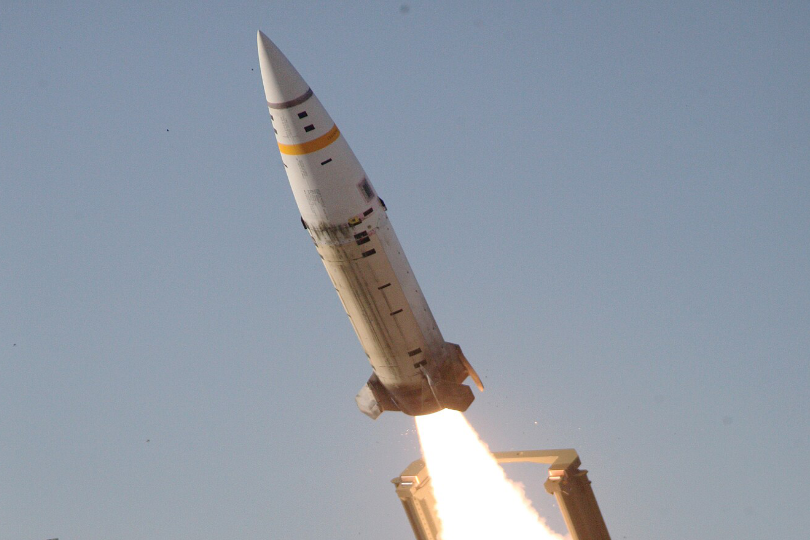
Though the Secretary of State and the White House will deny it, this effectively sets up Ukraine’s military as an extended branch of American armed forces in Europe, in all ways.
This may still be a proxy war, without “boots on the ground” from the U.S., EU, and beyond, but for Russia that difference is at best now just a subtle one. The world needs to take note.
Last Friday Ukrainian President Volodymyr Zelensky showed up at a regular meeting of the nations who donate arms, weapons, military vehicles, fighter aircraft, training, intelligence and more to Ukraine, with an impassioned plea to deliver. As he stood before the members of the Ukraine Defense Contact Group on the U.S.’s Ramstein Air Force Base in Germany for the first time, Zelensky demanded those present to eliminate current restrictions on the use of some of their most powerful weapons for long-distance attacks on targets deep within Russian territory.
“We think it is wrong [to prevent use of these weapons against long-range targets],” Zelensky told his audience. “We need to have this long-range capability, not only on the occupied territory of Ukraine but also on the Russian territory, yes, so that Russia is motivated to seek peace.”
The request represents another escalation of the Ukrainian war effort, as it attempts to repel the Russian forces which first invaded Ukraine in February 2022. The most recent “ask” before that was for more of the most advanced fighter jets that the United Kingdom, the United States, and the European Union can provide to the Ukrainian military.
It also comes after Ukraine has successfully destroyed critical military targets on Russian soil such as fuel depots and portions of airbases using shorter-range missiles and drones, mostly supplied by NATO members. Ukraine also launched ground assaults which have secured former Russian territory adjacent to Ukraine’s eastern border, in the Kursk region. Ukraine has also begun ongoing harassment of Russian forces by sending drones in and around Moscow, though these have mostly resulted in little damage as Russian anti-missile systems shot them down.
At the time it appeared the U.S. was unwilling to change its position on raising the stakes of the war in this way. All officials and members of the military present at the event listened courteously to Zelensky’s message, but all remained completely aligned with what Secretary of Defense Lloyd Austin, who was the host for the event, said soon after Zelensky delivered his speech.
Austin acknowledged what Zelensky had pitched as “an interesting argument”. But rather than reject it outright on grounds other officials have stated, that they wanted to avoid angering President Vladimir Putin of Russia even more over the use of long-range American-made ballistic missiles and other items far deeper into Russian territory, he artfully dodged that. Instead, he said in a statement to the press about the matter that intelligence showed the Russian military had already moved many of its more critical military resources much further away from the border. Having longer-range firepower would therefore be of less help in the war than it might have appeared.
“There’s no one capability that will, in and of itself, be decisive in this campaign,” Austin continued. “We had this discussion about tanks; we had this discussion about other capabilities.”
And while there might be some small gains for Ukraine forces in being allowed to use weapons such as Army Tactical Missile System (ATACMS), Austin continued, Austin went on to say winning the war is about far more than just being able to hit longer-range targets.
“It’s not just one thing,” the Defense Secretary said. “It’s the combination of capabilities and how you integrate those capabilities to achieve objectives.”
While those may have been the official American talking points as of September 9, Zelensky’s words must have struck a stronger chord than Austin was willing to say. That is because as of yesterday it was revealed quietly that the White House has agreed to let Ukraine use its long-distance weaponry anywhere within Russia.
Though not acknowledged, what seems to have pushed Joe Biden and his generals to change their position on this key strategic issue is new intelligence information which reportedly proves Iran has been providing Russian key weapons to support its side of the war with Ukraine.
That intelligence was initially reported by Ukraine military sources. They discovered over 200 of Iran’s Fath-360 short-range ballistic missiles were delivered to a Russian seaport on the Caspian Sea recently.
The Fath-360 missiles can deploy a warhead up to 150 kg (330 pounds) and has a target range of between 19 and 75 miles. While that classifies this as only a short-range weapon, the Fath-360 is capable of traveling of speeds up to 2300 mph. That is equivalent to Mach3, 3X the speed of sound.
That intel was soon corroborated via the United Kingdom Foreign Office and multiple U.S. intelligence agencies.
On September 10, Secretary of State Antony Blinken, speaking alongside UK Foreign Secretary David Lammy in a stopover as part of a trip to meet with Zelensky in Kyiv, told the press Iran had shipped the weapons and it was clear Russia planned to use them against Ukraine.
“This development and the growing cooperation between Russia and Iran threatens European security and demonstrates how Iran’s destabilizing influence reaches far beyond the Middle East,” Blinken said.
The Secretary of State went on to outline further information it has showing Iran had provided Russia with training on how to use the missiles. Blinken indicated further that the evidence shows Iran has shared other critical military technology information with Russia, again for use within Ukraine.
Blinken said the intel he has shows Russia could be planning to use these weapons within a few weeks.
Iran vehemently denies Blinken’s statements. It even wrote a formal letter to UN Secretary-General António Guterres outlining its official position regarding far more than just providing missiles to be used in the war between Russian forces and Ukraine.
“Iran considers the provision of military assistance to the parties engaged in the conflict – which leads to increased human casualties, destruction of infrastructure and a distancing from ceasefire negotiations – to be inhumane,” its government said in the letter.
It was a formal policy position it says it is strictly adhering to, despite the allegations from the U.S. and the UK. It is also a sharp dig at NATO nations having provided substantial firepower to Ukraine on their own.
Iran also openly rejects allegations it previously provided Shahed-136 and 131 drones to the Russian military.
The same day as Blinken’s statements from the UK regarding Iran, Joe Biden told reporters his team was in discussions about whether to give Zelensky permission to use it long-range weapons on Russia as he asked for last week.
“[We’re] working that out now,” he said in a response to a direct question about this from reporters.
Yesterday Blinken had already shifted his official public stance on the matter.
Blinken emphasized that the U.S. had always been willing to consider letting Zelensky use the long-range weapons against Russian targets across the border “from day one”, in comments made while alongside UK Foreign Minister David Lammy and Ukraine President Zelensky in Kyiv yesterday.
“We will continue to do this,” he added.
Behind the scenes, enough chatter was happening in the White House and State Department that confirmed the decision to allow Zelensky to use the weapons in this new way had already been made. Blinken’s new tone on Wednesday was just a transition to whatever the new official rhetoric will be.
From within Russia, Dmitry Peskov, Putin’s spokesperson from within the Kremlin, warned of serious repercussions to come if the U.S. and NATO forces proceed with their plan to let Zelensky use their long-range weapons against them on Russian soil.
There will be “an appropriate response” from Russia if this happens, Peskov told reporters yesterday.
He hedged that a bit by adding that, “There is no need to expect some kind of response everywhere.”
Peskov then broadened the discussion by pointing out how it was precisely because of decisions like this of the west to back Ukraine so forcefully in its defense against Russia, that Russia had to invade Ukraine.
Russia refers to that invasion as a “special military operation”, or SMO for short.
“To all these actions, the SMO (special military operation) is the response,” the Kremlin spokesperson explained. “Each of these decisions, taken by the collective West and then attributed to Ukraine, is an additional confirmation of the justification, necessity and inevitability of the SMO.”