It was March 15, 2020, as the world perched on the precipice of months-long forced job lockdowns tied to perceived dangers of exposure to a pandemic, when the Federal Reserve Board last lowered bank prime lending rates. That time they reduced them by 1 full percentage point. The cut lowered interest rates to between 0 and 0.25%, one of the lowest rates ever recorded in modern American history.
With interest rates already historically low at that time, there wasn’t much more the bank could do to stave off what was about to become one of the worst recessions the country ever endured. As job layoffs increased, default on debt became rampant, and most companies put even the most modest hiring and expansion plans on hold, the government soon shifted to other kinds of stimulus programs as last resorts. They worked minimally but could not make up for the damage federal, state, and local governments inflicted on their citizens by forcing them off the streets and locked up in their homes for much of 2020.
By 2021 the business market finally began to recover in the U.S. That triggered the single longest and largest job growth boom in the history of the United States. It also caused inflation to spike to an annual rate of 9.1% in June 2022, while wages soared. The hot job market pushed unemployment rates to just 3.5% as of January 2024, the lowest since over 40 years ago.
With the Fed and the Treasury perceiving the U.S. economy as dangerously overheated, it attempted to curb that growth via a series of interest rate increases. It eventually jacked up that rate to 8.5% as of August 2023. The Fed held that rate constant for a full twelve months, allowing derivative rates such as home and car loans, construction financing, and credit card rates to rise, while it hoped to put pressure on inflation rates, wage increases, and job growth, without accidentally triggering companies to slow growth too quickly.
Now a full 30 months after the March 2020 interest rate cut, the nation’s economy has sunk back into relative doldrums. As of the August 2024 Bureau of Labor Statistics (BLS) report, monthly hiring had dropped to 142,000, down substantially from the average monthly rate of 202,000 achieved for the previous twelve months. The official unemployment rate was 4.1%. Annualized inflation was estimated at 2.5% and wages were growing at a relatively low 3.8% yearly rate.
Though these indicators suggest the Fed may have already achieved most of the goals it had set for itself in bringing down inflation while keeping businesses afloat, a deeper dive into the nation’s financial figures from last month showed several new concerns to worry about.
One was a trend started earlier this year by the BLS to ratchet down its reported hiring rates within just a month after they were officially posted. That will likely mean the latest 142,000 new hires claimed for August in the report sent out just a few weeks ago may drop by a considerable amount when final figures are available.
Another involves built-in problems with how official unemployment rates. Besides potentially understating the rate at which individuals drop out of the labor market because they give up looking for jobs, the government’s unemployment figures fail to account for the recent much greater rate of loss of part-time employment compared to full-time figures this year. When those were added back in to the labor figures from last month, the revised data revealed the so-called “real” unemployment rate as of the end of August was 7.9%, almost double the official rate and a number too dangerously high to ignore.
A third factor was the continuing climb in personal debt in the country, as individuals struggled to make more than just minimum payments on credit cards, and are less likely to be able to afford major purchases such as cars and homes. That is all tied to the prime lending rate of 8.5%, which when passed through banking channels down to the average consumer, has pushed median credit card rates in the U.S. to 24.74% APR. Those are the compound interest rates according to the latest survey published by Investopedia for September 2024.
Economic advisors outside of the Fed had these issues in mind when, shortly after the BLS data was released two weeks ago, they collectively urged the central bank to consider something bigger than the widely-expected 0.25 percentage point cut many felt was probably coming.
As JPMorgan Chief Economist Michael Feroli said when the labor numbers were disclosed, "The August employment report reinforced the sense of waning vigor in labor market activity.”
That, plus the evidence that the economy was already treading along at a slow enough pace on factors such as inflation, pushed Feroli to recommend “cutting 50 [basis points] at the September meeting [as] the right thing to do”.
In its formal statement announcing the cut yesterday, the Federal Open Market Committee (FOMC) of the Federal Reserve Board said that “In light of the progress on inflation and the balance of risks, the Committee decided to lower the target range for the federal funds rate by 1/2 percentage point to 4-3/4 to 5 percent.”
The statement continued with a reflection on how it is balancing its considerations to keep business moving forward while minimizing inflation and preventing unemployment from rising much more.
“The [FOMC] seeks to achieve maximum employment and inflation at the rate of 2 percent over the longer run,” it explained. “The Committee has gained greater confidence that inflation is moving sustainably toward 2 percent, and judges that the risks to achieving its employment and inflation goals are roughly in balance. The economic outlook is uncertain, and the Committee is attentive to the risks to both sides of its dual mandate.”
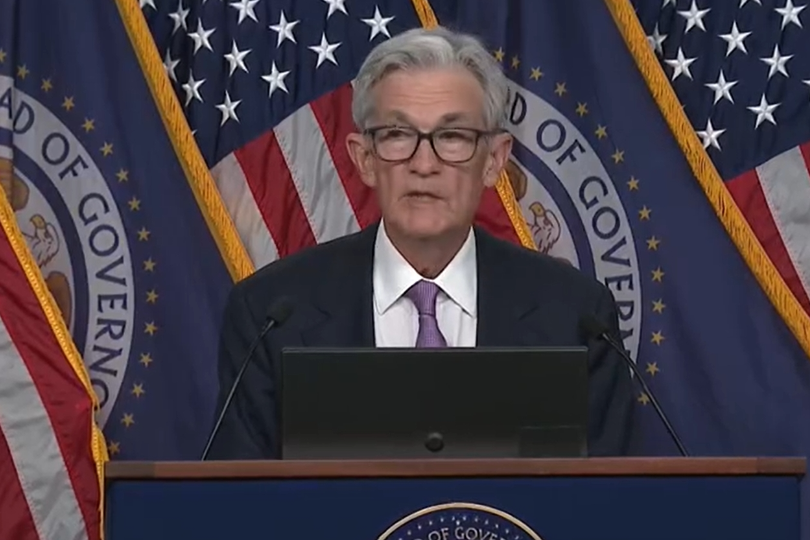
During his news conference announcing the rate reduction, Federal Reserve Board Chair Jerome Powell attempted to balance the positives he sees for what the previous rate hikes achieved against the need for the new 0.5 percentage lending rate cut.
“The U.S. economy is in good shape,” Powell said. “It’s growing at a solid pace, inflation is coming down, the labor market is in a strong place. We want to keep it there.”
In his short address, Powell also addressed the statement by some critics that he and the FOMC should have taken steps to lower the lending rates earlier.
“We do not think we’re behind,” Powell said. “We think this is timely. But I think you can take this as a sign of our commitment not to get behind.”