France Finally Gets Its New Government Over Three Months After Elections
Lead StoryPolitics
In the spring President Emmanuel Macron, feeling pressures from the left to be more socialist on one end, and from the right to be more fiscally austere and more hawkish militarily, chose an unlikely path to bring more stability to his government. He called a snap election.
The strategy was selected with the idea that it was Macron’s Renaissance political party and its allies would be the best positioned to capture the most seats in the Assemblée Nationale (National Assembly, the country’s legislature). It could thereby strengthen its position, separate out those groups opposing the president’s strong opinions on everything from Israel’s genocidal war in Gaza, to the conflict between Russia and Ukraine, calming protests over both of those and Macron’s controversial social programs such as increasing the age of retirement, and take far tougher steps to deal with a growing government deficit.
After voters came to the polls on June 30 and July 7, and the results counted, it became clear Macron’s plan had backfired. Not only did Macron’s coalition consisting of the Renaissance party and its traditional parties fail to win a majority of the seats in the Assembly, with just 168 out of 577 positions under its control, his party failed even to secure the largest number of seats. Instead, the left-wing Nouveau Front Populaire (NFP) had the largest bloc, with a strong showing of 182 seats. Yet even the NFP fell far short of the 289-seat majority needed to direct the next stage in forming the government, even if one also added 13 additional individuals who won seats representing leftist parties roughly in agreement with what the NFP stands for.
The voting also produced further fragmentation in the Assembly. The far-right Rassemblement National (RN, or National Rally) party and its allies pulled in 143 seats, LR conservatives 46, independent right 14, independent left 13, independent centrists 6, regionalists 4, and one miscellaneous entry.
This fragmentation is relevant because even though President Macron has the power to override the will of the Prime Minister, the individual junior to him in the government who coordinates pulling together the governing coalitions, if Macron were to do so he would risk rebellion from those in the legislature who stand against him. It is for this reason that the selection of the new prime minister, a second-in-command of sorts who is newly appointed after each National Assembly election, became more than ever the most critical electoral decision Macron would make.
Macron timed the election to happen just after the latest G7 summit, which was held in Apulia, Italy, from June 13-15, hoping that his presence there might lead to a stronger showing for his party in the elections just a little over two weeks later. It may have succeeded in doing that, but the damage to Macron’s popularity was apparently already deep enough so even slightly improved numbers were not enough to bring in a majority coalition.
With he and his legislative coalition’s powers at risk as the new cabinet positions would be named and power negotiations would be conducted, Macron then stalled in taking the next steps to deal with that, as he and his party representatives worked behind the scenes to cut deals and make promises to gain the new legislature’s support.
Macron used the excuse that he would be attending a summit of NATO nations in Washington, D.C. to be held from July 9 through 11, 2024, an event honoring the 75th anniversary of the founding of the alliance, as a reason not to act immediately on the results of the new elections.
Then it was summer, individuals were on vacation, and tensions in the streets were – for now at least – calm in France, so Macron waited even longer. But as the president delayed governmental affairs issues further, the multiple minority parties began to argue over what the next steps should be for the government-to-be, including putting together the also seriously delayed 2025 annual budget for the nation.
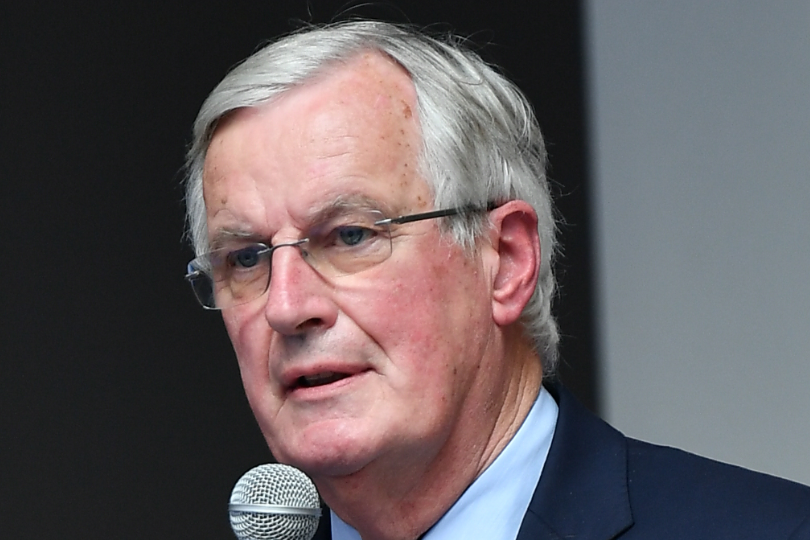
On September 21, the waiting on the most important key decisions necessary to get the new government in motion was over. That is when French Prime Minister Michel Barnier, a Macron appointee who Macron said was an excellent choice for that job after the elections were concluded, announced appointments for the new government’s 39 Cabinet Ministers.
Barnier is best known to the world as the EU negotiator who helped manage the EU side of the United Kingdom’ “Brexit” separation from the EU some years ago. He is known to be diplomatically savvy and with strong connections in multiple party segments.
Leading the list of some of the most important of those named is Jean-Noël Barrot, the country’s new Foreign Minister. A centrist politically, he is considered highly skilled at negotiations within the European Union and a strong partner to Macron as he continues to assert French dominance in EU affairs.
Antoine Armand is France’s new Finance Minister. He will have the task of guiding the creation of the 2025 budget and taking strong actions to reduce the country’s sizeable debt. He will also be working with other EU representatives on balancing France’s spending priorities against those of the EU as a whole.
Taking the post of Defense Minister in the new Cabinet is Sébastien Lecornu, who also happens to be the current holder of that position. He was one of the principal architects of Macron’s position to establish the EU as a prime military power with the ability to operate independently of the United States, even within NATO. Lecornu is also a strong supporter of Macron’s ongoing high levels of military aid for Ukraine against Russia and in keeping Israel well-supplied to continue its destructive wars in Gaza and more recently the West Bank.
Going forward, Lecornu must navigate not only the complex web of shifting military support issues for NATO, Ukraine, and Israel, but also will now have to determine what it means for France to have voted in favor of the UN General Assembly resolution this past week which mandates Israel to cease new settlement activities in the Palestinian territories it is occupying, and to exit them within one year. The same resolution also requires that France and all UN member states must “cease importing products originating from Israeli settlements and to halt the transfer of arms, munitions, and related equipment to Israel in cases where there are reasonable grounds to suspect they may be used in the Occupied Palestinian Territory.”
The 17 most senior members of the new Cabinet come from mostly center-right individuals, making this one of the most right-wing Cabinet in modern French history. Seven of those are from Macron’s political coalition and three are from Barnier’s center-right Republican representatives. Beyond the first 17, most of the rest of the new appointees also come from those aligned with Macron.
Missing entirely from the Cabinet are any members of the left-wing Nouveau Front Populaire coalition which brought in the most seats in the new National Assembly. Also left out is anyone from the National Rally coalition, the group which brought in the third largest number of seats in the Assembly and which supports Macron’s arch-rival, Maxine LePen.
This seemingly deliberate isolation of the first- and third-ranked political coalitions from the government, which together add up to 325 of the National Assembly’s 577 seats, is expected to cause significant fractures as Macron and his new Ministers attempt to lobby support for difficult fiscal and foreign policy initiatives in the country.
A key warning sign for what that might cause happened beginning Saturday night, just hours after the new Cabinet was made public, when students and other representatives of the far-left contingent rallied in the streets to protest their lack of representation in the new administration, even before it could get started. One of the larger of those gatherings was held in Lyon, France, where thousands marched yesterday with signs demanding the resignation of President Emmanuel Macron over the gross mismanagement of the appointment process.
It is already clear that Macron and Barnier will have their work cut out for them as they attempt to use their new 39-member Cabinet to negotiate a new budget, pass key legislation, and make what appear to be sweeping changes in France’s domestic and international policies.