As of late September 25, the United States and France were touting Israel would shut down its relentless airstrikes against Hezbollah forces based in southern Lebanon. Israel also supposedly agreed to shelve plans for an imminent ground invasion it only just revealed publicly.
The group of nations headed up by American and French negotiators reported then that they had crafted a detailed ceasefire plan designed to give a chance to cool tensions between the two nations. The proposal would bring a pause to the war which had already killed over 600, wounded thousands, and obliterated buildings throughout parts of Beirut and further south close to the Israeli border.
The region covered by the ceasefire proposal would be line of demarcation between Israel and Hezbollah known as the “Blue Line”.
This was the same plan that Joe Biden obliquely referred to when he said in a televised interview earlier this week that the U.S. was working together with others to implement “a settlement that can fundamentally change the whole region”.
France and the United States announced their push for the plan on Wednesday at the United Nations.
“We call on all parties, including the governments of Israel and Lebanon, to endorse the temporary ceasefire immediately," the two nations said in a joint statement released on the second day of the annual meeting of the United Nations General Assembly in New York City.
The message Biden and Secretary of State Antony Blinken were telling just about everyone was that Israel and Hezbollah had already agreed in principle to the ceasefire plan. Part of why they believed this so strongly is that negotiations between Israel and the U.S. on this had been carried out at relatively high levels. National Security Advisor Jake Sullivan headed up the U.S. side of the talks, and Ron Dermer, a close associate of the Israeli primer minister, represented the Israeli contingent. The two groups were said to have worked together on drafts of the ceasefire terms from the very beginning.
A senior administration official said both Hezbollah and Israel “were familiar with the text” of that agreement, and implied there was strong buy-in from each side.
Though the exact timing of when the ceasefire would begin was still tentative, U.S. officials involved said it would likely begin sometime yesterday, September 26, and would run for three weeks. Those same officials called the agreement “a breakthrough”
After a year of Israel’s brutal war against the Palestinian people in Gaza which many times the U.S. had said a ceasefire there was close at hand, and which time after time the U.S. had to retract its statements, the world should have been far more skeptical that this time a real ceasefire between Israel and Hezbollah was about to happen. But it was not, perhaps because of the involvement of a third party like France this time, and perhaps also because this was a different battlefront.
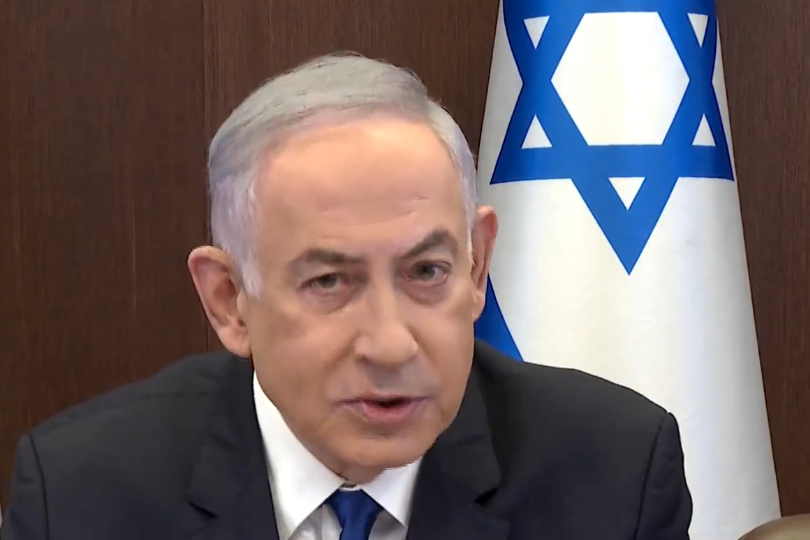
Late yesterday, however, shortly after Israeli Prime Minister Benjamin Netanyahu landed in New York on his way to join the General Assembly meetings, it quickly became clear whoever it was that the U.S. and France might have been talking with on the Israeli side of this was either lying to them or had never discussed the matter with the prime minister’s office.
“My policy, our policy, is clear,” Netanyahu told reporters in an impromptu press conference. “We continue to hit Hezbollah with all our might. We will not stop until we achieve all our goals.”
The U.S. response to what happened was a combination of bafflement and confusion.
White House press secretary Karine Jean-Pierre insisted during a briefing yesterday that “indeed coordinated with the Israeli side.”
John Kirby, a White House spokesperson who has been an integral part of the U.S. public positioning regarding policies involving Israel and the Middle East, was uncharacteristically terse in his response to reporters’ questions on this yesterday.
“I can’t speak for Prime Minister Netanyahu, I can’t answer the question why he said what he said,” he said.
Kirby said there was no way the U.S. would have gone public with the joint statements about the plan on Wednesday, or claimed Israel was supportive of the proposal unless that was true.
“What I can tell you is that statement we worked on last night wasn’t just drawn up in a vacuum,” Kirby continued. “It was done after careful consultation, not only with the countries that signed on to it, but Israel itself.”