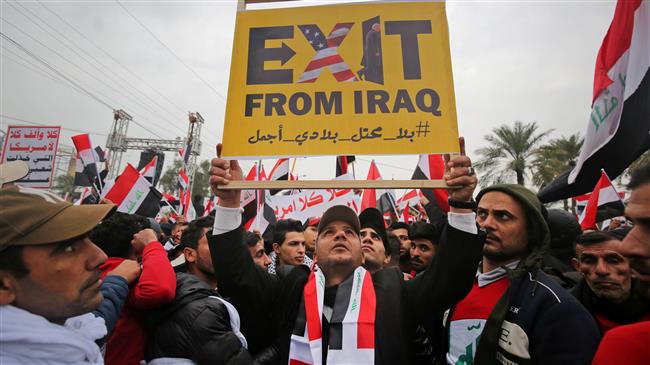
Mostly because of its continued backing of Israel financially and with weaponry in its war against Hamas and the Palestinian people in Gaza since October 7, the U.S. military has become a target of numerous military missions from Hezbollah and insurgent forces aligned in some way either with Hamas, Hezbollah, Yemen, or Iran.
Israel’s war in Gaza has been ruled on multiple occasions as likely a genocidal one, first by the United Nations International Court of Justice in January 2024. That was followed in May by an announcement by International Criminal Court (ICC) Chief Prosecutor Karim Khan declaring that Prime Minister Benjamin Netanyahu and Defense Minister Yoav Gallant “bear criminal responsibility for the following war crimes and crimes against humanity committed on the territory of the State of Palestine (in the Gaza strip) from at least 8 October 2023”.
Then in July 2024 the International Court of Justice issued an advisory opinion to the UN that Israel has been illegally occupying the Gaza Strip and the West Bank, land agreed upon in multiple treaties for over fifty years as belonging to the Palestinian people. That opinion was requested by the United Nations in a resolution passed In December 2022.
The UN General Assembly acted to recognize this conclusion in a special though nonbinding resolution earlier this month. That measure directed Israel to halt further occupation steps in each area and to withdraw from the illegally occupied territories within one year. Not surprisingly, both Israel and the U.S. voted against it. Israel declared the resolution invalid as of the moment it was passed and the U.S. said it felt it would create problems reaching an possible ceasefire in Gaza.
It is against the backdrop of the current phase of the American-supported Israeli-led genocidal war against Gaza that American installations in Iraq became active targets in the conflict between allies of the Palestinian people and Israel. Dozens of Americans have been reported injured, and extensive damage also acknowledged since a year ago, on both the Iraq bases and those the U.S. still maintains as an illegal occupying force in Syria.
The American installations in Iraq are also targets because the U.S. continues to use those bases to launch strikes of its own on Iran-backed militia forces operating in parts of Iraq. The most recent of these airstrikes happened in July. And while it may have achieved some success it is mission, that the U.S. launched attacks on Iraqi soil without agreement with or permission from the Iraqi government angered the Iraqi public, who raised their own demands for the U.S. to get out.
Iraq has also suffered extensive property damage and harm to its people as a direct result of the airstrikes and other attacks on the American bases in the country.
Much of the attacks on the Iraqi bases is linked directly to Iran-backed militia organizations operating in and around Iraq.
Earlier this year as a direct result of this, Iraq demanded the U.S. close its military installations and leave the country. Approximately 2,500 American troops are current stationed in Iraq as part of a mission the Department of Defense says is still tied to fighting the Islamic State organization regionally. This mission, supported by the American bases in Iraq and the troops positioned there, has been in place for over twenty years.
The U.S. acknowledged it would consider the request but nothing formal was announced about any pending withdrawals until this week. But even though a new plan for a partial pullout from Iraq is now in place, the United States and Iraq governments seem far apart even in terms of what was supposedly agreed to.
The first inklings of what was to happen was announced two weeks ago by the Iraqi government. It said it and the United States had finally signed off on a plan to get American troops out of the country. Iraqi officials said that some small numbers of the American military might remain, but the implication was most troops would be gone. Multiple bases would be shutdown and turned over to Iraq for whatever use it might wish.
The formal U.S. version regarding that came in a press briefing held yesterday by Pentagon Deputy Press Secretary Sabrina Singh.
“I think it’s fair to say that, you know, our footprint is going to be changing within the country,” Singh explained.
The emphasis of Singh’s remarks was not about troop numbers but instead that the Department of Defense has finally agreed to phase out its mission tied to Islamic State.
An unnamed senior Biden administration official with the State Department provided a little more information about their near-term plans in Iraq.
“I’d like to emphasize that this is an evolution of the military mission in Iraq,” the official said, under conditions of anonymity associated with these sorts of statements. “We’re moving towards the type of productive, long-term security relationship the United States has with partners around the world.”
The spokesperson explained that the current military mission would officially end as of September 2025. The official noted further the U.S. and Iraq had “reached an understanding” regarding in what way and by home much Iraq would continue to provide certain support for the approximately 900 American forces occupying part of northern Syria through at least September 2026.
The official then acknowledged that there “could very well be” some downsizing of total American troop numbers in Iraq but refused to say how many. The broad implication of his remarks was this was an issue still in discussion, and that it might be entirely possible the total number of U.S. military personnel leaving Iraq by September 2025 might not be all that large.
Pentagon spokesperson Singh said in her press briefing only that it was “fair to say… our footprint is going to be changing”.
The carefully encoded statements from Singh and the unnamed State Department official will likely not sit well with the government of Iraq. It and Iraq’s public want the U.S. out, especially so as the Middle East war Israel appears determined to expand widely could soon draw reprisals against the U.S. by Palestine’s supporters.